
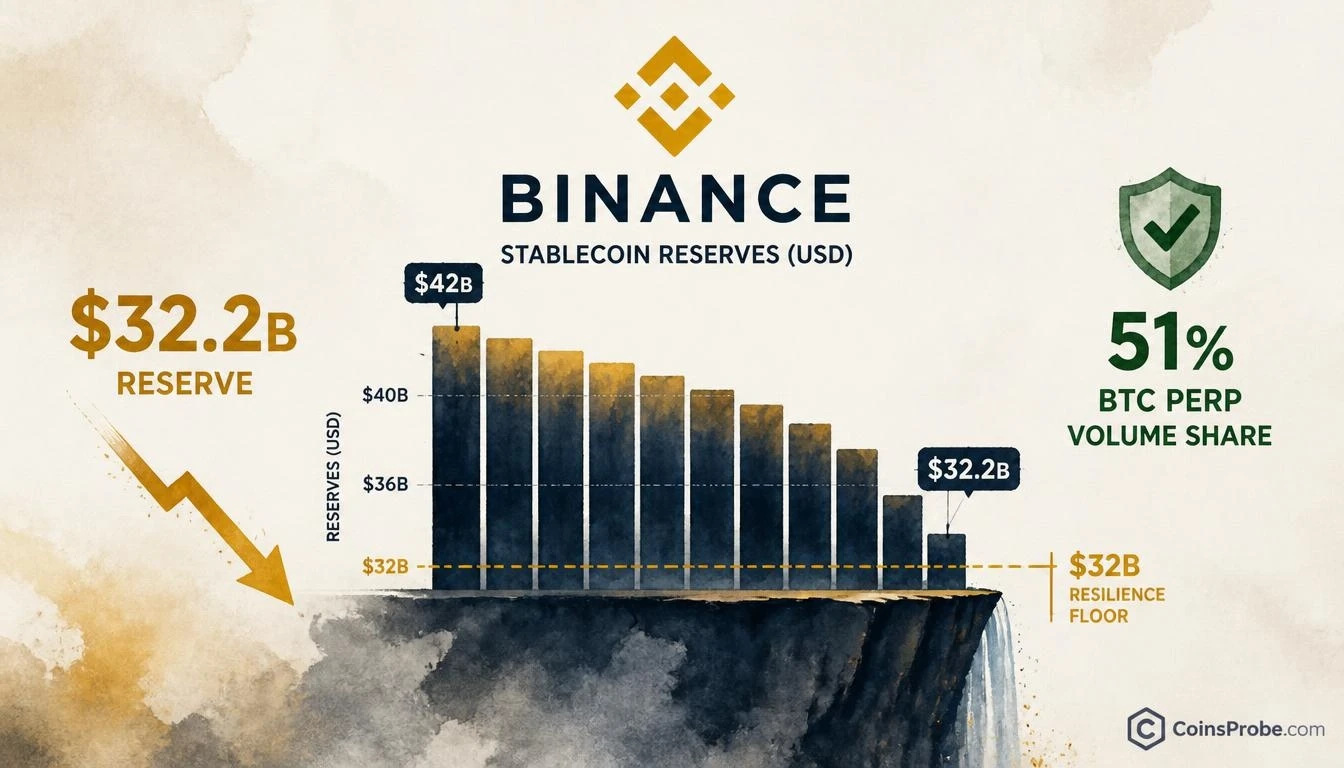

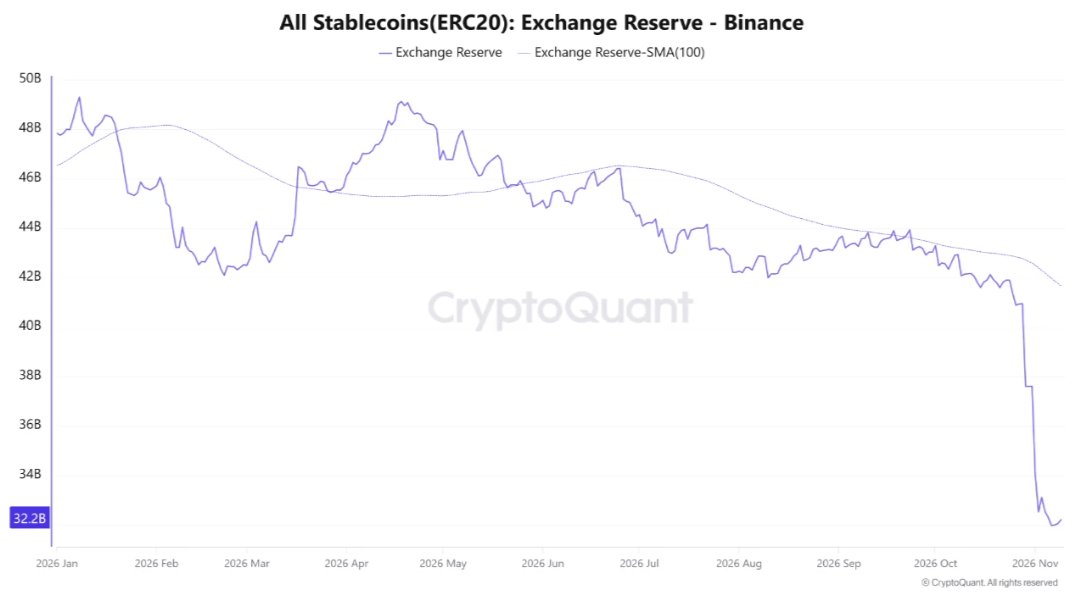
- Binance ERC-20 stablecoin reserves at $32.2B — down from ~$41–42B pre-hack, per CryptoQuant/Novaque Research
- $4.72B in net client withdrawals followed Binance's 29 October security breach, per Reuters cited in CryptoQuant analysis
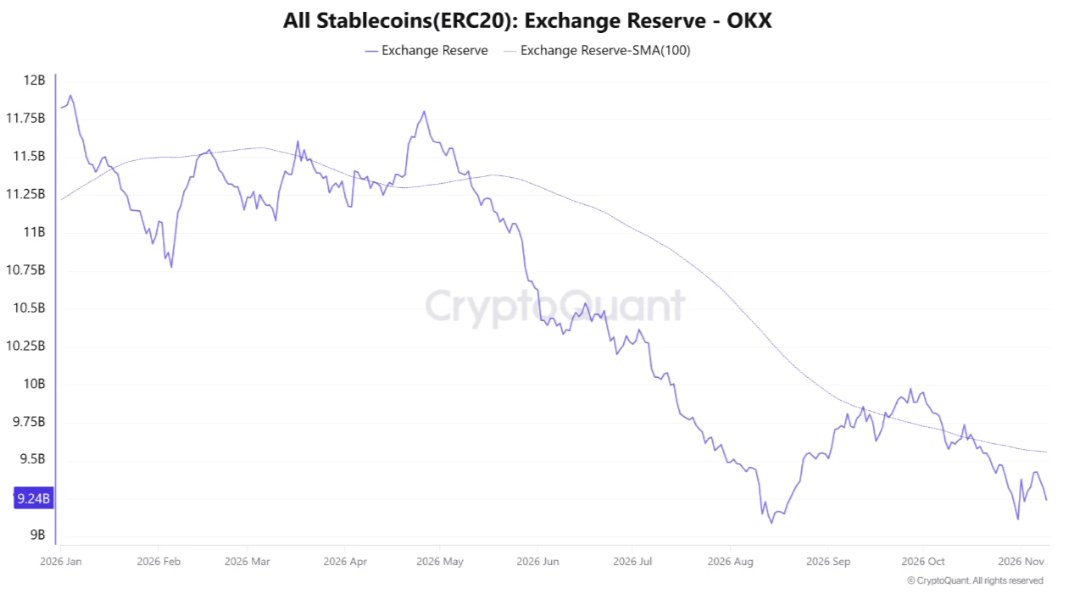
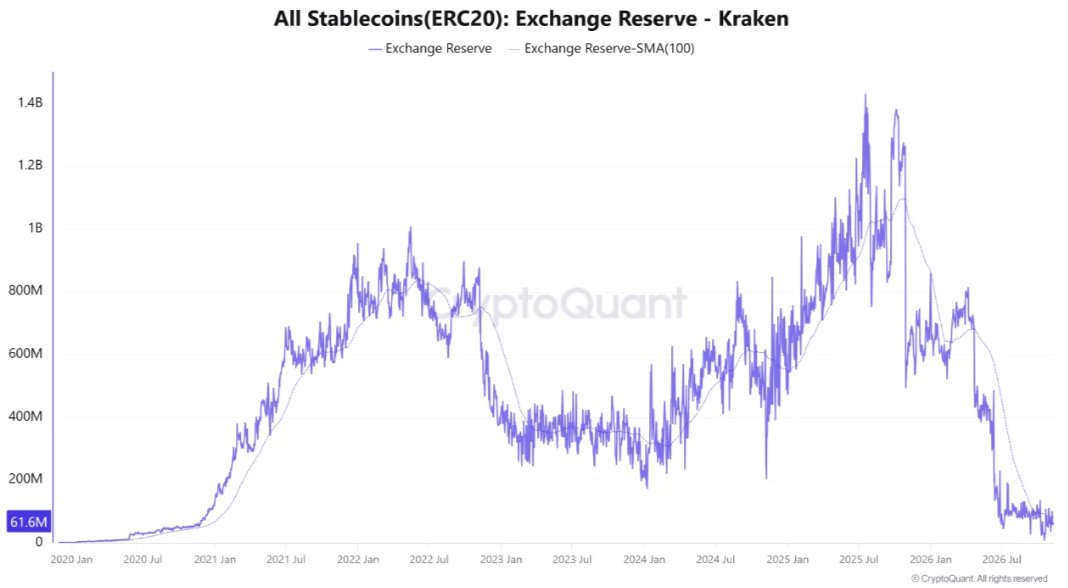
- OKX holds $9.24B and Kraken $61.6M in ERC-20 stablecoins — neither shows capital inflow from Binance
- Binance retains ~51% BTC perpetual futures volume share and ~$29M/day net spot buying (Nov 1–10)
Binance is trading at the center of the most closely watched liquidity test in crypto this cycle. Bitcoin is currently priced at approximately $73,648 — down 0.43% in the past 24 hours — against a backdrop that includes the exchange’s most consequential stress test since its founding: a 29 October security breach that triggered $4.72 billion in net client withdrawals immediately after withdrawals reopened, per a Reuters report cited in the full CryptoQuant analysis.
The post-hack picture is more nuanced than the headline figure suggests. An analyst at Novaque Research, publishing through CryptoQuant’s Quicktake platform, examined Binance’s on-chain reserve position across stablecoins, BTC, and ETH — and reached a measured but clear conclusion: “For now, the evidence points to a significant liquidity adjustment rather than a structural loss of dominance.” That distinction is not semantic. It is the difference between a temporary drawdown and a permanent competitive shift — and the on-chain data, as of November 10, supports the former.
The $32B Stablecoin Reserve — What the On-Chain Data Actually Shows
Binance’s tracked ERC-20 stablecoin reserves currently sit near $32 billion, down from approximately $41–42 billion in late October. The chart showing this decline confirms the severity: a gradual multi-month decline from January 2026 peaks, followed by a sharp near-vertical drop in late October and early November. The current 32.2B reading sits well below the SMA(100), which remains considerably higher — the gap between the two is at its widest point in the charted history. The breakdown below the SMA(100) is confirmed.
The critical analytical question is where that liquidity went. The Novaque Research note — published November 10, 2026 — examined competing venues directly. OKX holds approximately $9.32 billion in tracked ERC-20 stablecoins, with reserves also trending lower, now printing at 9.24B per the chart. OKX’s reserves have broken below their own SMA(100), which sits near the 9.5B area — a confirmed breakdown on that exchange as well. There is no evidence of a straight migration from Binance to OKX. Competing venues are not absorbing the liquidity that left Binance. That absence of migration is the core of the resilience argument.
Kraken’s ERC-20 stablecoin reserve tells an even sharper story. The current reading is 61.6M — near the lowest levels in the exchange’s entire charted history stretching back to January 2020. The reserve peaked during the 2021–2022 cycle, partially recovered into a sharp high in mid-2025, and has since collapsed to near-zero levels. Kraken is not a destination for displaced Binance liquidity. The chart confirms a breakdown, with reserves sitting well below the SMA(100) and near historical lows. Per the CryptoQuant analysis, Kraken sits near $62.5 million following a sustained contraction.
BTC and ETH Reserves — Why Native-Unit Data Matters
The Novaque Research note draws an important methodological distinction for BTC and ETH reserve comparisons. Binance holds approximately $51.7 billion in BTC and $6.5 billion in ETH by USD value, versus $12.6 billion and $2.4 billion at OKX. Those numbers make Binance’s scale immediately apparent. But the analyst flags a critical limitation: USD-denominated crypto reserves mechanically fall when prices decline. Without native-unit balances — the actual coin count, not the dollar value — movements in USD reserve charts cannot be reliably classified as withdrawals. Wallet restructuring and cross-chain transfers may explain part of the contraction. The analysis does not overstate its conclusions here: it acknowledges the ambiguity and limits its claims accordingly.
Trading Volume Dominance — The Competitive Position Metric
Reserve data tells one side of the story. Market share data tells another. According to the CryptoQuant analysis, Binance holds approximately 51% of BTC perpetual futures volume across the four largest trading venues during the November 1–10 period. It accounts for approximately 37% of net selling share, while remaining a net spot buyer at approximately $29 million per day. These are not the figures of an exchange that has lost its competitive position. At roughly half of BTC perp volume on the largest venues, Binance’s market infrastructure remains intact even as its stablecoin reserves compress.
What the Resilience Argument Requires Going Forward
The Novaque Research note is careful to frame the current state as a test, not a verdict. The analysis identifies three specific conditions that will determine whether the liquidity adjustment remains temporary: Binance’s ability to sustain trading depth, restore stablecoin balances, and retain capital through continued volatility. The note frames this explicitly as “a test of liquidity governance” rather than evidence of competitive decline.
The key question the analyst poses is precise: whether clients are withdrawing usable settlement balances faster than the exchange can restore confidence, collateral capacity, and market depth. That is a process question — one that will be answered over weeks, not hours. For context on the broader stablecoin liquidity environment, see our earlier analysis on Stablecoin Market Cap Hits 1-Year Low — Is Crypto’s Liquidity Drying Up?. For the full background on the breach itself, see Binance Resumes Withdrawals After Biggest Hack in Crypto History.
Binance’s $32 billion stablecoin position, combined with its ~51% BTC perp volume share and $29M/day net spot buying, represents a reserve scale that no competing venue currently matches. The $4.72 billion in post-hack withdrawals is real. The decline from $41–42B to $32B is real. What is equally real is that OKX and Kraken are not receiving that capital — their own reserves are also contracting. The evidence, as the analyst concludes, points to a system-wide liquidity adjustment rather than a bilateral transfer of exchange dominance. Watch whether Binance’s ERC-20 stablecoin reserve stabilizes above $30B in the sessions ahead — that level will determine whether the adjustment narrative holds or the structural decline thesis gains ground.
Frequently Asked Questions
How much did Binance’s stablecoin reserves drop after the October 2026 hack?
Did OKX or Kraken gain stablecoin reserves as Binance lost them?
What does Binance’s trading volume share look like after the hack?
What would confirm that Binance’s position is stabilizing rather than deteriorating further?
Source: CryptoQuant · Published by CoinsProbe Markets Desk
The opinions and market insights shared on CoinsProbe represent the views of individual authors based on prevailing market conditions at the time of publication. Cryptocurrency investments carry significant risk and volatility. Readers are encouraged to conduct their own research and seek professional financial advice before making investment decisions. CoinsProbe and its contributors do not accept responsibility for financial losses or decisions made based on published content.
CoinsProbe may publish sponsored articles, affiliate links, or promotional collaborations. All sponsored material is clearly labeled to maintain transparency with our audience. Our editorial decisions remain fully independent, and advertising partnerships do not influence reviews, rankings, or published opinions.
Since 2023, CoinsProbe has delivered reliable insights on cryptocurrency, blockchain, and digital assets. Our content is created by experienced researchers and analysts who follow strict editorial standards focused on accuracy, transparency, and credibility. Every article is carefully reviewed and verified using trusted sources and current market data. We provide unbiased analysis and timely updates covering everything from emerging crypto projects to major industry developments.