
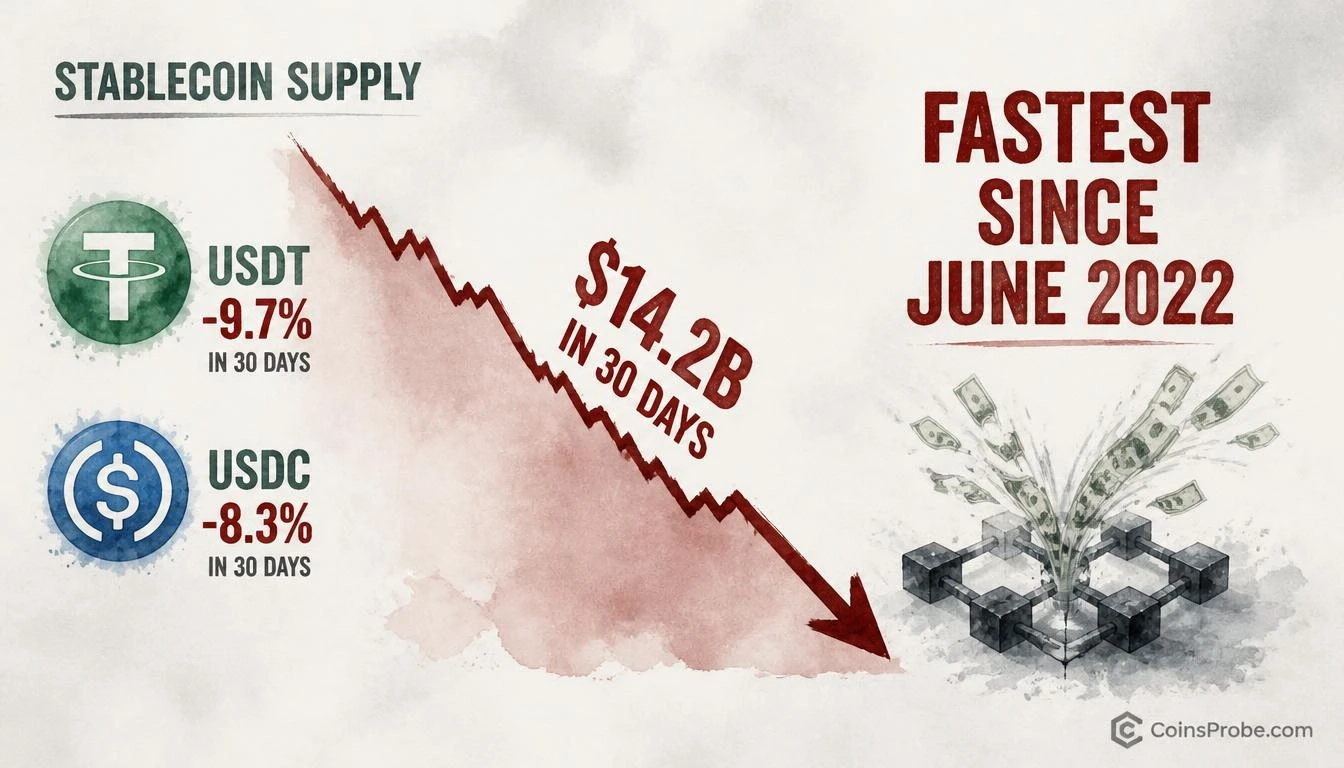

- Total stablecoin supply fell $14.2B in 30 days — the fastest contraction since June 2022, per Glassnode
- DeFiLlama data confirms stablecoin market cap at ~$292B on Nov 10, 2026 — down 4.6% month over month
- Ethereum's stablecoin share dropped to 46%; Tron expanded to ~32% as liquidity migrates cross-chain
- Glassnode's signal threshold: stablecoin supply must return to growth before fresh capital is confirmed
The on-chain liquidity backdrop for crypto markets has deteriorated sharply. Total stablecoin supply has contracted by $14.2 billion over the past 30 days — the fastest rate of decline since June 2022, according to Glassnode’s latest Week On-Chain report. DeFiLlama data places total dollar-pegged stablecoin capitalization at approximately $292.0 billion as of November 10, 2026, down roughly 4.6% month over month — confirming the scale of the drawdown across the broader stablecoin market.
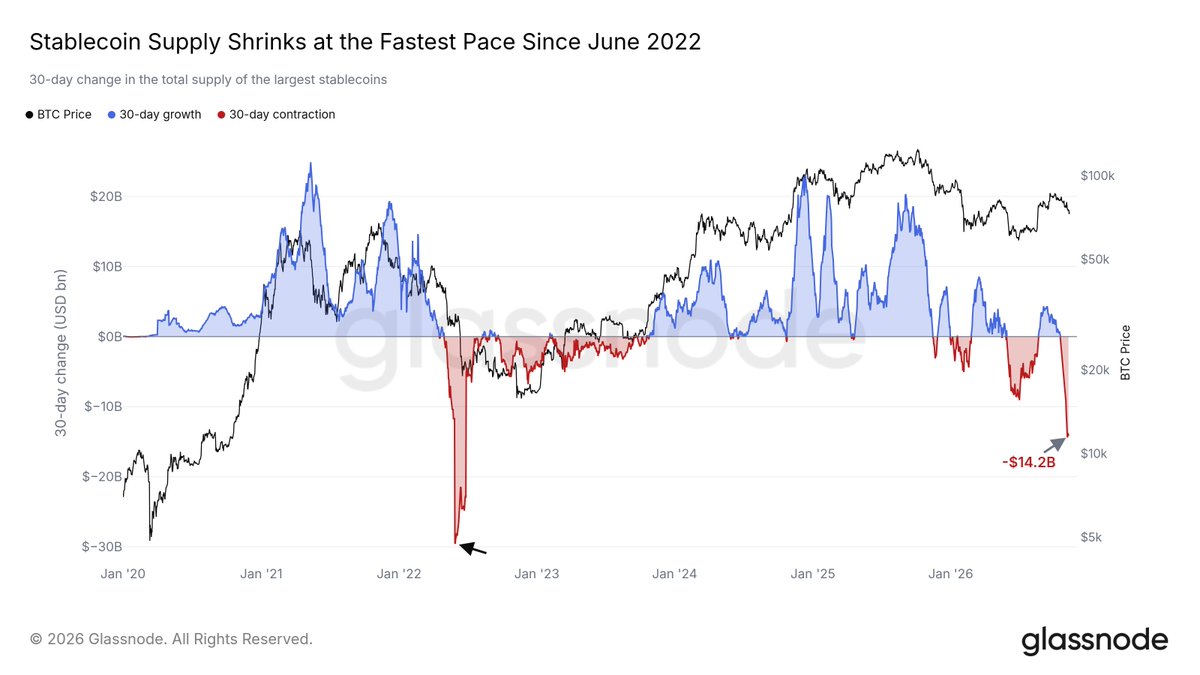
The contraction is not concentrated in a single token. USDT declined 5.42% year to date and was reported trading slightly below its dollar peg, a signal consistent with active redemption pressure. USDC fell 1.91% over the same period. Ethena’s USDe saw the sharpest drop among major stablecoins at 24.2%, while PayPal’s PYUSD fell 23.5%. The lone outlier was Ripple’s RLUSD, which rose 108.24% year to date — suggesting selective inflows into newer entrants even as aggregate supply contracts. The movement of large stablecoin positions to exchanges has been a recurring theme in recent weeks, and the current data suggests the direction of that flow has turned decisively toward exits rather than redeployment.
On-chain analysts interpret a falling stablecoin supply as a macro headwind for risk assets. The mechanism is direct: stablecoins represent immediately deployable buying power within crypto markets. When supply shrinks, it reflects holders redeeming tokens for fiat or withdrawing capital from the on-chain ecosystem entirely — reducing the pool of dollars available to bid on Bitcoin, Ethereum, and other assets. This is structurally distinct from direct asset selling; it means potential buyers are leaving the system. Glassnode notes that a chain-level shift is also underway: Ethereum’s share of total stablecoin supply has fallen to 46%, while Tron has expanded its share to approximately 32% — indicating some liquidity is migrating cross-chain rather than exiting entirely. The prior episode of stablecoin supply compression raised similar concerns about crypto’s available liquidity runway. The key level to watch is not a price — it is supply direction itself. Glassnode is explicit: a return to stablecoin supply growth is the threshold that would signal fresh capital re-entering the market.
Until that threshold is crossed, the data presents a uniform picture of liquidity withdrawal. Glassnode’s Week On-Chain report flags additional signals — recent buyers, large wallet positioning, and bids sitting below current market prices — as areas requiring continued monitoring. The broader sentiment backdrop has already turned bearish by several on-chain measures. What to watch now: whether aggregate stablecoin supply stabilizes and begins recovering week over week. A sustained reversal — even a modest one — would be the first measurable confirmation that net capital is re-entering the system rather than leaving it. Absent that, the $14.2 billion contraction stands as the most significant liquidity warning since the June 2022 market bottom.
Frequently Asked Questions
Does a falling stablecoin supply mean Bitcoin’s price will drop?
Why is Ethereum losing stablecoin market share to Tron?
What was the last time stablecoin supply contracted this fast?
What specific metric would confirm new money is entering crypto again?
Source: Glassnode · Published by CoinsProbe Markets Desk
The opinions and market insights shared on CoinsProbe represent the views of individual authors based on prevailing market conditions at the time of publication. Cryptocurrency investments carry significant risk and volatility. Readers are encouraged to conduct their own research and seek professional financial advice before making investment decisions. CoinsProbe and its contributors do not accept responsibility for financial losses or decisions made based on published content.
CoinsProbe may publish sponsored articles, affiliate links, or promotional collaborations. All sponsored material is clearly labeled to maintain transparency with our audience. Our editorial decisions remain fully independent, and advertising partnerships do not influence reviews, rankings, or published opinions.
Since 2023, CoinsProbe has delivered reliable insights on cryptocurrency, blockchain, and digital assets. Our content is created by experienced researchers and analysts who follow strict editorial standards focused on accuracy, transparency, and credibility. Every article is carefully reviewed and verified using trusted sources and current market data. We provide unbiased analysis and timely updates covering everything from emerging crypto projects to major industry developments.