
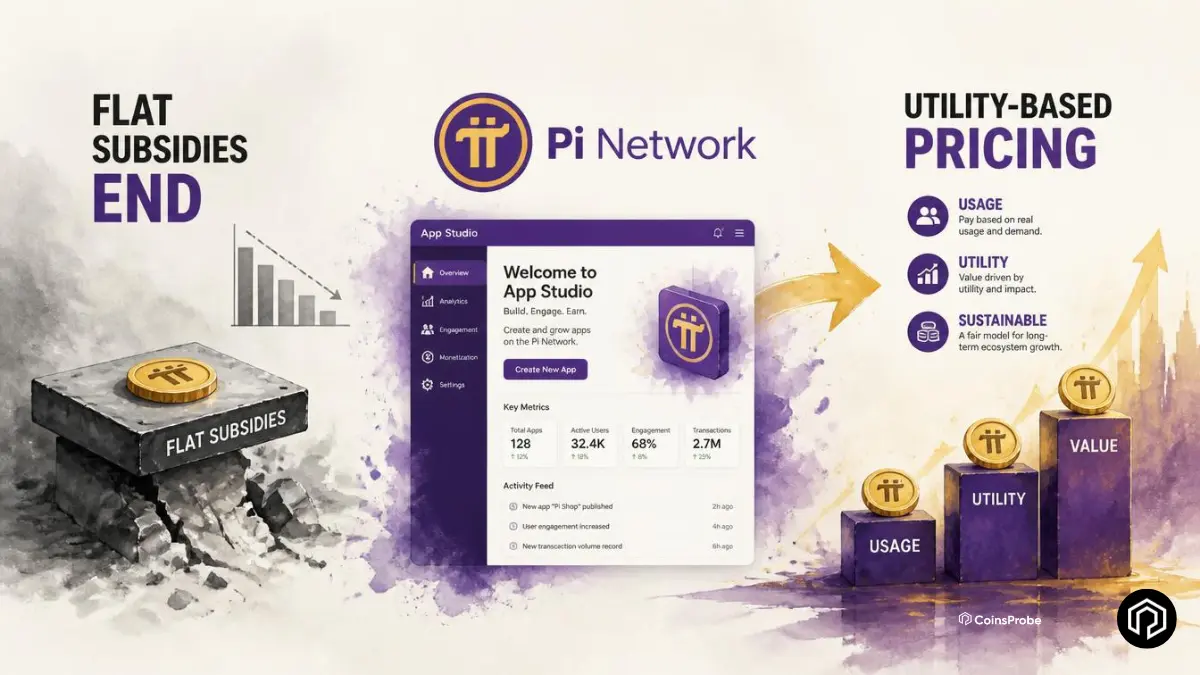

- Pi Network will change App Studio pricing from August 24, moving from flat subsidized fees to usage-based pricing.
- Apps with genuine user engagement can continue receiving the subsidized rate.
- Apps without meaningful usage will pay the full AI service cost.
- Subsidized eligibility will be reviewed regularly, allowing creators to qualify later by attracting real users.
Pi Network’s App Studio pricing update is the clearest signal yet that the ecosystem is transitioning from its experimental early phase into a sustainability-focused model where network resources are directed toward genuine utility rather than unlimited subsidised experimentation. It is a maturity signal — and a meaningful one.

What Is Changing on August 24
The current model:
Every App Studio creator currently pays a flat 0.25 Pi to create an app and another 0.25 Pi to edit an existing one — regardless of whether the app has any users, serves any real purpose, or is simply a test creation that will never be shared.
Pi Network heavily subsidised these costs during App Studio’s early phase to lower the barrier to experimentation and encourage a broad range of creators to explore the platform without financial risk.
The new model from August 24:
The standard creation and editing price will more closely reflect the actual cost of the AI services used to generate apps — with Pi confirming it will not add any markup on top of the underlying AI costs. Creators pay what the AI infrastructure actually costs to deliver, rather than a symbolic flat fee subsidised by the network.
The exception — who keeps the subsidised rate:
Creators whose apps demonstrate real utility — specifically measured by a sufficient number of distinct users beyond the creator themselves — will continue to enjoy the previous subsidised pricing. The subsidy shifts from being universal to being merit-based, tied directly to whether the app serves a genuine audience within the Pi community.
Why Pi Is Making This Change Now
The timing and rationale connect directly to the broader ecosystem maturation we have been tracking throughout 2026. As we covered in our Pi2Day 2026 recap and utility releases article — Pi has been systematically building toward a utility-driven ecosystem with real applications serving real users. App Studio’s pricing model is now being aligned with that same philosophy.
The data Pi observed:
After collecting usage data on App Studio since its launch, Pi Network identified a clear pattern: a large number of apps were created primarily for testing or experimentation and never attracted meaningful usage. The flat subsidy model meant the network was providing equal support to apps with zero users as to apps with genuine, active audiences — an inefficient allocation that the new pricing model directly corrects.
The three goals the new model achieves:
Reducing low-quality and spam apps — When creation has a real cost for apps that fail to attract users, the incentive to create placeholder or experimental apps simply to test the interface is reduced. Creators who intend to build something real will proceed; creators who were simply experimenting with low-stakes test creations will self-select out.
Encouraging genuine product development — The subsidy now functions as a reward for demonstrated utility rather than a baseline participation incentive. This creates a direct feedback loop: build something users want, earn the subsidy that reduces costs for further development.
More effective resource allocation — Network subsidies directed toward apps with real users produce measurable ecosystem value. Subsidies directed toward apps with zero users produce no ecosystem value. The new model reallocates support from the latter to the former.
What Creators Should Do Before August 24
The deadline is approximately two weeks away — creators who want to qualify for the subsidised rate need to act now:
Improve app usefulness and usability: Apps that provide genuine value to other Pioneers are more likely to attract the distinct users required for subsidised rate qualification. Focus on solving actual problems within the Pi community rather than demonstrating technical capability.
Share apps with other Pioneers: The qualification metric is distinct users beyond the creator — which means apps that sit unshared or are only used by the creator themselves will not qualify. Actively sharing with the broader Pioneer community is the most direct path to meeting the threshold.
Gather feedback and iterate: Apps that respond to user feedback and improve over time tend to attract and retain more users than static creations. The regular review cycle Pi plans means ongoing improvement is rewarded — not just the state of the app at the August 24 cutoff.
Focus on real utility: As we covered in our App Studio persistent storage and AI planning article — the tools available in App Studio have expanded significantly to support more sophisticated applications. Creators who use these capabilities to build genuinely useful apps rather than simple demonstrations are better positioned for both the subsidy qualification and long-term ecosystem success.
The Review Cycle — Not a One-Time Decision
One of the most important aspects of the new model that creators need to understand: eligibility is not determined once and locked permanently.
Pi Network plans to review creator qualifications regularly based on updated usage data. This means:
- Creators who do not qualify initially on August 24 are not permanently excluded from the subsidised rate
- Apps that gain users after the initial review can qualify for the subsidy in subsequent review cycles
- Apps that lose users over time could see their subsidy eligibility reviewed downward
This dynamic review structure creates ongoing incentive to maintain and improve app quality rather than simply reaching the threshold once and neglecting further development.
What This Signals for the Pi Ecosystem
The App Studio pricing change is more than a technical update — it is a philosophical statement about where Pi Network is in its development arc.
As we documented in our Protocol v26.1 upgrade article — Pi has been systematically advancing its technical infrastructure throughout 2026. The App Studio pricing shift is the first major policy change that applies the same maturity lens to the economic layer of the ecosystem — moving from “subsidise everything to encourage participation” toward “subsidise real utility to encourage quality.”
For the token’s price picture — which as we analysed in our PI recovery and August unlock article remains under pressure from token unlocks and weak demand — the most important long-term variable is whether the Pi ecosystem generates genuine, sustained on-chain activity that creates organic demand for PI tokens. The App Studio pricing change is designed to push the ecosystem in that direction: fewer low-quality apps, more genuine utility, and network resources concentrated where they create actual user value.
Whether that translates into PI recovering above $1 depends on the speed and scale of genuine adoption — but the policy direction is clearly aligned with the conditions that would need to be in place for a sustained price recovery.
Bottom Line
Pi Network’s transition from flat-subsidy to utility-based App Studio pricing on August 24 marks a clear and meaningful shift from the ecosystem’s experimental phase to a sustainability-focused model. The change concentrates network support on apps that serve real users, creates ongoing incentive for quality development, and aligns the economic structure of App Studio with Pi’s broader utility-first philosophy.
For creators: the next two weeks matter. Apps that demonstrate genuine user engagement before August 24 — or through subsequent review cycles — will continue to benefit from subsidised pricing. Apps that remain unused will face the full AI infrastructure cost going forward.
Frequently Asked Questions
What is changing in Pi Network’s App Studio pricing?
From August 24, 2026, the flat 0.25 Pi creation and editing fee is replaced with utility-based pricing reflecting actual AI service costs — with the prior subsidised rate reserved for creators whose apps demonstrate genuine user engagement.
Who keeps the subsidised App Studio pricing after August 24?
Creators whose apps have a sufficient number of distinct users beyond the creator themselves — demonstrating real utility within the Pi community — will continue to receive the prior subsidised rate.
Why is Pi Network making this pricing change?
Pi observed that many apps were created for testing or experimentation and never attracted meaningful usage. Equal subsidisation of all apps regardless of utility was an inefficient use of network resources — the new model focuses support on genuine utility.
What does this change signal for the Pi ecosystem?
A clear transition from the experimental early phase to a sustainability-focused model — where network resources are directed toward genuine utility rather than unlimited experimentation, aligning economic incentives with Pi’s utility-first development philosophy.
How does the App Studio pricing change relate to PI token recovery?
Genuine on-chain activity generating real user demand is a prerequisite for PI price recovery. The pricing change is designed to improve ecosystem quality and utility — creating the conditions that would need to be in place for sustained organic PI token demand and potential recovery above $1.
The opinions and market insights shared on CoinsProbe represent the views of individual authors based on prevailing market conditions at the time of publication. Cryptocurrency investments carry significant risk and volatility. Readers are encouraged to conduct their own research and seek professional financial advice before making investment decisions. CoinsProbe and its contributors do not accept responsibility for financial losses or decisions made based on published content.
CoinsProbe may publish sponsored articles, affiliate links, or promotional collaborations. All sponsored material is clearly labeled to maintain transparency with our audience. Our editorial decisions remain fully independent, and advertising partnerships do not influence reviews, rankings, or published opinions.
Since 2023, CoinsProbe has delivered reliable insights on cryptocurrency, blockchain, and digital assets. Our content is created by experienced researchers and analysts who follow strict editorial standards focused on accuracy, transparency, and credibility. Every article is carefully reviewed and verified using trusted sources and current market data. We provide unbiased analysis and timely updates covering everything from emerging crypto projects to major industry developments.