
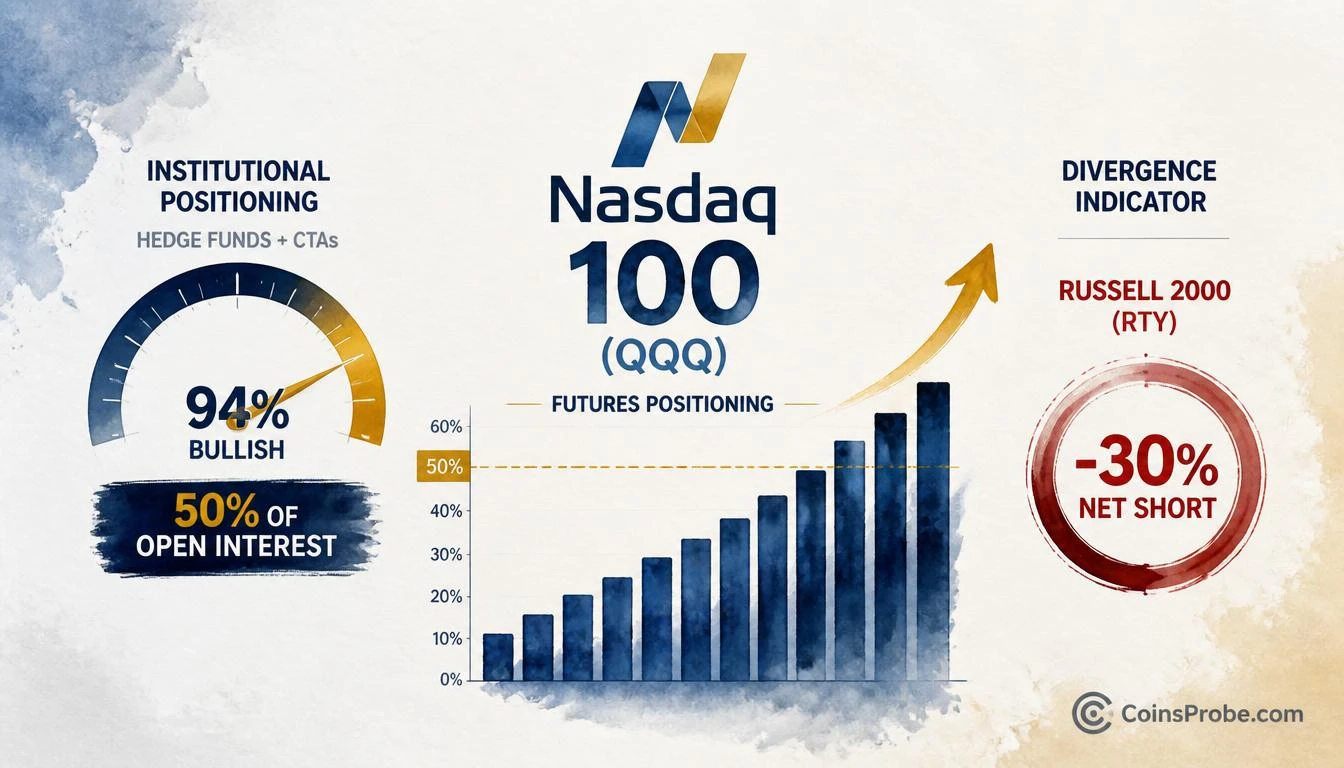

- Nasdaq futures net long positioning hits ~50% of open interest — highest since 2017, per @KobeissiLetter
- Data covers hedge funds, CTAs, and institutional Nasdaq futures traders — not retail sentiment
- Russell 2000 simultaneously at ~-30% net short — widest Nasdaq/Russell divergence in dataset history (2014–2026)
- Extreme crowded longs at this threshold have historically preceded either breakout acceleration or sharp positioning unwinds
Institutional investors are more bullish on tech than at almost any point in the past decade. Long speculative positioning in Nasdaq 100 futures has surged to nearly 50% of open interest — the highest reading since 2017, according to @KobeissiLetter.
The data covers hedge funds, Commodity Trading Advisors (CTAs), and other institutional participants in the Nasdaq futures market. The net long share approaching 50% of total open interest means the majority of outstanding futures contracts are now positioned for further upside in large-cap tech.
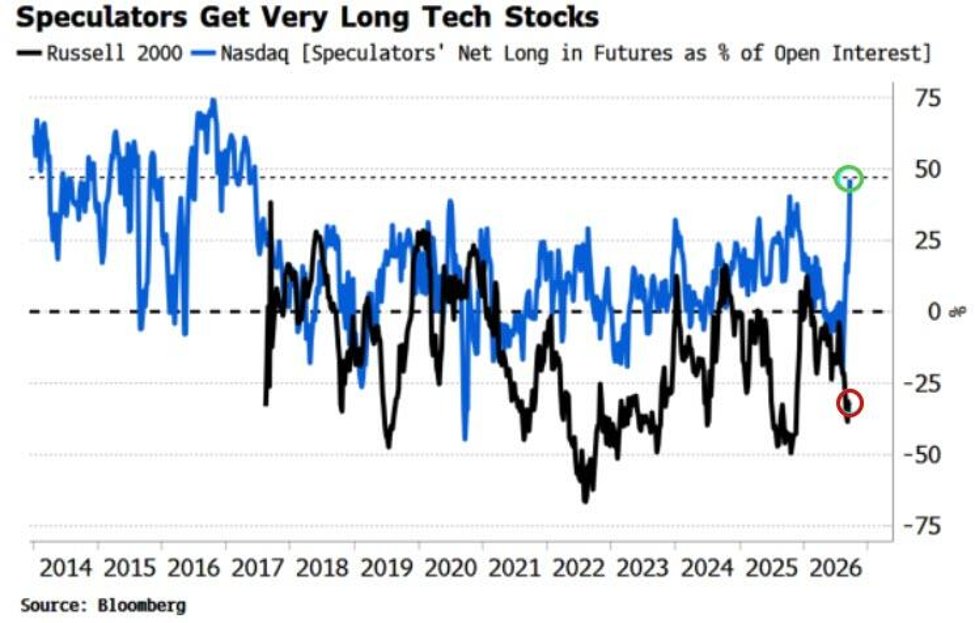
The chart tells a sharper story than the headline number alone. While Nasdaq positioning has reached its upper dashed threshold — historically an extreme bullish zone — Russell 2000 speculators are simultaneously sitting at approximately -30% net short, the widest divergence between the two indices in the entire 2014–2026 dataset. Money has concentrated in large-cap tech while small-caps remain deeply unloved.
Crowded positioning at this level is a double-edged signal. Extreme net long readings historically precede either a sustained breakout — or a sharp positioning unwind as latecomers are squeezed out. At 50% of open interest, there is limited room for additional institutional buyers to amplify the move; the marginal buyer is already in. The Russell 2000’s deep short positioning, by contrast, creates asymmetric short-squeeze potential if sentiment rotates toward small-caps.
This is the same institutional positioning dynamic flagged when institutional USD bulls slashed $15B in bets to their lowest level since March — capital flowing out of one consensus trade and into another. The Nasdaq long is now that consensus trade. Watch for positioning normalization as the primary near-term risk, particularly if macro data forces a reassessment of the rate outlook from the Federal Reserve.
For context on where broader risk appetite sits alongside this tech concentration, see OTHERS breaking monthly resistance with a $500B–$650B range now in play — a parallel signal that speculative appetite has extended well beyond equities.
Frequently Asked Questions
What does 50% of open interest in net long Nasdaq futures actually mean?
Why is the Russell 2000 being -30% net short significant alongside the Nasdaq data?
Does extreme bullish positioning mean a Nasdaq correction is imminent?
Source: Kobeissiletter · Published by CoinsProbe Markets Desk
The opinions and market insights shared on CoinsProbe represent the views of individual authors based on prevailing market conditions at the time of publication. Cryptocurrency investments carry significant risk and volatility. Readers are encouraged to conduct their own research and seek professional financial advice before making investment decisions. CoinsProbe and its contributors do not accept responsibility for financial losses or decisions made based on published content.
CoinsProbe may publish sponsored articles, affiliate links, or promotional collaborations. All sponsored material is clearly labeled to maintain transparency with our audience. Our editorial decisions remain fully independent, and advertising partnerships do not influence reviews, rankings, or published opinions.
Since 2023, CoinsProbe has delivered reliable insights on cryptocurrency, blockchain, and digital assets. Our content is created by experienced researchers and analysts who follow strict editorial standards focused on accuracy, transparency, and credibility. Every article is carefully reviewed and verified using trusted sources and current market data. We provide unbiased analysis and timely updates covering everything from emerging crypto projects to major industry developments.