

- Zcash drops 16% from its recent peak, triggering a forced liquidation event across leveraged long positions
- $28.37 million in long liquidations confirmed by Whale Alert on September 11, 2026
- Forced market sells from liquidated longs mechanically amplified the initial 16% price decline
- Key metric to watch: ZEC open interest on Coinglass — compression signals leverage cleared, elevation signals continued risk
BREAKING
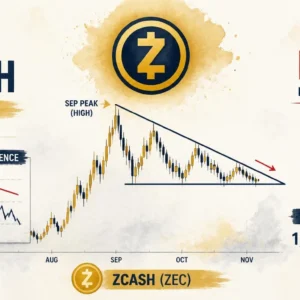
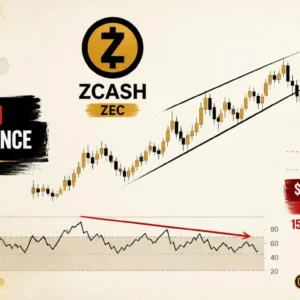
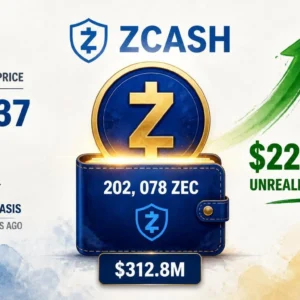
A sharp 16% reversal from its recent peak has turned Zcash’s leveraged market into a liquidation event — with $28.37 million in long positions forcibly closed as price moved against overleveraged traders, according to Whale Alert.
The flush is not a random data point. It reveals the mechanical structure beneath ZEC’s price action: a crowded long-side derivatives position built during the recent rally, now being unwound at forced prices.
The Liquidation Cascade — What $28.37M in Longs Wiped Actually Means
When price fell 16% from the local peak, it crossed the liquidation thresholds of long positions that had been opened with leverage during ZEC’s prior run-up. Those positions were not voluntarily closed — they were forcibly liquidated by exchanges when margin requirements could no longer be met.
| Metric | Value |
|---|---|
| Price Drop From Peak | 16% |
| Long Liquidations Triggered | $28.37 million |
| Dominant Side Liquidated | Long (bullish bets) |
| Signal Type | Leveraged long flush |
Source: Whale Alert — September 11, 2026
Why Long Liquidations Amplify the Initial Drop
Forced liquidations do not wait for a better price. Exchanges automatically sell the collateral at market — which adds additional sell pressure on top of the initial decline. This is the mechanics of a liquidation cascade: price falls → longs get liquidated → forced market sells push price lower → more longs hit their thresholds → repeat. The $28.37 million figure represents the scale of that amplification in ZEC’s case.
Is This a Structural Breakdown or a Leverage Flush?
The critical distinction here is between a fundamental deterioration and a derivatives market correction. A 16% drop that triggers $28.37 million in long liquidations is consistent with a leverage flush — where the asset itself has not changed its underlying network parameters, but the derivatives market built an unsustainable bullish structure above spot demand.
Leverage flushes can mark local bottoms when the over-leveraged positions have been cleared — removing the overhang of potential forced selling. They can also precede deeper corrections when they reflect genuine demand destruction rather than pure positioning excess. The liquidation data alone does not distinguish between these two outcomes. What matters next is whether spot buying emerges at current levels or whether price continues lower without the mechanical support of forced-sell pressure. This dynamic is directly comparable to liquidation events seen in broader crypto markets — as covered in Why Is Bitcoin Falling Today? Oil Prices, Inflation, ETF Outflows, and Liquidations Hit Crypto.
The metric to monitor: open interest on ZEC perpetual swaps. If OI compresses significantly following the liquidation event, it signals the crowded positioning has been cleared. If OI remains elevated, further liquidation risk persists on any continued move lower.
Zcash’s 16% decline and the resulting $28.37 million long liquidation event are mechanically linked — the drop triggered the flush, and the flush amplified the drop. Whether this resets ZEC’s derivatives market into a healthier structure or marks the beginning of a deeper correction depends on one data point: open interest normalization. Track ZEC perpetual swap OI on Coinglass in real time to determine which scenario is unfolding.
Frequently Asked Questions
Why did Zcash drop 16% from its recent peak?
How much was liquidated in Zcash’s drop?
What is a liquidation cascade and does it apply to Zcash here?
Is Zcash’s drop a buying opportunity or a sign of further downside?
Source: Whale Alert · Published by CoinsProbe Markets Desk
The opinions and market insights shared on CoinsProbe represent the views of individual authors based on prevailing market conditions at the time of publication. Cryptocurrency investments carry significant risk and volatility. Readers are encouraged to conduct their own research and seek professional financial advice before making investment decisions. CoinsProbe and its contributors do not accept responsibility for financial losses or decisions made based on published content.
CoinsProbe may publish sponsored articles, affiliate links, or promotional collaborations. All sponsored material is clearly labeled to maintain transparency with our audience. Our editorial decisions remain fully independent, and advertising partnerships do not influence reviews, rankings, or published opinions.
Since 2023, CoinsProbe has delivered reliable insights on cryptocurrency, blockchain, and digital assets. Our content is created by experienced researchers and analysts who follow strict editorial standards focused on accuracy, transparency, and credibility. Every article is carefully reviewed and verified using trusted sources and current market data. We provide unbiased analysis and timely updates covering everything from emerging crypto projects to major industry developments.