
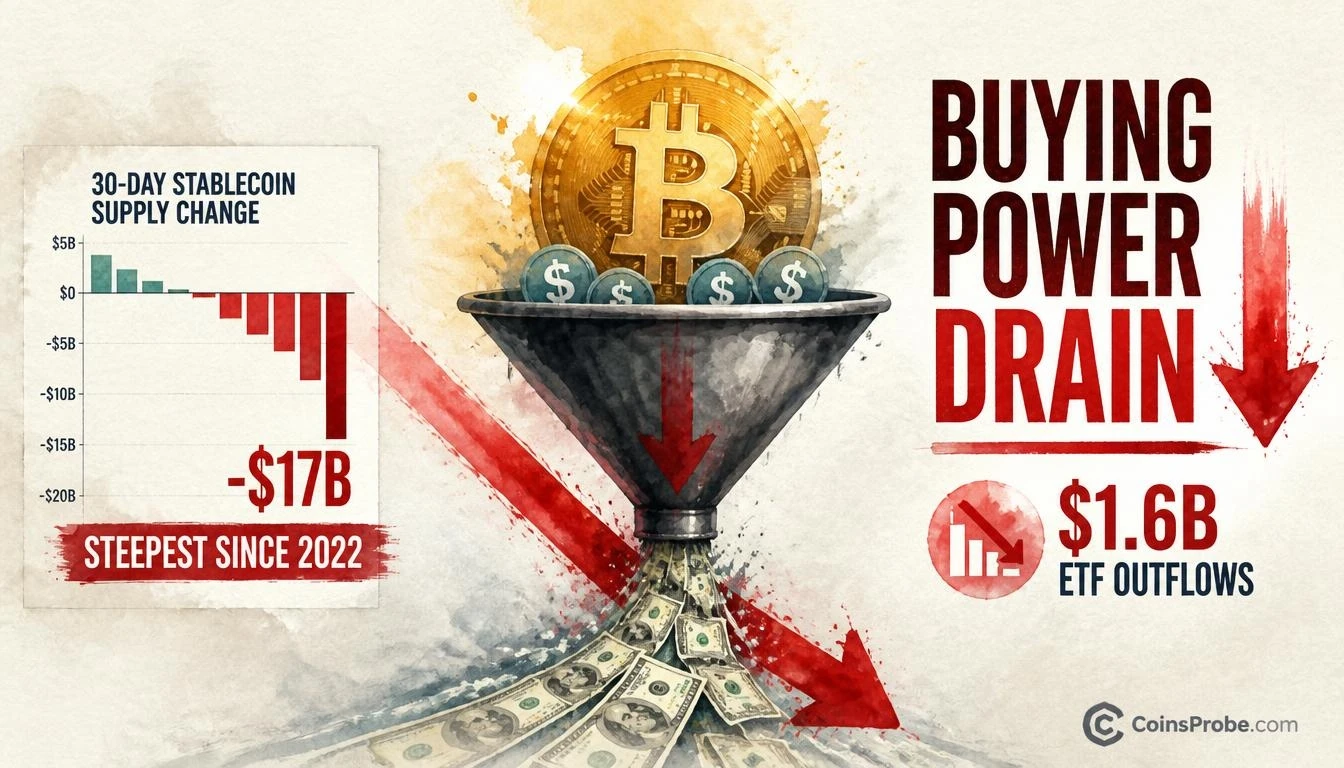

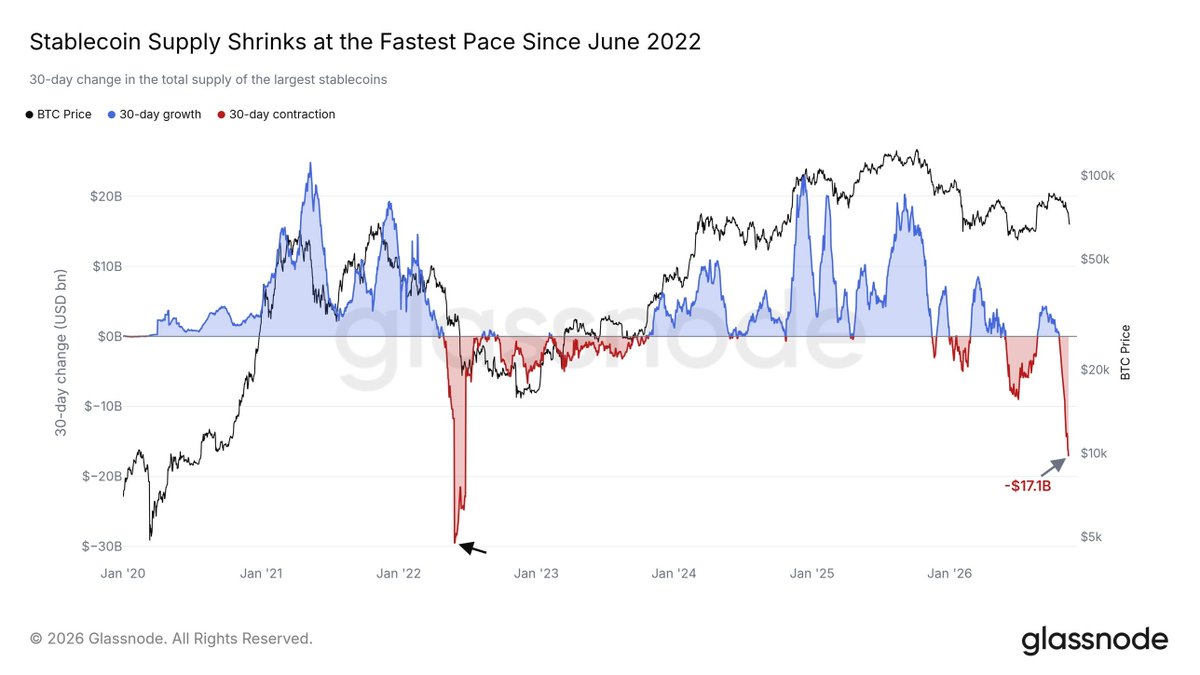
- Stablecoin supply fell ~$17B in 30 days — the steepest monthly contraction since June 2022 per Glassnode
- Tether market cap alone dropped ~$6.6B over 60 days, confirming broad-based redemption activity across major stablecoins
- U.S. spot Bitcoin ETFs saw ~$1.6B in net outflows over 20 sessions, compounding the stablecoin liquidity drain simultaneously
- Glassnode: "For a bull market to happen, capital needs to enter, not leave the ecosystem"
Stablecoin supply has contracted sharply over the past 30 days — and the scale of the drawdown is sending a direct warning about crypto’s near-term liquidity conditions. Glassnode, one of the most closely tracked on-chain data platforms in the industry, reports that stablecoin supply fell by approximately $17B over the past month, the steepest single-month contraction since the 2022 bear market. The implication is structural: when stablecoin supply shrinks, the immediately deployable dollar liquidity that funds crypto purchases shrinks with it.
Glassnode’s framing of the data is unambiguous. Per their published note, as holders convert stablecoins back into fiat rather than rotating into Bitcoin or other cryptoassets, they drain buying power from the ecosystem. The platform states directly: “For a bull market to happen, capital needs to enter, not leave the ecosystem.” That is not a hedged observation — it is a declarative conclusion about the precondition for a sustained rally.
What the $17B Contraction Actually Means
The stablecoin supply figure Glassnode cites — $17B in 30-day outflows — represents the largest single-month contraction since Terra’s collapse in June 2022 triggered mass-scale redemptions across the stablecoin market. For context, the June 2022 event was catastrophic: Terra/LUNA imploded, UST depegged, and roughly $40B in market cap was erased within days, taking significant stablecoin liquidity with it. That this current drawdown approaches a comparable rate of contraction — without an equivalent black-swan event — makes it structurally notable.
Tether’s market capitalization alone reportedly declined approximately $6.6B over a 60-day window, confirming the contraction is not isolated to smaller or algorithmic stablecoins. This is broad-based redemption activity. Research tracking the data puts the 30-day figure at approximately $14.2B by some measurements, with the $17B figure representing the outer bound of reported estimates. Regardless of which figure is applied, the directional conclusion is identical: stablecoin supply has fallen to below roughly $280B–$291B, leaving the ecosystem with materially less dry-powder capital than it held a month ago.
The mechanism matters here. Stablecoins function as crypto’s internal dollar system — they are the primary vehicle through which institutional and retail participants hold dollars while remaining positioned to rotate into risk assets. When holders redeem stables for actual fiat, those dollars exit the crypto ecosystem entirely. They do not sit in a wallet waiting to re-enter. This is categorically different from, say, Bitcoin moving from exchange to cold storage, where the asset remains within the system. A stablecoin redemption is an exit. That is why Glassnode characterizes the contraction as a drain on buying power rather than a neutral capital reallocation. This dynamic connects directly to the broader stablecoin liquidity concerns that have been building for months.
The Demand-Side Context: ETF Outflows Compound the Signal
The stablecoin contraction does not exist in isolation. It is occurring alongside measurable deterioration in institutional demand through the spot Bitcoin ETF channel. U.S. spot Bitcoin ETFs recorded approximately $1.6B in net outflows across 20 trading sessions, including six consecutive days of withdrawals. That is not a rotation — it is sustained institutional selling pressure hitting the market simultaneously with the stablecoin liquidity drain.
Together, these two data points describe the same underlying condition from two different angles: capital is leaving the crypto ecosystem, not entering it. The ETF outflows represent institutional exit. The stablecoin redemptions represent retail and broader market exit. When both are moving in the same direction at the same time, the combined signal is harder to dismiss as noise.
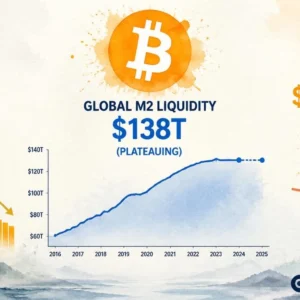
This also contextualizes the broader macro picture. Global M2 growth has stalled at $138T, removing the tailwind that liquidity expansion typically provides to risk assets including Bitcoin. A shrinking stablecoin base in a stalling global liquidity environment is a compounding headwind, not an isolated one.
What It Is — And What It Isn’t
Stablecoin supply contraction is a liquidity indicator. It measures the available stock of immediately deployable capital within the crypto ecosystem. It is not a price prediction, and it does not confirm that every redeemed dollar has permanently left crypto markets. Some portion of redemptions may reflect seasonal portfolio rebalancing, tax-related cash-raising, or risk management ahead of macro events — flows that could reverse.
What the data does confirm with certainty: marginal buying power has declined. The pool of capital available to absorb selling pressure in BTC and broader crypto markets is smaller today than it was 30 days ago. When demand is already weak — as the ETF outflow data suggests — a simultaneous reduction in available buying liquidity removes one of the structural supports that has historically cushioned crypto drawdowns. The collapse in Bitcoin demand metrics documented separately reinforces the same conclusion from the on-chain side.
The metric to watch is directional recovery in stablecoin supply. A sustained reversal — stablecoin market cap expanding month-over-month — would signal that capital is re-entering the ecosystem and that the liquidity foundation for a renewed rally is rebuilding. Until that inflection appears in the data, the structural condition Glassnode is describing remains in force: capital is exiting, not entering, and bull markets require the opposite.
Watch the 30-day stablecoin supply trend as the definitive real-time indicator of whether crypto’s liquidity floor is stabilizing or continuing to erode.
Frequently Asked Questions
Why does a drop in stablecoin supply matter for Bitcoin’s price?
Is the $17B stablecoin drop the same as $17B leaving crypto permanently?
What would signal a recovery in crypto liquidity conditions?
How does the current stablecoin contraction compare to the 2022 bear market?
Source: Glassnode · Published by CoinsProbe Markets Desk
The opinions and market insights shared on CoinsProbe represent the views of individual authors based on prevailing market conditions at the time of publication. Cryptocurrency investments carry significant risk and volatility. Readers are encouraged to conduct their own research and seek professional financial advice before making investment decisions. CoinsProbe and its contributors do not accept responsibility for financial losses or decisions made based on published content.
CoinsProbe may publish sponsored articles, affiliate links, or promotional collaborations. All sponsored material is clearly labeled to maintain transparency with our audience. Our editorial decisions remain fully independent, and advertising partnerships do not influence reviews, rankings, or published opinions.
Since 2023, CoinsProbe has delivered reliable insights on cryptocurrency, blockchain, and digital assets. Our content is created by experienced researchers and analysts who follow strict editorial standards focused on accuracy, transparency, and credibility. Every article is carefully reviewed and verified using trusted sources and current market data. We provide unbiased analysis and timely updates covering everything from emerging crypto projects to major industry developments.