

- Bitcoin trades at $68,753 — down 6.41% in 24 hours — as combined spot and futures demand collapses to -362,000 BTC per CryptoQuant
- Miner-to-exchange flows spiked 16-fold to 2,077 BTC on Nov 10, with 97% originating from Antpool — potential selling pressure flagged
- U.S. spot Bitcoin ETFs posted ~$300M in net outflows on Nov 11; short-term holders sit underwater at a $75,600 average cost basis
- CryptoQuant analyst XWIN: "A lasting rebound requires fresh buyers, not just fewer sellers"
Bitcoin is trading at $68,753 — down 6.41% in the past 24 hours — as a brief rebound attempt collapses under the weight of two simultaneous structural deteriorations: a deepening demand deficit across both spot and futures markets, and a sudden 16-fold surge in miner-to-exchange flows. This is not a routine pullback driven by derivatives mechanics. The on-chain data, published November 12 by CryptoQuant analyst XWIN (@xwinfinance), documents a specific structural breakdown with measurable thresholds.
XWIN’s conclusion is unambiguous: “Leverage is being unwound, but spot demand has not recovered sustainably.” That single sentence encapsulates the core problem — sellers are exiting leveraged positions, which typically reduces downside pressure, but the buyers needed to absorb that supply and push price higher simply have not shown up in meaningful volume. The CryptoQuant Quicktake report, published November 12, 2026, identifies four specific metrics traders must watch before concluding a durable floor has formed.
Signal 1 — Total Bitcoin Demand Collapses to -362,000 BTC
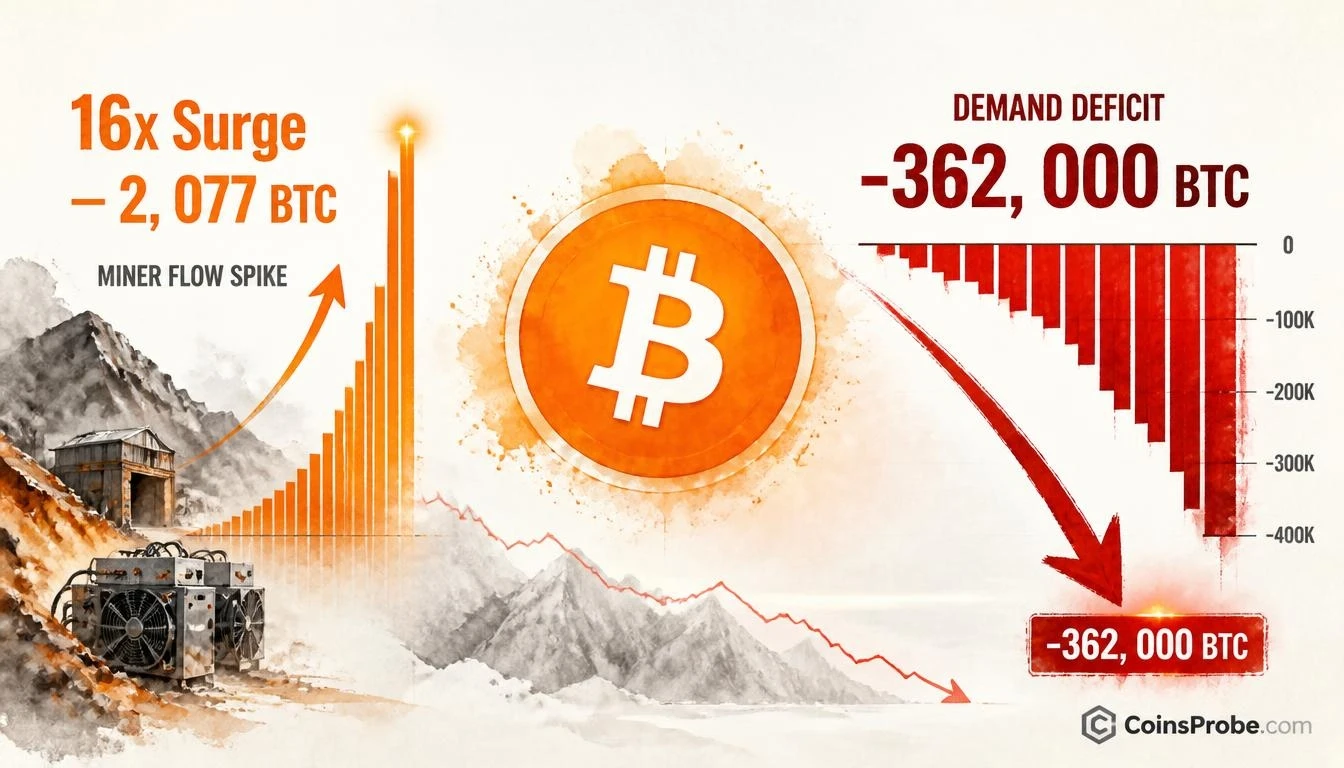
The first chart — Bitcoin: Spot and Perpetual Futures Demand Growth (30-day rolling sum) — is the most structurally significant data point in XWIN’s report. Combined demand across both markets now stands at -362,000 BTC: spot demand at -280,000 BTC and futures demand at -82,000 BTC.
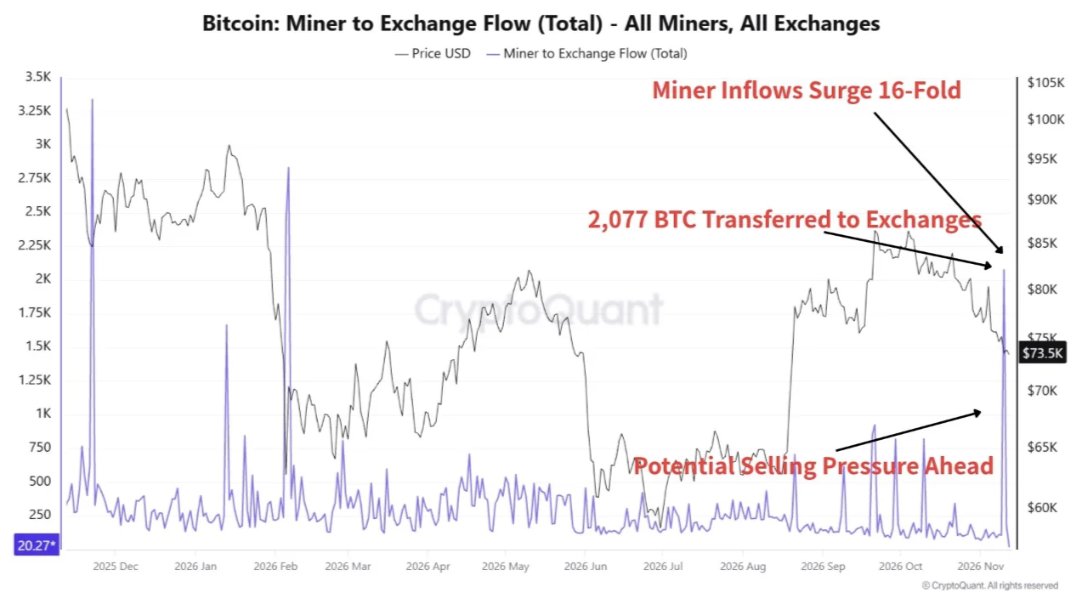
What makes this reading particularly important is the sequence XWIN documents. An earlier data point showed spot demand improving even as futures demand deteriorated — a divergence that typically signals institutional buyers stepping in while leveraged traders exit. That improvement was real. But it did not hold. The latest estimate confirms spot demand has reverted back into deeply negative territory, eliminating the brief divergence that briefly suggested a demand floor was forming.
The market structure tells the same story. Futures taker CVD remained sell-dominant throughout the period. Spot taker activity was described as closer to neutral — not accumulation. Combined with a $300 million net outflow from U.S. spot Bitcoin ETFs on November 11 (data via XWIN’s CryptoQuant report) and a $14.2 billion drop in stablecoin supply over 30 days per Glassnode, the demand picture is unambiguous: there are fewer buyers entering the market, not just fewer sellers leaving it. Those are categorically different conditions, and conflating them is the most common analytical error at potential inflection points.
Short-term holders — defined as wallets holding BTC for fewer than 155 days — are sitting at an average cost basis of $75,600, per XWIN’s report. With spot price at $68,753 at time of writing, this cohort is underwater by approximately 9.1%. Historically, sustained price action below the short-term holder cost basis amplifies selling pressure as this cohort capitulates, adding supply into an already demand-deficient market. This is the structural backdrop behind Bitcoin’s November 12 slide into the $71,000 range referenced in XWIN’s report. The ongoing ETF outflow dynamic and pressure on short-term holders reinforce each other.
Signal 2 — Miner-to-Exchange Flows Spike 16-Fold to 2,077 BTC
The second chart tracks Bitcoin: Miner to Exchange Flow (Total). On November 10, miner inflows to exchanges surged to 2,077 BTC — approximately 16 times the 30-day daily average of 127 BTC. The chart annotation labels this explicitly: “Miner Inflows Surge 16-Fold” with the accompanying note “Potential Selling Pressure Ahead.”
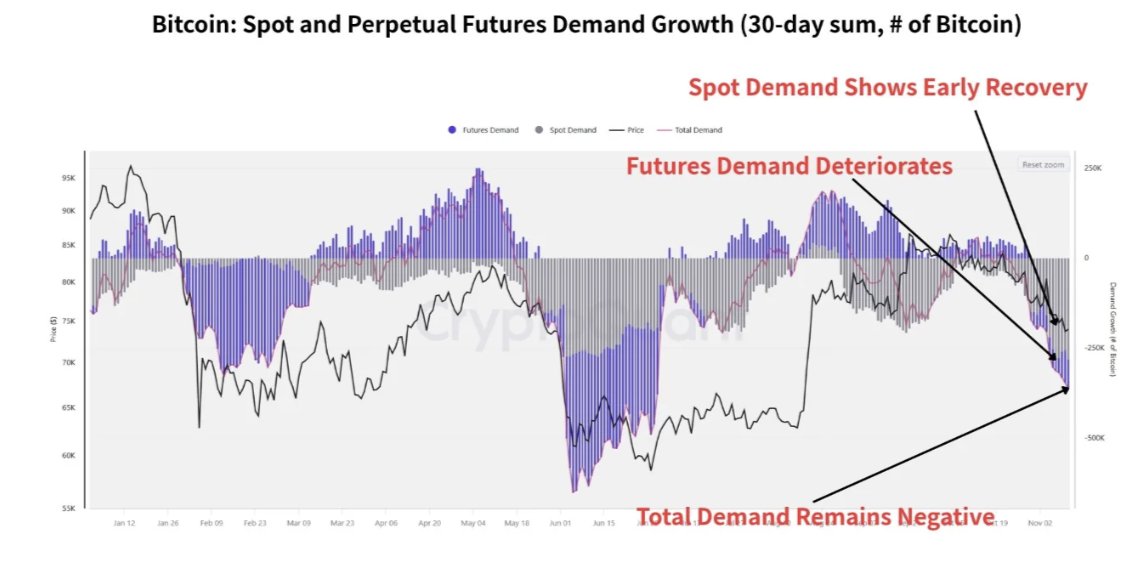
XWIN’s analysis introduces a critical qualification that separates rigorous on-chain reading from surface-level interpretation: exchange deposits from miners are not automatically selling events. Roughly 97% of the November 10 spike originated from Antpool, and exchange transfers can reflect treasury management, internal wallet reorganization, or operational cash flow — not necessarily immediate market sales. This distinction matters. The 2,077 BTC figure is a flow into exchanges, not confirmed sell volume.
However, the context in which this spike occurs changes its significance. XWIN flags that higher mining difficulty combined with lower BTC prices may be squeezing miner margins. When miners face compressed margins, the probability that exchange transfers convert into actual sales increases — not because transfers prove selling, but because the economic incentive to sell is structurally elevated. XWIN explicitly frames the watch condition: monitor whether miner transfers turn into actual sales. That distinction between transfer and sale is what determines whether this 16-fold spike represents a warning signal or operational noise. The broader deleveraging context across exchanges provides additional backdrop for interpreting these flows.
Four Metrics XWIN Says Must Confirm Before a Lasting Rebound
XWIN’s conclusion section in the CryptoQuant report lists four specific metrics that must shift before a sustainable rebound can be called. These are not generic market conditions — they are specific, trackable data points:
| Metric | Current Condition | Required for Rebound |
|---|---|---|
| Demand Growth (30-day) | -362,000 BTC combined | Must turn sustainably positive |
| Coinbase Premium | Not specified (watch condition) | Must recover — signals U.S. spot buying |
| ETF Flows | ~$300M net outflow Nov 11 | Must reverse to net inflow trend |
| Miner Transfers | 2,077 BTC spike (Nov 10) | Must not convert into confirmed sales |
Source: XWIN / CryptoQuant Quicktake, November 12, 2026
The final sentence of XWIN’s report is the most precise summary of current market structure: “A lasting rebound requires fresh buyers, not just fewer sellers.” This is the analytical distinction that matters most. Leverage unwinding reduces selling pressure but does not create demand. Spot demand at -280,000 BTC means the market is structurally short on buyers — and until that number reverses, any price recovery remains a relief rally rather than a trend change. The large-holder concentration data provides further context on who is — and is not — accumulating at current levels.
The macro backdrop compounds the structural weakness. XWIN’s report cites hot U.S. inflation data as a contributing factor to the November 12 decline — a macro headwind that reduces the probability of near-term Federal Reserve rate cuts and directly weighs on risk asset demand. Ethereum slipped toward $2,000 in the same session, confirming this was not an idiosyncratic Bitcoin event.
The combined picture — deepening demand deficit, miner margin pressure, ETF outflows, stablecoin supply contraction, and short-term holders underwater — forms a structurally coherent bearish case. XWIN does not state a price target or invalidation level. The report’s framing is explicitly conditional: when the four listed metrics shift, the thesis changes. Until then, the data supports continued caution.
Watch the 30-day spot demand figure — a move from -280,000 BTC toward zero would be the first measurable sign that fresh buyers are entering the market. That is the number that determines whether the next move is a rebound or a continuation.
Source: x.comFrequently Asked Questions
What does -362,000 BTC in combined demand mean for Bitcoin’s price?
Does the 2,077 BTC miner-to-exchange spike mean miners are selling Bitcoin?
What specific conditions must be met for Bitcoin’s rebound to be considered sustainable?
Why are short-term Bitcoin holders significant at the current price of $68,753?
Source: CryptoQuant · Published by CoinsProbe Markets Desk
The opinions and market insights shared on CoinsProbe represent the views of individual authors based on prevailing market conditions at the time of publication. Cryptocurrency investments carry significant risk and volatility. Readers are encouraged to conduct their own research and seek professional financial advice before making investment decisions. CoinsProbe and its contributors do not accept responsibility for financial losses or decisions made based on published content.
CoinsProbe may publish sponsored articles, affiliate links, or promotional collaborations. All sponsored material is clearly labeled to maintain transparency with our audience. Our editorial decisions remain fully independent, and advertising partnerships do not influence reviews, rankings, or published opinions.
Since 2023, CoinsProbe has delivered reliable insights on cryptocurrency, blockchain, and digital assets. Our content is created by experienced researchers and analysts who follow strict editorial standards focused on accuracy, transparency, and credibility. Every article is carefully reviewed and verified using trusted sources and current market data. We provide unbiased analysis and timely updates covering everything from emerging crypto projects to major industry developments.