
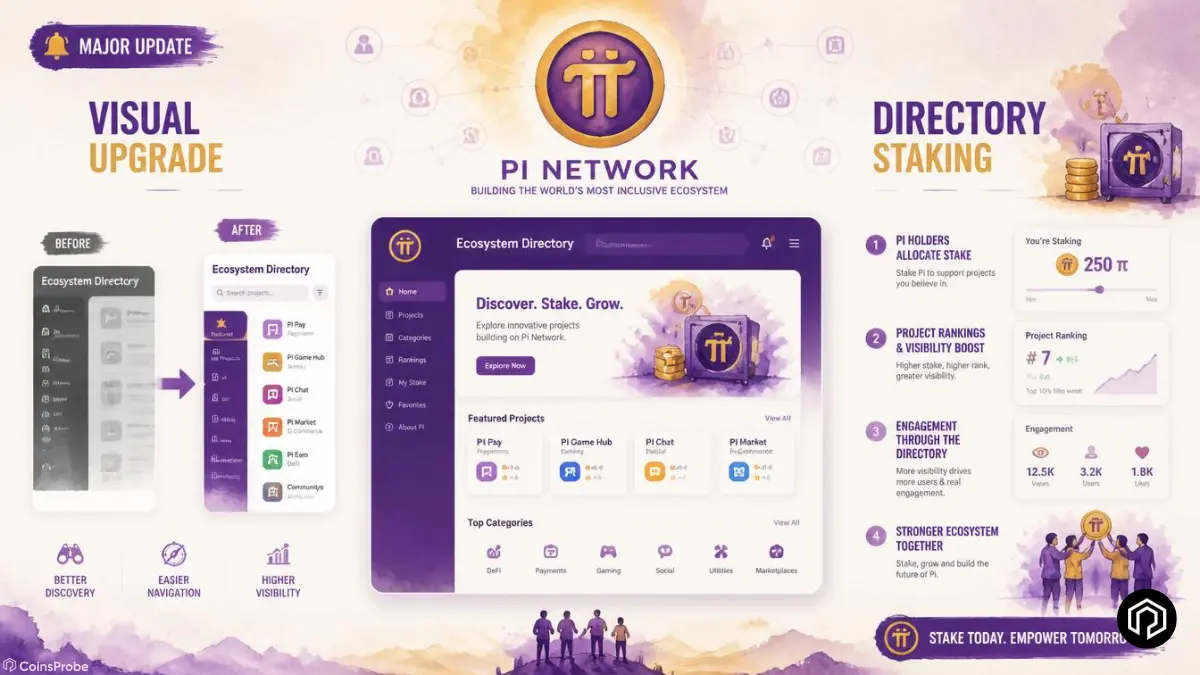

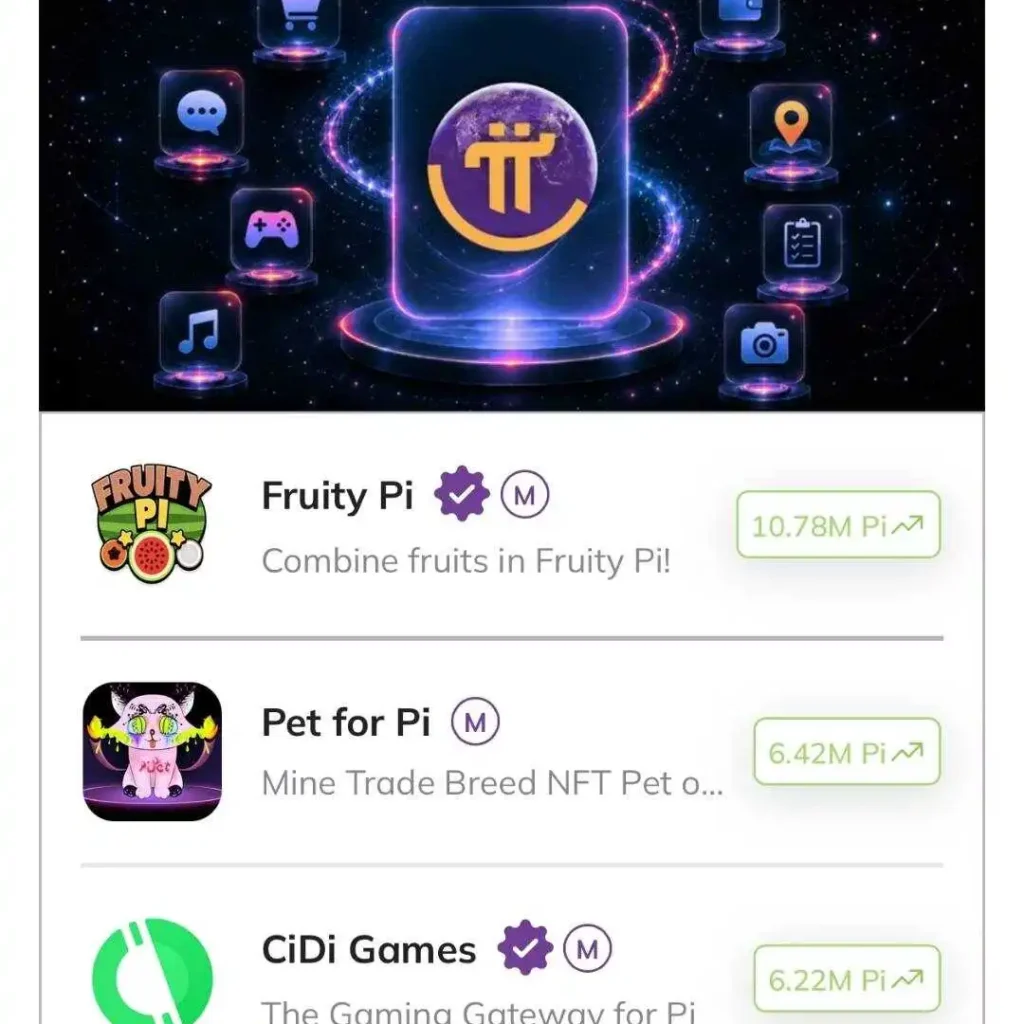
- Pi Network has rolled out a major visual and UX update to its Ecosystem Directory Staking feature — improving design, navigation, and overall usability within the PiApps tab.
- The mechanism lets anyone stake Pi on Mainnet to boost an app's ranking and visibility in the Pi Browser's Ecosystem Interface — with no protocol-level rewards for staking, keeping the network neutral toward any specific app.
- Real-world proof of concept: CiDi Games saw its ranking boosted by 3.19 million staked Pi shortly after its beta launch — contributing to over 1.2 million game plays in under a week.
- The feature provides a lightweight, low-effort discovery mechanism compared to the Pi Ad Network or Pi Launchpad — addressing the core problem of the AI era: building apps has become easy, but getting noticed has not.
Pi Network has shipped a significant visual and user-experience overhaul to one of its most quietly important ecosystem mechanisms: Ecosystem Directory Staking. The update makes it easier for Pioneers, developers, creators, and businesses to support and promote Pi apps and utilities — directly through the PiApps tab in the Pi Browser.
As we covered in our CiDi Games launch article — this exact staking mechanism has already demonstrated real user-acquisition power, helping a single app reach over a million sessions in under a week. Today’s update is a refinement of the interface that powered that result.
What Is Ecosystem Directory Staking?
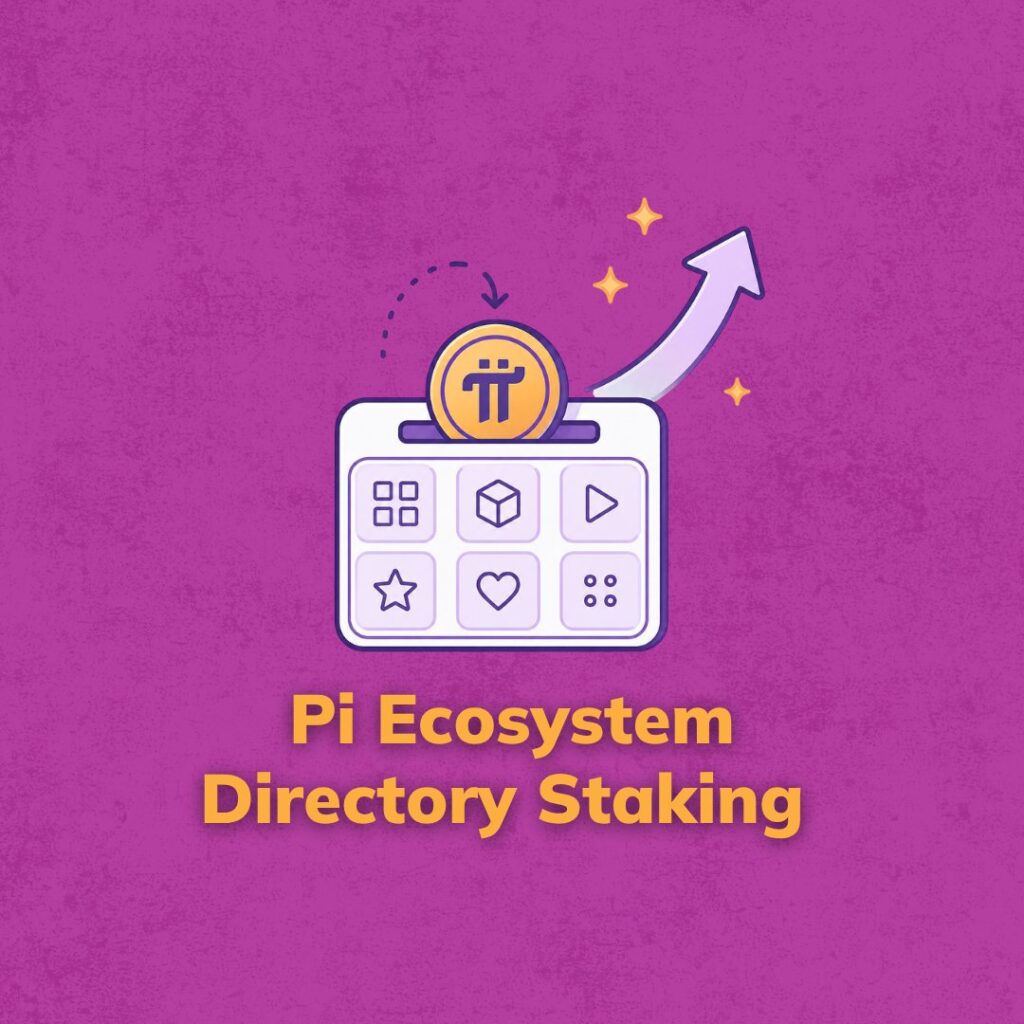
Ecosystem Directory Staking is a decentralised, on-chain mechanism built directly into Pi Mainnet that allows anyone to stake their Pi to boost the ranking and visibility of apps and services within the Pi Browser’s Ecosystem Interface.
The core mechanics are straightforward:
- Higher staking volume → Higher ranking in the app’s relevant category
- Higher ranking → More visibility, translating into more impressions and user traffic for the app
- The mechanism functions as a community signal of genuine interest and support — staking real Pi is a more meaningful signal than a passive like or comment
This feature was originally launched during Pi2Day 2025, and today’s update represents the most substantial visual and usability refresh since its introduction — bringing improved design, smoother navigation, and a better overall experience specifically within the PiApps tab.
How the Staking Mechanism Actually Works
The process is designed to be simple enough for any Pioneer to participate, while remaining genuinely decentralised in how rankings are determined:
Step 1 — Pioneers and businesses stake Pi directly on Mainnet toward a specific app or service listed in the Ecosystem Directory.
Step 2 — The staked Pi increases that app’s ranking within its category in the Ecosystem Directory — making it more visible to other Pioneers browsing the PiApps tab.
Step 3 — Developers and “vibe coders” — as we covered in our Pi App Studio vibe coding article — can actively promote their apps by encouraging community staking or by offering their own additional incentives to attract stakers.
Step 4 — At the end of the staking period, the original staked Pi is returned to the user. This is a critical distinction: staking here is not a donation or a fee — it is a temporary commitment of capital that comes back to the staker once the period concludes.
Important — no protocol-level rewards: Pi Network explicitly does not offer any Pi rewards for staking through this mechanism. The network remains neutral and does not promote or favour any specific app over another. Any additional incentives — in-app rewards, special features, promotional perks — must come directly from the individual app developers themselves, not from the protocol.
This neutrality is an important design choice. It means the Ecosystem Directory’s rankings reflect genuine community staking behaviour rather than the network itself picking winners — preserving the decentralised character of app discovery within Pi’s ecosystem.
The Proof It Works — CiDi Games’ 1.2 Million Plays
The most compelling evidence for why this feature matters comes from a very recent real-world example. As detailed in our CiDi Games launch coverage — the game saw its Ecosystem Directory ranking boosted by 3.19 million staked Pi shortly after its beta launch.
The result of that visibility boost: over 1.2 million game plays in less than one week.
This single case study is the clearest demonstration available of the staking mechanism’s actual user-acquisition power. A new app — without a pre-existing user base — was able to generate visibility proportional to genuine community staking interest, and that visibility converted directly into massive real engagement within days.
For any developer evaluating whether to invest effort into the Ecosystem Directory staking mechanism — CiDi Games is the concrete data point that answers the question: yes, staking-driven ranking genuinely moves real usage.
Why This Update Matters for the Broader Ecosystem
The visual and UX refresh announced today is not a cosmetic change in isolation — it addresses a structural challenge that has been building across the entire crypto and AI app landscape throughout 2026.
Makes discovery easier for 60+ million Pioneers — A cleaner, more navigable PiApps tab interface means Pi’s massive user base can find and engage with apps more efficiently — directly benefiting every app currently competing for attention in the Ecosystem Directory.
A lightweight alternative to heavier promotion tools — Compared to the Pi Ad Network or the Pi Launchpad — both of which involve more significant commitments — Ecosystem Directory Staking offers developers a comparatively low-effort, low-friction way to gain visibility and attention.
Solves the AI-era discovery problem — As we have covered extensively through Pi’s Vibe Coder Campaign — AI tools have made building apps dramatically easier, but they have not solved the harder problem of getting those apps in front of real users. Ecosystem Directory Staking is specifically designed to address that exact gap.
Strengthens economic-stake-based curation — Rather than relying purely on reviews, comments, or algorithmic recommendation — the Ecosystem Directory’s rankings are shaped by genuine economic commitment from the community. Staking real Pi behind an app is a fundamentally stronger signal of conviction than a passive star rating.
How to Access Ecosystem Directory Staking
Participation is straightforward for any Pioneer:
Open the Pi Browser → Navigate to the PiApps tab (the Ecosystem Interface) → Browse apps by category → Stake Pi toward any app you want to support and help discover.
The improved navigation introduced in today’s update should make this entire flow noticeably smoother than the original Pi2Day 2025 version of the feature.
The Bigger Picture — Pi’s Self-Sustaining Ecosystem Strategy
Today’s update is one more piece of a consistent pattern we have been tracking throughout 2026: Pi Network systematically building the infrastructure for a self-sustaining, community-curated app ecosystem rather than one that depends entirely on centralised promotion or top-down curation decisions.
Combined with the Vibe Coder Campaign recruiting AI app builders, the Pi App Studio lowering the technical barrier to bringing apps onto Pi, and the Pi Launchpad providing a fair-access token launch mechanism — Ecosystem Directory Staking completes a key piece of the puzzle: discovery and distribution for apps once they exist.
Every piece of this puzzle reinforces the others. More vibe coders building apps means more apps needing discovery. Better discovery through staking means apps that genuinely resonate with the community get found faster. And faster discovery means a stronger overall ecosystem that attracts even more developers in a continuing cycle.
Bottom Line
Pi Network’s visual update to Ecosystem Directory Staking is a refinement of a mechanism that has already proven its real-world impact — CiDi Games’ jump to 1.2 million plays in under a week is direct evidence that community-driven, stake-based discovery genuinely works within Pi’s ecosystem.
The improved PiApps tab navigation and design should make this proven mechanism even more accessible to Pi’s 60+ million Pioneers — strengthening the decentralised, economically-driven curation model that distinguishes Pi’s approach to app discovery from a purely algorithmic or centrally-curated alternative.
For developers — particularly the wave of vibe coders Pi has been actively recruiting — Ecosystem Directory Staking remains one of the most accessible tools available for converting a finished app into real visibility and real users. This kind of ecosystem-layer progress is happening alongside Pi’s continued infrastructure work — as we covered in our Protocol 25.2 deadline article, the network just completed the eighth of nine upgrade steps toward v26 — and its token launch experiments — as detailed in our Pi Launchpad SLICE testnet article.
Every layer reinforces the others: stronger infrastructure supports more reliable apps, better discovery tools help those apps find real users, and a more functional ecosystem is ultimately the foundation Pioneers are watching closely as they track whether $PI can recover above $1 again.
Frequently Asked Questions (FAQ)
What is Pi Network’s Ecosystem Directory Staking?
A decentralised, on-chain mechanism that lets anyone stake Pi on Mainnet to boost an app’s ranking and visibility within the Pi Browser’s Ecosystem Interface — with staked Pi returned at the end of the staking period.
What changed in Ecosystem Directory Staking update?
A major visual and UX overhaul — improved design, smoother navigation, and a better overall experience within the PiApps tab — the most significant refresh since the feature launched at Pi2Day 2025.
Do stakers earn Pi rewards?
No — there are no protocol-level Pi rewards for staking. The original staked amount is returned at the end of the period. Any additional incentives must come from individual app developers, not the network.
How do I access Ecosystem Directory Staking?
Open the Pi Browser → go to the PiApps tab (Ecosystem Interface) → browse apps by category → stake Pi toward any app you want to support and help others discover.
The opinions and market insights shared on CoinsProbe represent the views of individual authors based on prevailing market conditions at the time of publication. Cryptocurrency investments carry significant risk and volatility. Readers are encouraged to conduct their own research and seek professional financial advice before making investment decisions. CoinsProbe and its contributors do not accept responsibility for financial losses or decisions made based on published content.
CoinsProbe may publish sponsored articles, affiliate links, or promotional collaborations. All sponsored material is clearly labeled to maintain transparency with our audience. Our editorial decisions remain fully independent, and advertising partnerships do not influence reviews, rankings, or published opinions.
Since 2023, CoinsProbe has delivered reliable insights on cryptocurrency, blockchain, and digital assets. Our content is created by experienced researchers and analysts who follow strict editorial standards focused on accuracy, transparency, and credibility. Every article is carefully reviewed and verified using trusted sources and current market data. We provide unbiased analysis and timely updates covering everything from emerging crypto projects to major industry developments.