
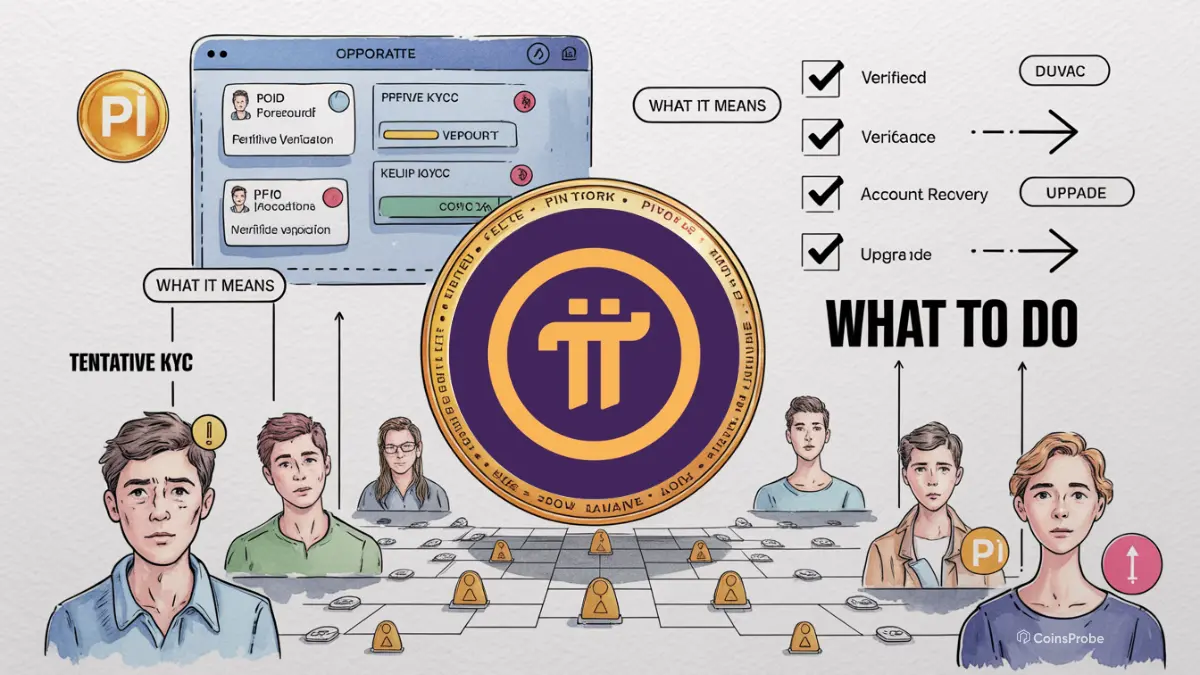

- The Pi Core Team has issued a detailed update addressing Tentative KYC — the intermediate verification status affecting millions of Pioneers who are still waiting for full KYC approval and Mainnet migration.
- Tentative KYC is not a rejection — it signals that an application requires additional verification before final approval to protect the network's core One Person, One Account principle.
- Recent AI upgrades have already reduced the human review queue by 50% — converting millions of Tentative cases to full KYC — with continued improvements underway.
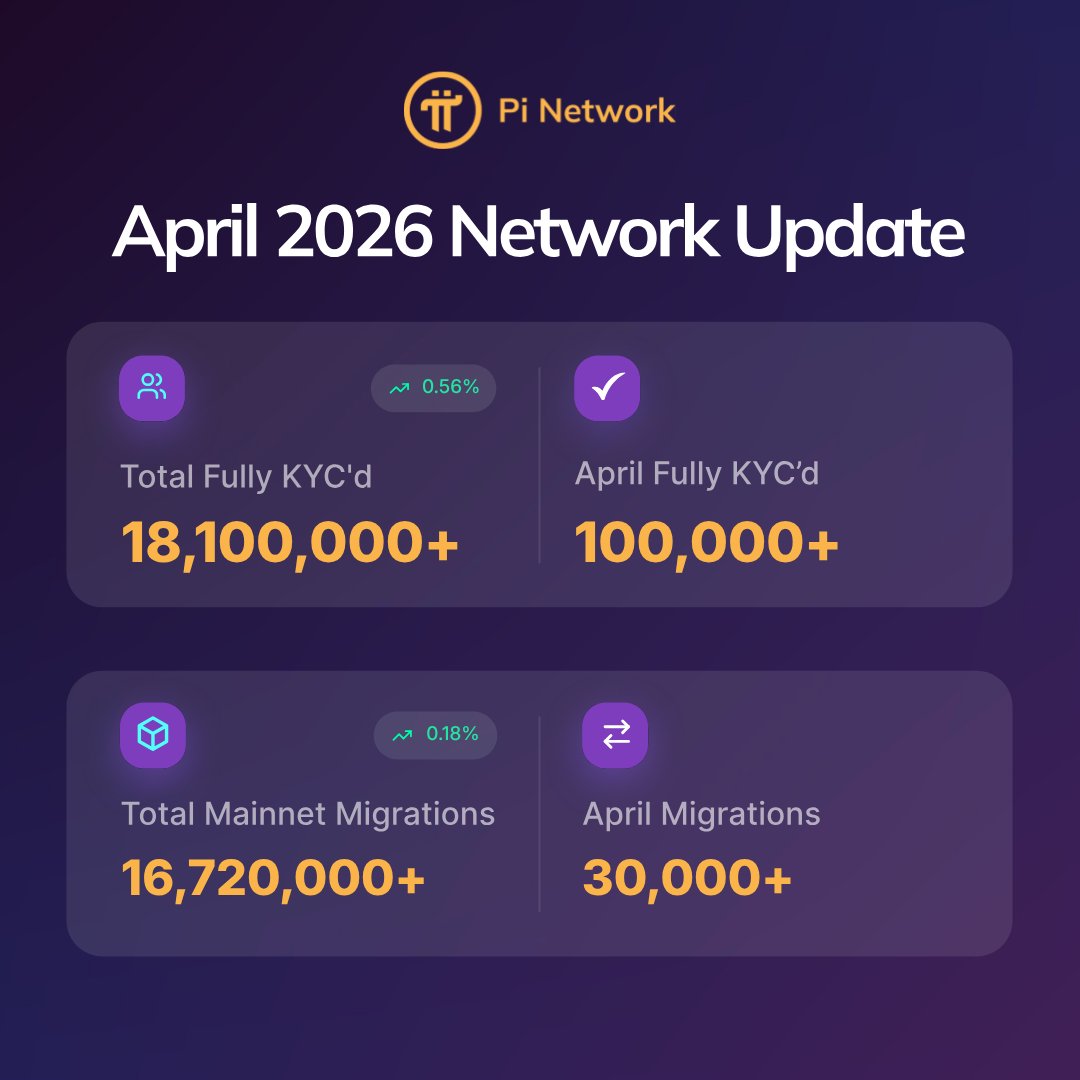
- The update arrives as Pi Network confirms 18.1 million+ total KYC'd Pioneers and 16.7 million+ Mainnet migrations in its April 2026 Network Update.
For millions of Pioneers who have been mining Pi since the early days, the Tentative KYC status has been one of the most frustrating experiences in the ecosystem — a holding pattern with no clear end date that blocks full Mainnet migration and participation. On May 13, 2026, the Pi Core Team addressed this directly — explaining not just what Tentative KYC means, but why the strictness that causes the delay is a deliberate and necessary design choice.
The announcement came alongside confirmation that over 18.1 million Pioneers have now successfully completed KYC and more than 16.7 million have migrated to Mainnet — milestones that make Pi Network the largest identity-verified blockchain community in the world.
Despite this progress, the team devoted significant attention to the Tentative KYC process — acknowledging the frustration directly and explaining the reasoning behind the system’s intentional strictness.
What Tentative KYC Actually Means
The first and most important clarification from the Pi Core Team: Tentative KYC is not a rejection.
It is an intermediate status — a signal that an application has been received and reviewed but requires additional verification steps before final approval can be granted. Pioneers in this status have not been turned away — they are in a secondary review process designed to ensure the network’s most fundamental principle holds: One Person, One Account.
As we covered in our Nicolas Kokkalis Consensus 2026 session recap, the ability to prove that every account belongs to a real and unique human being is the foundation of Pi’s entire value proposition — both as a community asset and as infrastructure for the AI era. Tentative KYC is the mechanism that enforces that standard at the verification stage.
Why Pi’s KYC Process Is Intentionally Strict
The Pi Core Team was direct on this point: the verification system is deliberately conservative — and that is exactly the point.
If the system approved applications without sufficient checks, three specific problems would follow:
Duplicate accounts on Mainnet — Multiple accounts belonging to the same person would dilute rewards, distort ecosystem metrics, and create an unfair advantage for those gaming the system at the expense of genuine long-term Pioneers.
Distorted rewards and participation — The entire ecosystem’s fairness depends on the assumption that each mining account represents a distinct real person. Without that assumption holding, the reward model breaks down for everyone.
Unreliable identity for applications — As we covered in our Pi for AI strategy article, Pi’s verified human infrastructure is increasingly being positioned as critical for AI-era applications that require authentic human input. Allowing unverified or duplicate accounts to pass KYC would undermine the core value of that infrastructure for any developer or company that wants to build on it.
The strictness of the process ultimately protects the Pioneers who have been honest from the beginning — by ensuring that the network they have invested time in mining actually represents what it claims to represent.
Why This Matters for Pi’s Future
The Pi Core Team connected the Tentative KYC process directly to the real-world utility that Pi is building toward:
Identity-dependent applications — dApps and services that require verified real users — not anonymous wallet addresses — need to be able to trust that Pi’s KYC has held to a meaningful standard. Loose verification undermines that entirely.
Verified payments — Peer-to-peer transactions between confirmed real participants carry a different level of trust than anonymous wallet-to-wallet transfers. Pi’s verified network enables a payment layer that traditional crypto cannot match.
Authentic human input — As Protocol 23 brings smart contracts online — with a May 15 deadline covered in our node operator guide — the programmable ecosystem that activates will be far more valuable if every participant behind it is a confirmed real person.
Recent Improvements — The System Is Getting Faster
The Core Team acknowledged the frustration directly and outlined the specific improvements already made to accelerate processing:
Advanced AI models — Updated machine learning systems combined with enhanced liveness detection and data analysis are processing applications faster and with greater accuracy than earlier versions of the system.
50% reduction in human review queue — The most concrete metric in the update. The queue of cases requiring individual human reviewer attention has been cut in half — meaning the backlog is actively being resolved rather than growing.
Millions of cases converted — Millions of Tentative KYC cases have already been moved to full approval through these improvements — demonstrating that the system is working through the backlog at meaningful scale.
What Tentative Pioneers Should Do Right Now
If you are currently in Tentative KYC status, the Pi Core Team outlined four specific actions:
1. Complete any available liveness checks — Open the Pi app and complete any liveness verification steps that are available to you. These checks are often the trigger that moves an application from Tentative to approved review.
2. Ensure documents and information are accurate — Review what you submitted. Blurry images, inconsistent name spelling, expired documents, or mismatched information are common causes of Tentative status. If you can resubmit with clearer documentation, do so.
3. Continue mining daily — Active mining signals continued genuine participation and can trigger automated reviews of pending Tentative cases. Do not stop mining while waiting.
4. Be patient — Each case is reviewed individually. The system cannot batch-approve edge cases — that is precisely why the human review queue exists. The 50% queue reduction shows progress is happening even if it is not visible day to day.
Community Reaction
The update has received a mixed but broadly understood response from the Pioneer community. Pioneers who understand the long-term vision have welcomed the transparency — recognising that a looser verification system would ultimately harm the ecosystem they have been building for years.
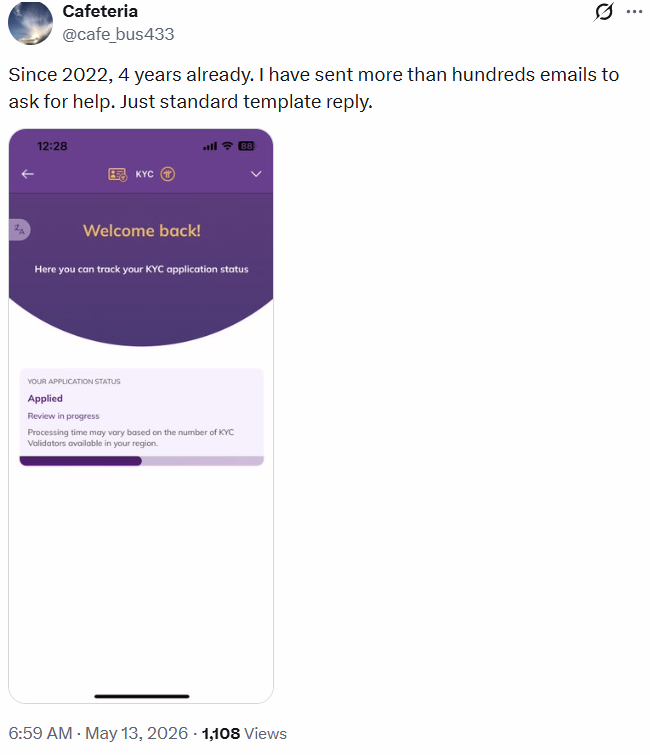
The frustration, however, is real — particularly for Pioneers who have been in Tentative status for months without a clear timeline for resolution. The Core Team’s acknowledgement of that frustration — combined with concrete metrics showing the queue has been halved — is the most substantive response the team has provided on this issue to date.
Bottom Line
Tentative KYC is not a dead end — it is a quality gate that exists to protect the network that millions of genuine Pioneers have spent years building. The strictness that causes the delay is the same strictness that makes Pi’s verified human community valuable. And with the human review queue already reduced by 50% through AI improvements, the backlog is moving — even if not fast enough for those waiting.
If you are in Tentative status — complete your liveness checks, verify your documents are accurate, keep mining, and watch for updates from @PiCoreTeam.
Stay updated with the latest Pi Network developments, KYC updates, and ecosystem news at CoinsProbe.com
Frequently Asked Questions (FAQ)
What does Tentative KYC mean on Pi Network?
Tentative KYC means the verification process is still under review. It is not a rejection but an intermediate status requiring additional checks.
How long does Tentative KYC take?
There is no fixed timeline, but Pi Network says AI upgrades have reduced the review queue significantly.
What should users do if stuck in Tentative KYC?
Complete liveness checks, ensure documents are clear and accurate, continue mining, and monitor official Pi Network updates.
Why is Pi Network’s KYC process strict?
The system is designed to enforce the “One Person, One Account” rule and prevent duplicate or fake accounts from entering Mainnet.
How many users have completed KYC so far?
Pi Network reported over 18.1 million fully KYC-verified users and 16.7 million Mainnet migrations as of April 2026.
The opinions and market insights shared on CoinsProbe represent the views of individual authors based on prevailing market conditions at the time of publication. Cryptocurrency investments carry significant risk and volatility. Readers are encouraged to conduct their own research and seek professional financial advice before making investment decisions. CoinsProbe and its contributors do not accept responsibility for financial losses or decisions made based on published content.
CoinsProbe may publish sponsored articles, affiliate links, or promotional collaborations. All sponsored material is clearly labeled to maintain transparency with our audience. Our editorial decisions remain fully independent, and advertising partnerships do not influence reviews, rankings, or published opinions.
Since 2023, CoinsProbe has delivered reliable insights on cryptocurrency, blockchain, and digital assets. Our content is created by experienced researchers and analysts who follow strict editorial standards focused on accuracy, transparency, and credibility. Every article is carefully reviewed and verified using trusted sources and current market data. We provide unbiased analysis and timely updates covering everything from emerging crypto projects to major industry developments.