
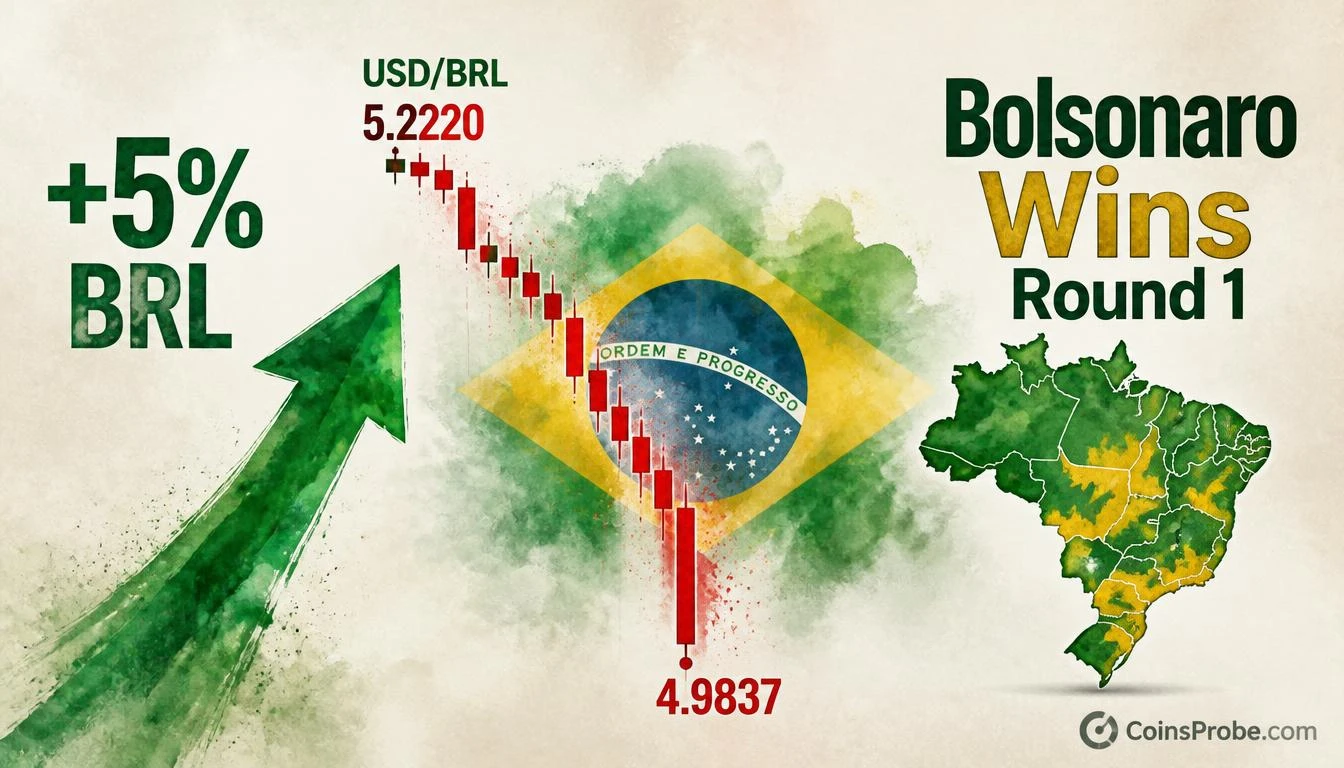

- Brazilian Real rises nearly +5% against the USD in a single session on October 5, 2026
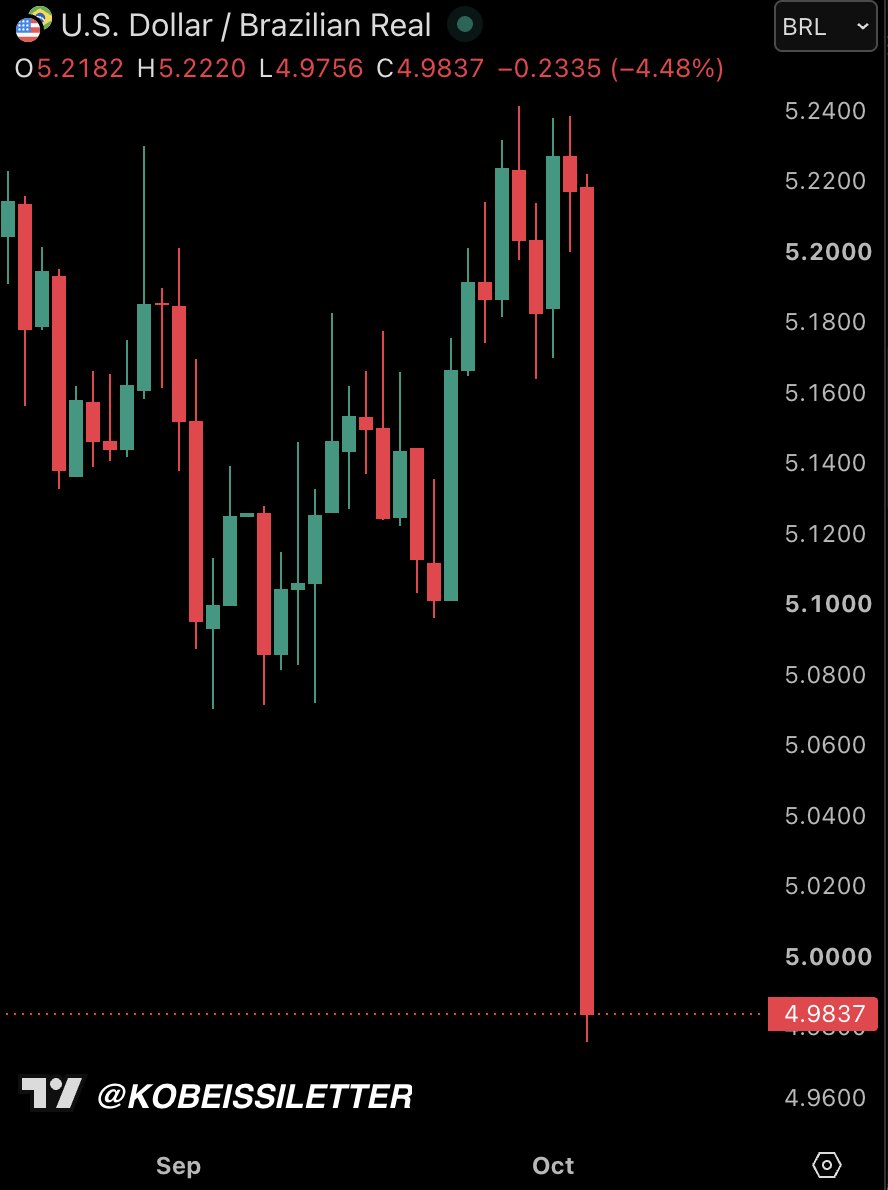
- USD/BRL fell 4.48% — from intraday high of 5.2220 to close at 4.9837 per @KobeissiLetter
- Flavio Bolsonaro defeats President Lula in first round — Lula's first election loss since 1998
- Brazilian equities also rising ahead of expected October second round
The Brazilian Real surged nearly +5% against the U.S. Dollar on October 5, 2026, after Flavio Bolsonaro defeated incumbent President Luiz Inácio Lula da Silva in the first round of Brazil’s presidential election — marking Lula’s first presidential election loss since 1998.
The USD/BRL exchange rate dropped 4.48% in a single session, falling from an intraday high of 5.2220 to a closing price of 4.9837, according to chart data cited by @KobeissiLetter. The move registered on the daily chart as one of the sharpest single-session declines in the pair in recent memory — a near-vertical red candle reflecting a dramatic and rapid repricing of Brazilian political risk.
A first-round victory by Bolsonaro was not the consensus outcome heading into the vote. Markets interpreted the result as a decisive shift away from the Lula administration’s fiscal policies, triggering immediate capital inflows into Brazilian assets. Brazilian equities also rose ahead of what is expected to be a second round in October, per the Kobeissi Letter’s report.
Lula has won every presidential election he contested since 2002 — making this result a historically unprecedented break in Brazilian electoral politics. The market’s reaction reflects both the surprise factor and the perceived policy contrast between the two candidates on fiscal discipline and market-friendly governance.
The scale of the currency move — nearly 5% in a single session — places this among the most significant single-day BRL appreciations in recent cycles. For context in emerging market currency terms, a 4–5% single-day move in a major EM pair signals an event-driven repricing, not a gradual shift in sentiment.
For broader context on macro-driven asset moves reshaping regional markets, see CoinsProbe’s coverage of how institutional capital is repositioning across emerging market structures.
Frequently Asked Questions
What caused the Brazilian Real to surge nearly 5% on October 5, 2026?
Is a second round of the Brazil election still expected in October 2026?
When was Lula’s last presidential election loss before this result?
Source: Kobeissiletter · Published by CoinsProbe Markets Desk
The opinions and market insights shared on CoinsProbe represent the views of individual authors based on prevailing market conditions at the time of publication. Cryptocurrency investments carry significant risk and volatility. Readers are encouraged to conduct their own research and seek professional financial advice before making investment decisions. CoinsProbe and its contributors do not accept responsibility for financial losses or decisions made based on published content.
CoinsProbe may publish sponsored articles, affiliate links, or promotional collaborations. All sponsored material is clearly labeled to maintain transparency with our audience. Our editorial decisions remain fully independent, and advertising partnerships do not influence reviews, rankings, or published opinions.
Since 2023, CoinsProbe has delivered reliable insights on cryptocurrency, blockchain, and digital assets. Our content is created by experienced researchers and analysts who follow strict editorial standards focused on accuracy, transparency, and credibility. Every article is carefully reviewed and verified using trusted sources and current market data. We provide unbiased analysis and timely updates covering everything from emerging crypto projects to major industry developments.