
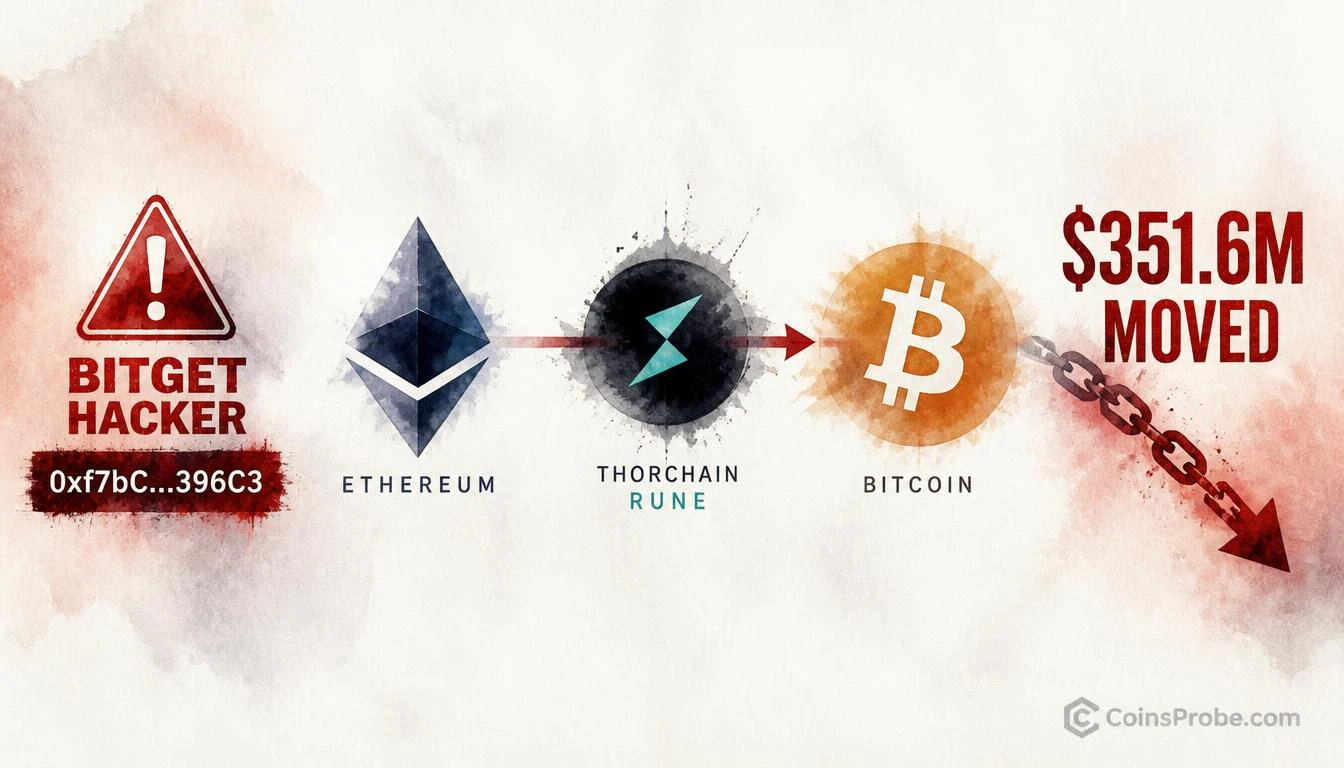

- Bitget hacker wallet 0xf7bC92103F23EF312658CD9b81dc2713f7b396C3 is actively swapping ETH for BTC via THORChain
- Total stolen funds linked to this wallet: $351.6M from the Bitget exploit
- THORChain chosen as conversion route — non-custodial cross-chain protocol with no centralized freeze mechanism
- Activity flagged by Lookonchain on September 28, 2026
BREAKING
Ethereum and Bitcoin markets are under close scrutiny this week as on-chain investigators flag a significant movement from one of crypto’s most closely watched criminal wallets. The broader market has been navigating a period of measured consolidation, with institutional narratives around Ethereum’s long-term positioning continuing to draw attention — making this development particularly pointed in its timing.
On-chain analytics platform Lookonchain flagged on September 28, 2026, that the wallet linked to the Bitget hack — address 0xf7bC92103F23EF312658CD9b81dc2713f7b396C3 — is actively swapping ETH for BTC through the decentralized cross-chain liquidity protocol THORChain. The wallet is associated with the theft of $351.6 million from Bitget. The THORChain activity is separately traceable at thorchain.net.
No detailed historical trade record for this specific wallet is available beyond the original theft event. What is confirmed:
- The wallet received $351.6M in funds traced to the Bitget exploit
- The wallet is now executing ETH-to-BTC swaps via THORChain, a protocol that enables cross-chain transactions without a centralized intermediary
- The swap activity was identified and reported by Lookonchain on September 28, 2026
The choice of THORChain as the conversion route is a deliberate tactical decision. This is widely interpreted by on-chain security analysts as an attempt to convert ETH — a more easily frozen or flagged asset on Ethereum’s traceable ledger — into BTC, which operates on a separate chain with different tracing infrastructure. THORChain’s non-custodial, cross-chain architecture makes it significantly harder for centralized exchanges or issuers to intervene at the contract layer. Analysts commonly view large ETH-to-BTC rotations from exploit wallets as a laundering preparation step — moving stolen value into an asset that is more portable and historically harder to freeze at the protocol level.
The development places renewed pressure on THORChain’s community and governance to address its use in post-exploit fund movements — a debate the protocol has faced before. For Bitget, the visibility of this on-chain activity underscores both the persistent traceability of blockchain forensics and the limitations of recovery once funds reach cross-chain infrastructure. Security teams and blockchain investigators will be monitoring downstream BTC wallets for further movement. The Arkham Intelligence explorer entry for this address remains the primary live tracking resource as the situation develops.
Frequently Asked Questions
Why is the Bitget hacker using THORChain to swap ETH for BTC?
Can the $351.6M stolen from Bitget still be recovered or frozen?
How was this wallet activity detected?
Source: Lookonchain · Published by CoinsProbe Markets Desk
The opinions and market insights shared on CoinsProbe represent the views of individual authors based on prevailing market conditions at the time of publication. Cryptocurrency investments carry significant risk and volatility. Readers are encouraged to conduct their own research and seek professional financial advice before making investment decisions. CoinsProbe and its contributors do not accept responsibility for financial losses or decisions made based on published content.
CoinsProbe may publish sponsored articles, affiliate links, or promotional collaborations. All sponsored material is clearly labeled to maintain transparency with our audience. Our editorial decisions remain fully independent, and advertising partnerships do not influence reviews, rankings, or published opinions.
Since 2023, CoinsProbe has delivered reliable insights on cryptocurrency, blockchain, and digital assets. Our content is created by experienced researchers and analysts who follow strict editorial standards focused on accuracy, transparency, and credibility. Every article is carefully reviewed and verified using trusted sources and current market data. We provide unbiased analysis and timely updates covering everything from emerging crypto projects to major industry developments.