

- Analyst Ali Martinez (@alicharts) identifies current crypto market as the 'Disbelief' phase of the market cycle — October 18, 2026
- Disbelief stage historically precedes the largest sustained price appreciation in a cycle — the last accessible entry before the crowd returns
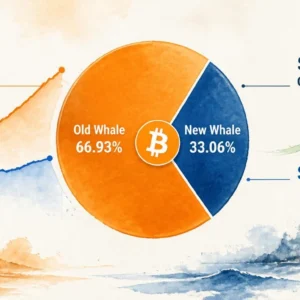
- New Bitcoin whales hold 1/3 of whale realized cap with cost basis near $77,000 — structural accumulation consistent with the disbelief-phase diagnosis
- No price target or invalidation level given — sentiment framework is confirmed or denied by participation metrics, not a single price candle
Bitcoin and the broader crypto market are climbing — and almost nobody believes it will last. That skepticism is not a warning sign. According to market cycle psychology, it is precisely the condition that defines the most historically profitable entry zone in any asset cycle.
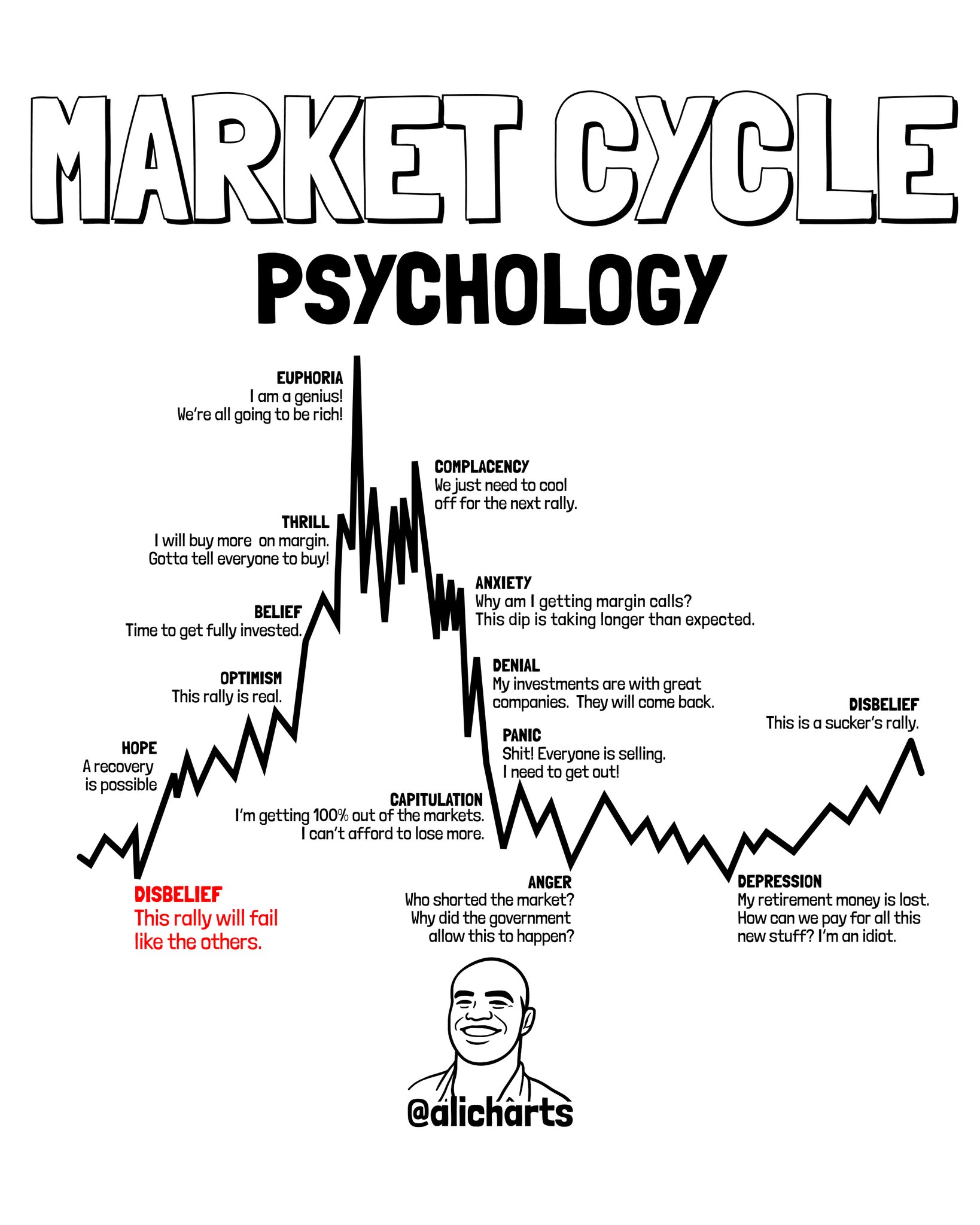
Crypto analyst Ali Martinez (@alicharts) posted a single word on October 18, 2026: “disbelief…” — paired with the classic Market Cycle Psychology infographic. The word he chose was deliberate. It is a named stage in cycle psychology, not a casual sentiment remark. Martinez was placing the current market at a specific coordinate on the boom-bust-recovery arc: the phase where prices have recovered from the bottom, but the crowd remains convinced the rally is temporary.
What ‘Disbelief’ Actually Means in Market Cycle Theory
The Market Cycle Psychology model — widely referenced across institutional and retail analysis — maps investor emotion against price movement across a full cycle. The sequence runs: optimism → excitement → thrill → euphoria (the top) → anxiety → denial → panic → depression (the bottom) → hope → relief → disbelief → optimism (the new cycle begins).
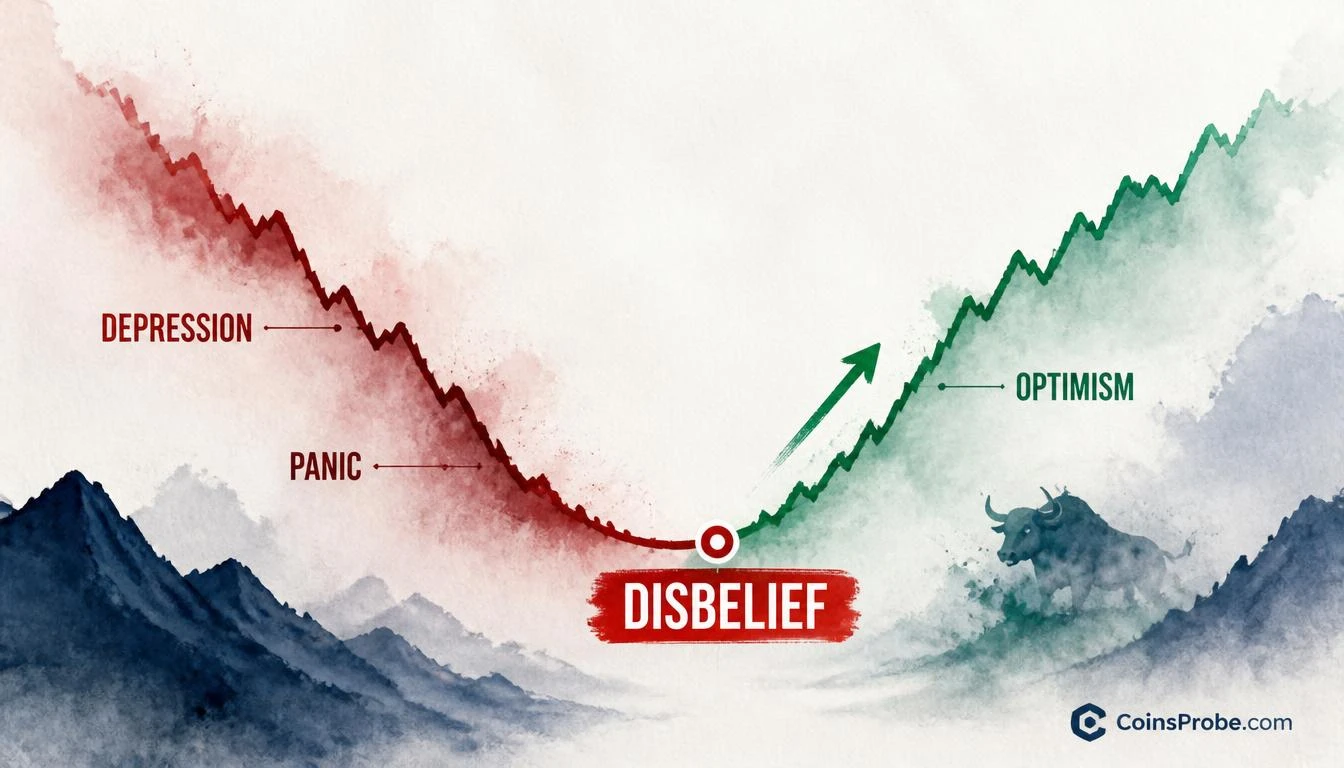
Disbelief sits at a precise and uncomfortable location: prices are rising again, but the majority of investors — burned by the prior drawdown — interpret the move as a trap. The internal narrative of the disbelief phase is: “This rally will fail, just like the others.” Participation is low. Conviction is low. Yet price continues to rise, because the structural bottom is already behind.
The infographic Martinez shared highlights the left-side disbelief label in red — the stage where the recovery is underway but not yet trusted. This is not the disbelief of a dead-cat bounce. It is the disbelief of a genuine new cycle, one that the crowd dismisses because the memory of the prior crash is still fresh.
Why This Phase Matters Structurally
Market cycle psychology is not a price indicator — it is a sentiment framework. What makes Martinez’s observation significant is not a specific price level but the behavioral fingerprint it describes. The disbelief phase has three consistent characteristics that repeat across cycles:
- Retail participation remains depressed. Volume has recovered from panic lows but has not returned to euphoria levels. Social interest metrics are below the prior-cycle peak.
- Macro narratives are still negative. The crowd finds reasons the rally cannot be real — regulatory risk, macroeconomic pressure, unresolved fundamentals. These narratives are not wrong in isolation, but they obscure the directional trend.
- Early accumulators are already positioned. The investors who bought during depression and hope phases are sitting on gains. New money has not yet arrived in size. That incoming wave is what drives the next leg — optimism into excitement.
This dynamic is why the disbelief stage has historically preceded the largest sustained price appreciation in a cycle. It is not the lowest-risk entry — that was depression. It is the last accessible entry before the crowd returns and prices accelerate.
For broader context on the structural altcoin picture, the TOTAL2 Falling Wedge Breakout analysis at CoinsProbe maps out the relief rally structure and the timeline ahead for altcoin market cap recovery.
What the Signal Does Not Say
Martinez’s post carries no price target, no specific asset call, and no technical level. The Market Cycle Psychology model is non-quantitative — it is a qualitative positioning tool. Several things this signal explicitly does not provide:
- It does not specify a timeframe for when disbelief transitions to optimism.
- It does not name a single asset — the framework applies to Bitcoin, altcoins, and the total crypto market equally.
- It does not provide an invalidation level. Market cycle psychology cannot be falsified by a single price candle.
What it does confirm, with high historical consistency, is the sentiment regime: the majority is not yet a buyer. That asymmetry — between price trend and crowd positioning — is the core insight.
Where Individual Assets Stand
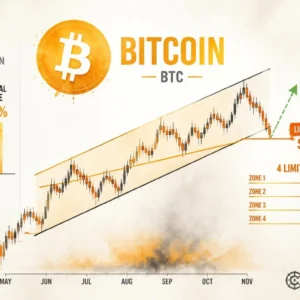
For traders applying the disbelief framework to specific charts, the technical levels being watched across the market currently include Chainlink’s 4H structure — where the $12 level is the critical line and $8.50 is the defined downside target if that level fails. That type of specific technical risk remains live even within a disbelief-phase recovery.
Simultaneously, whale behavior at the Bitcoin level is providing structural support data. Analysis of new Bitcoin whales — who now hold one-third of whale realized cap with a cost basis near $77,000 — suggests informed capital entered during the precise depression-to-hope phase that precedes disbelief. That positioning is consistent with where Martinez has placed the current market on the cycle.
Bullish and Bearish Readings of the Framework
Bullish Scenario
If the disbelief phase is correctly identified, the next stage is renewed optimism — where retail participation returns, social sentiment recovers, and capital rotates back into risk assets at scale. In prior crypto cycles, the disbelief-to-optimism transition has corresponded with the longest sustained price appreciation periods of the entire cycle. The condition for this to play out: continued price appreciation against continued crowd skepticism, until sentiment data shows a measurable shift toward optimism.
Bearish Scenario
The disbelief framework fails if price reverses sharply from current levels and re-enters the hope-or-lower stages. This would mean the prior rally was a dead-cat bounce within a continuing bear market — the “sucker’s rally” interpretation, which the infographic itself acknowledges as the crowd’s default assumption during this phase. Martinez’s signal does not provide an invalidation price; the framework’s failure would need to be confirmed by sustained price deterioration and a return to negative sentiment extremes, not by a single pullback.
The Market Psychology Takeaway
Ali Martinez’s one-word post is a market positioning statement dressed as a sentiment observation. By naming the disbelief phase, he is arguing that the structural recovery from the cycle bottom is underway — not as a prediction, but as a psychological map of where the crowd currently sits relative to price. The crowd’s disbelief is the fuel. Every investor who converts from skeptic to buyer moves price from disbelief toward optimism. That conversion process, historically, is what drives the most significant gains in a cycle’s second half.
The level traders are now watching: whether social sentiment data and participation metrics confirm the disbelief diagnosis — or whether price action deteriorates enough to reassign the current moment to an earlier, more bearish stage on the cycle map.
Frequently Asked Questions
What is the ‘Disbelief’ phase in market cycle psychology and why does it matter?
Is the Disbelief phase the same as a dead-cat bounce?
Did Ali Martinez give a specific price target or level for Bitcoin alongside this signal?
What would invalidate the Disbelief phase diagnosis?
Source: Ali Charts · Published by CoinsProbe Markets Desk
The opinions and market insights shared on CoinsProbe represent the views of individual authors based on prevailing market conditions at the time of publication. Cryptocurrency investments carry significant risk and volatility. Readers are encouraged to conduct their own research and seek professional financial advice before making investment decisions. CoinsProbe and its contributors do not accept responsibility for financial losses or decisions made based on published content.
CoinsProbe may publish sponsored articles, affiliate links, or promotional collaborations. All sponsored material is clearly labeled to maintain transparency with our audience. Our editorial decisions remain fully independent, and advertising partnerships do not influence reviews, rankings, or published opinions.
Since 2023, CoinsProbe has delivered reliable insights on cryptocurrency, blockchain, and digital assets. Our content is created by experienced researchers and analysts who follow strict editorial standards focused on accuracy, transparency, and credibility. Every article is carefully reviewed and verified using trusted sources and current market data. We provide unbiased analysis and timely updates covering everything from emerging crypto projects to major industry developments.