
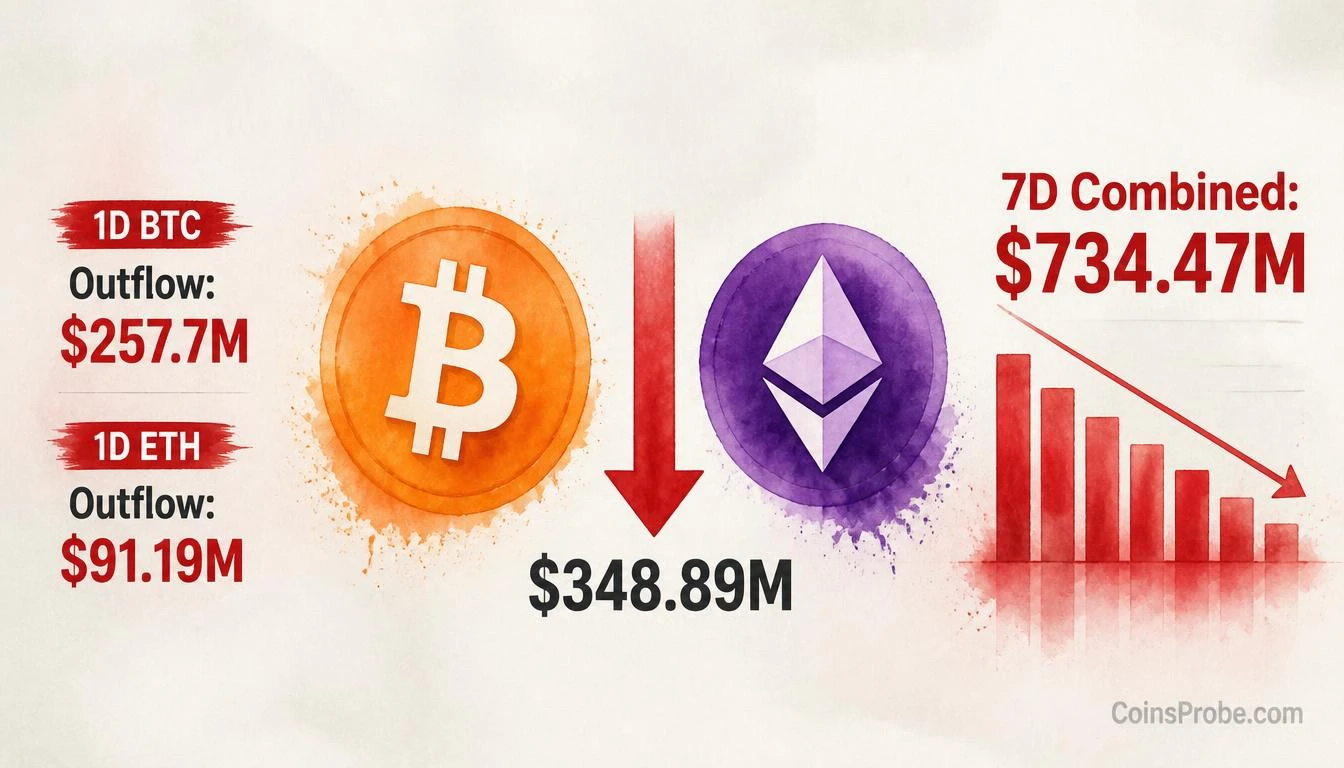

- Bitcoin ETFs posted a 1-day net outflow of 3,209 BTC ($257.7M) on Oct 15, per Farside Investors via Lookonchain
- Ethereum ETFs shed 38,915 ETH ($91.19M) in the same session — ETH contributed 42.6% of combined 7-day outflows despite smaller AUM
- Combined 7-day outflows across both products total $734.47M — Bitcoin $421.57M, Ethereum $312.9M
- GBTC and ETHE drove the bulk of redemptions; BlackRock IBIT and Fidelity FBTC inflows failed to offset losses
BREAKING
Spot Bitcoin and Ethereum ETFs recorded a combined net outflow of $348.89 million on October 15, according to flow data published by Lookonchain, citing Farside Investors custodian reports. Bitcoin ETFs shed 3,209 BTC ($257.7 million) in a single session. Ethereum ETFs redeemed 38,915 ETH ($91.19 million) on the same day. At the time of writing, Bitcoin is trading at $82,178 — up 0.44% in the past 24 hours.
October 15 Flow Breakdown — Both Asset Classes in the Red
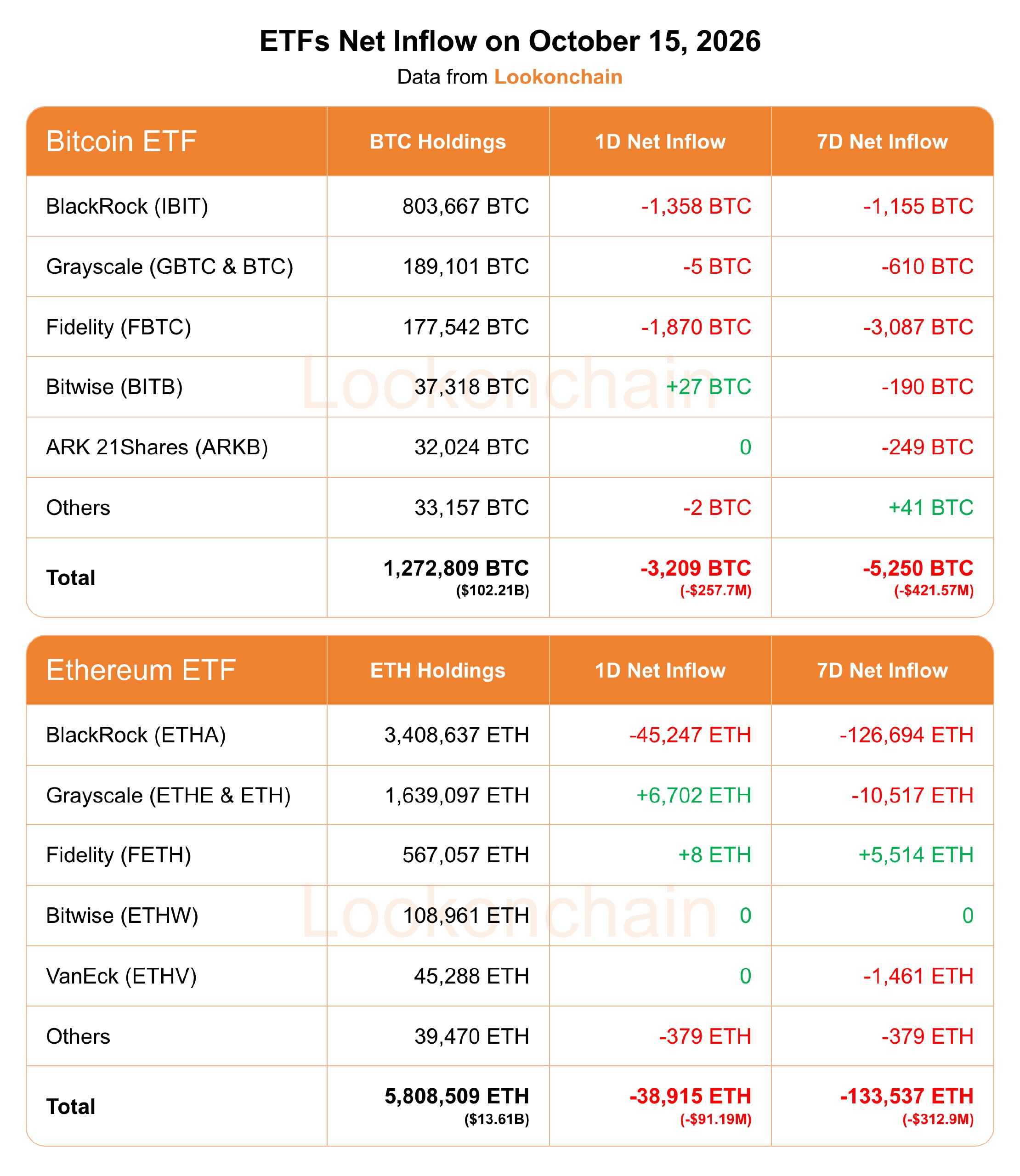
The one-day figures sit inside a broader seven-day bleed that has now totalled $734.47 million across both products. Bitcoin’s 7-day outflow stands at 5,250 BTC ($421.57 million). Ethereum’s 7-day outflow stands at 133,537 ETH ($312.9 million). Neither asset class posted a positive session on the day.
| Asset | 1D Net Flow | 7D Net Flow |
|---|---|---|
| Bitcoin ETFs | −3,209 BTC (−$257.7M) | −5,250 BTC (−$421.57M) |
| Ethereum ETFs | −38,915 ETH (−$91.19M) | −133,537 ETH (−$312.9M) |
| Combined | −$348.89M | −$734.47M |
Source: Farside Investors / Lookonchain, October 15
ETH Outflows Outpaced BTC on a Dollar-Adjusted Basis
On a percentage-of-7-day basis, Ethereum ETFs contributed $312.9 million of the $734.47 million combined weekly total — 42.6% of the bleed — despite holding a far smaller AUM base than Bitcoin products. That concentration signals Ethereum ETF redemption pressure is running proportionally harder than Bitcoin’s. GBTC and ETHE continued to account for the bulk of outflows across both categories, per Farside Investors data, while BlackRock’s IBIT and Fidelity’s FBTC registered modest inflows that were insufficient to offset the legacy-fund redemptions.
The October 15 session extends a pattern that has persisted through the month. As tracked in Bitcoin and Ethereum ETFs Bleed $1.23B in 7 Days as October Outflows Deepen, the current outflow cycle has been sustained rather than episodic — the 7-day figures have remained negative throughout October without a meaningful reversal day from the newer issuers.
What the Numbers Confirm — And What They Don’t
Seven consecutive days of combined negative flow is a factual redemption trend. What it does not confirm is direction: ETF outflows reflect institutional and retail holders exiting positions through the ETF wrapper — they do not, by themselves, predict whether spot price will follow. Bitcoin’s price is +0.44% on the day despite the outflow, which is a direct data point that the two variables are not moving in lockstep on October 15.
The research context from Farside Investors points to reduced risk appetite following Bitcoin’s failed attempt to sustain above $66,000 earlier in October, with pre-U.S. election capital rotation as a contributing factor. No single headline event — no SEC action, no issuer statement, no macro data release — was identified as a discrete trigger for the October 15 session specifically.
For a comparable period where single-day inflows briefly interrupted a weekly outflow trend, see Bitcoin ETFs Log $167M Daily Inflow While Weekly Outflows Hit $618M — the structural dynamic of daily reversals failing to offset 7-day totals has been a recurring feature of October flow data.
The metric to watch: whether IBIT and FBTC daily inflows begin to exceed GBTC and ETHE daily redemptions on a net basis. Farside Investors publishes custodian-verified fund-level data each session. Until that crossover occurs, the 7-day total will continue to reflect net redemption pressure across the combined spot ETF universe.
Watch $421.57 million as the current 7-day Bitcoin ETF outflow baseline — any session where IBIT inflows alone exceed that weekly run-rate in aggregate would represent a structural shift in the redemption trend.
Frequently Asked Questions
Which Bitcoin ETF funds drove the October 15 outflows?
How does the October 15 Ethereum ETF outflow compare to Bitcoin’s on a proportional basis?
Does an ETF outflow necessarily mean the spot price of Bitcoin or Ethereum will fall?
Source: Lookonchain · Published by CoinsProbe Markets Desk
The opinions and market insights shared on CoinsProbe represent the views of individual authors based on prevailing market conditions at the time of publication. Cryptocurrency investments carry significant risk and volatility. Readers are encouraged to conduct their own research and seek professional financial advice before making investment decisions. CoinsProbe and its contributors do not accept responsibility for financial losses or decisions made based on published content.
CoinsProbe may publish sponsored articles, affiliate links, or promotional collaborations. All sponsored material is clearly labeled to maintain transparency with our audience. Our editorial decisions remain fully independent, and advertising partnerships do not influence reviews, rankings, or published opinions.
Since 2023, CoinsProbe has delivered reliable insights on cryptocurrency, blockchain, and digital assets. Our content is created by experienced researchers and analysts who follow strict editorial standards focused on accuracy, transparency, and credibility. Every article is carefully reviewed and verified using trusted sources and current market data. We provide unbiased analysis and timely updates covering everything from emerging crypto projects to major industry developments.