
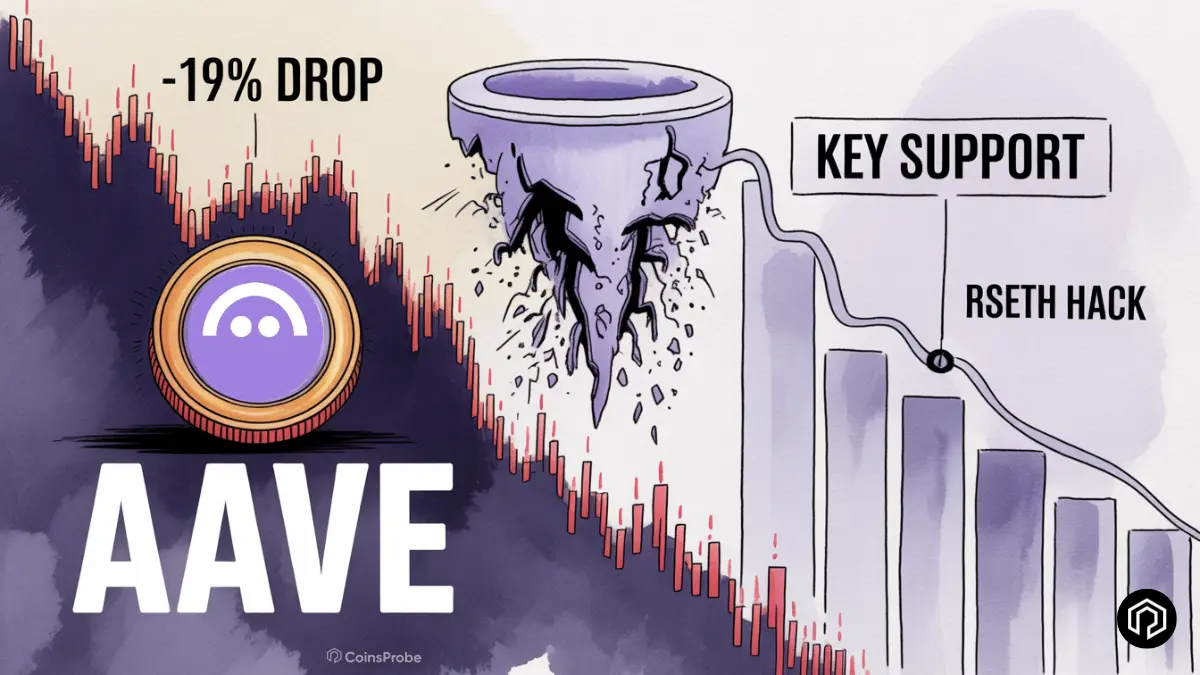
- Aave drops ~19% after a $294M rsETH exploit linked to Kelp DAO.
- Over $6.28B TVL wiped out in under 24 hours as whales exit positions.
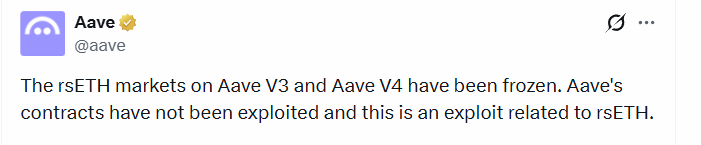
- Aave confirms no core exploit, isolates risk to rsETH collateral and freezes affected markets.
- Key support at $80–85 now critical, while reclaiming $136 (200W MA) needed for recovery.
In the largest DeFi exploit of 2026 so far, attackers drained approximately 116,500 rsETH (valued at $292–294 million, roughly 18% of rsETH’s circulating supply) from Kelp DAO’s LayerZero-powered cross-chain bridge on April 18. The stolen funds were quickly deposited as collateral on Aave V3, where the exploiter borrowed over 82,600 ETH (approximately $195–236 million). This has left Aave with an estimated $196–236 million in isolated bad debt in its wETH pool.
Aave’s core smart contracts were not exploited — the incident is isolated to the rsETH collateral from the Kelp DAO bridge. However, the event triggered immediate panic across the protocol, resulting in massive outflows and a sharp sell-off in the AAVE token. The AAVE token plunged as much as 19–20% in 24 hours, falling from around $113–115 levels to lows near $90–92 (trading at approximately $90.92, -19.00% at the time of writing), amid heavy whale selling and a broader risk-off sentiment in DeFi.

On-Chain Impact: $6.28 Billion TVL Vanishes in Under 24 Hours
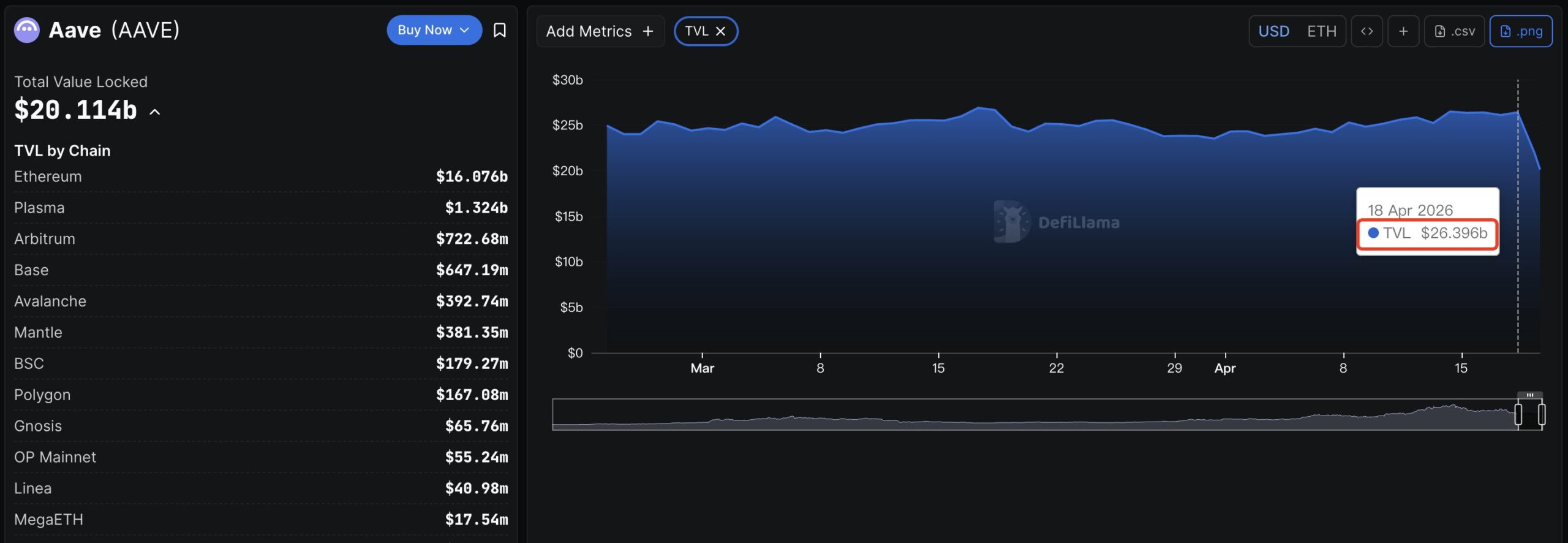
According to on-chain analytics from Lookonchain, Aave’s Total Value Locked (TVL) collapsed from $26.396 billion to $20.114 billion — a staggering $6.28 billion drop in less than 24 hours.
Major whale withdrawals contributed heavily to the liquidity crunch:
- MEXC: $431 million
- Nonco-linked whale (0x7CD0): $405.7 million
- Abraxas Capital: $392 million
ETH utilization in Aave’s core pools hit 100%, creating temporary liquidity stress for depositors. Multiple other protocols (including Compound V3, Euler, and SparkLend) also froze related rsETH markets to contain the contagion.
Aave’s Rapid Response
The Aave Guardian and protocol team acted swiftly:
- rsETH and wrsETH markets were frozen across Aave V3 and V4 deployments starting late April 18.
- Borrowing power against rsETH was reduced to zero.
- Official statement: “Aave’s contracts have not been exploited — this is an exploit related to rsETH.”
- The team is reviewing post-exploit borrows and has indicated they will “explore paths to offset the deficit” if needed. The Umbrella safety module (holding over $250 million in staked assets) remains a potential backstop.
Aave’s core markets (outside of the frozen rsETH positions) remain safe and fully operational. No depositor funds in non-rsETH pools are at systemic risk.
AAVE Technical Analysis: Key Support in Focus
On the weekly timeframe, AAVE is trading inside a descending channel — a structure formed by two parallel, downward-sloping trendlines that often appears during extended corrective phases
Main Support to Hold for a Rebound: The lower support trendline at $80–85. This zone aligns with the channel’s lower boundary and historical lows around $85.76. A successful hold here is critical for any potential stabilization or relief rally.
Upside Confirmation Needed: For a bullish reversal, AAVE must reclaim the 200-week MA at $136.96. This level previously served as dynamic support during the 2025 rally and now acts as significant overhead resistance.
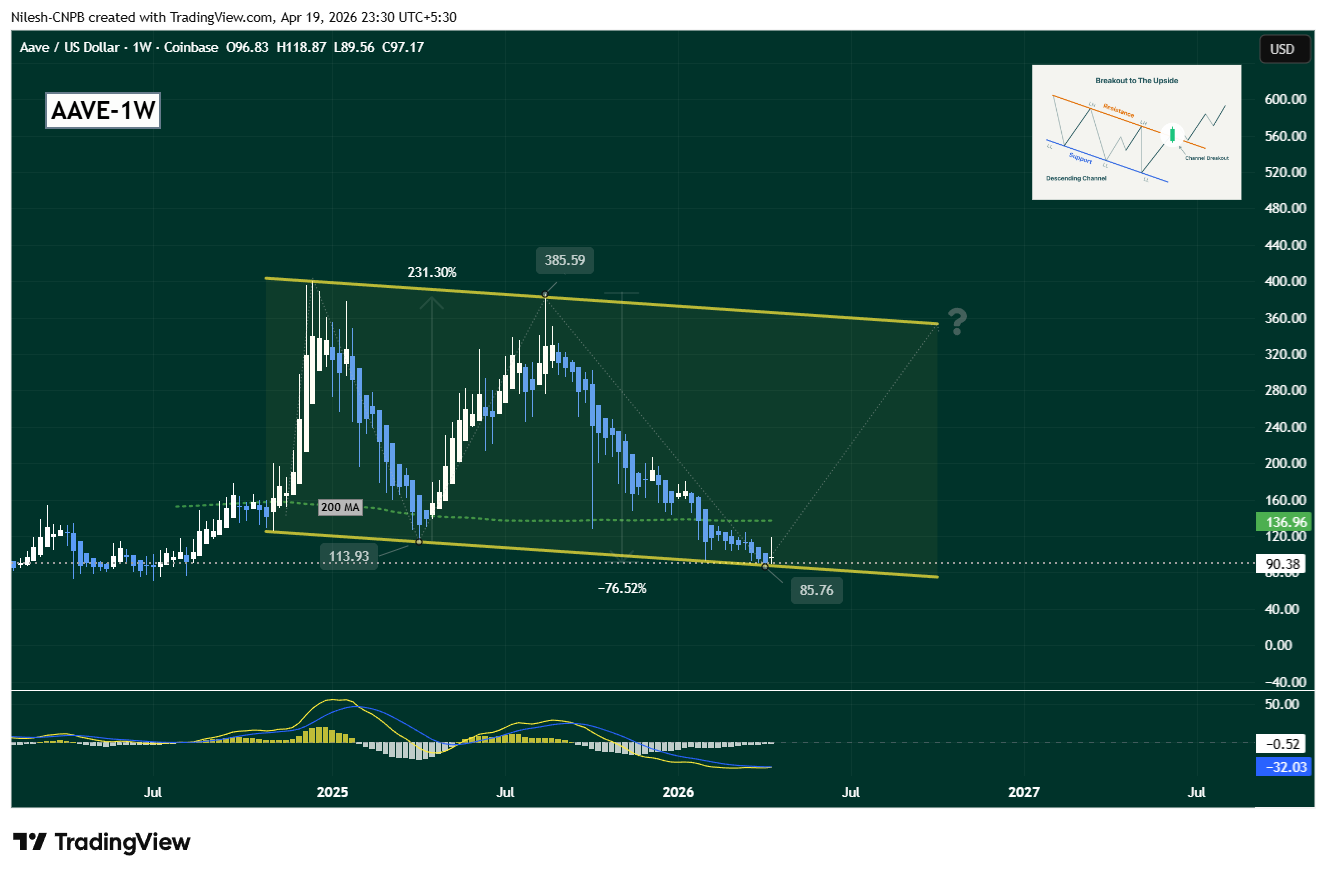
The chart highlights the descending channel, prior highs near $385.59 (+231.30% move), and a steep -76.52% drawdown from those peaks. A question mark near the projected upper channel boundary underscores the current uncertainty.
If AAVE fails to hold above current levels and slips back below the channel’s lower boundary, the bullish setup would be invalidated — potentially sending price back into consolidation or extending the broader downtrend.
Bottom Lines
The Kelp DAO rsETH bridge exploit has exposed the interconnected risks in DeFi — particularly the use of bridged liquid restaking tokens as collateral. While Aave itself remains structurally sound, the event has triggered a sharp confidence shock, reflected in both TVL outflows and AAVE’s price action.
Investigations by Kelp DAO, LayerZero, and independent security firms are ongoing. The next key catalysts will be Aave’s governance forum updates and any progress on offsetting the isolated bad debt.
Market sentiment remains cautious, traders should monitor the $80–85 support zone closely alongside real-time on-chain flows and official Aave communications.
Frequently Asked Questions (FAQ)
Why did AAVE drop today?
Aave fell sharply after a $294M rsETH exploit linked to Kelp DAO triggered panic and massive withdrawals.
Was Aave hacked?
No, Aave’s core smart contracts were not exploited. The issue is limited to compromised rsETH collateral used within the protocol.
How much TVL did Aave lose?
Aave saw a massive $6.28 billion drop in Total Value Locked (TVL) within 24 hours.
What are the key levels to watch for AAVE?
Support: $80–85
Resistance: $136 (200-week MA)
Can AAVE recover from this drop?
Recovery depends on holding support levels and how the protocol handles bad debt resolution and governance actions.
The opinions and market insights shared on CoinsProbe represent the views of individual authors based on prevailing market conditions at the time of publication. Cryptocurrency investments carry significant risk and volatility. Readers are encouraged to conduct their own research and seek professional financial advice before making investment decisions. CoinsProbe and its contributors do not accept responsibility for financial losses or decisions made based on published content.
CoinsProbe may publish sponsored articles, affiliate links, or promotional collaborations. All sponsored material is clearly labeled to maintain transparency with our audience. Our editorial decisions remain fully independent, and advertising partnerships do not influence reviews, rankings, or published opinions.
Since 2023, CoinsProbe has delivered reliable insights on cryptocurrency, blockchain, and digital assets. Our content is created by experienced researchers and analysts who follow strict editorial standards focused on accuracy, transparency, and credibility. Every article is carefully reviewed and verified using trusted sources and current market data. We provide unbiased analysis and timely updates covering everything from emerging crypto projects to major industry developments.