
- AAVE token has dropped nearly 20 percent following the recent hack incident.
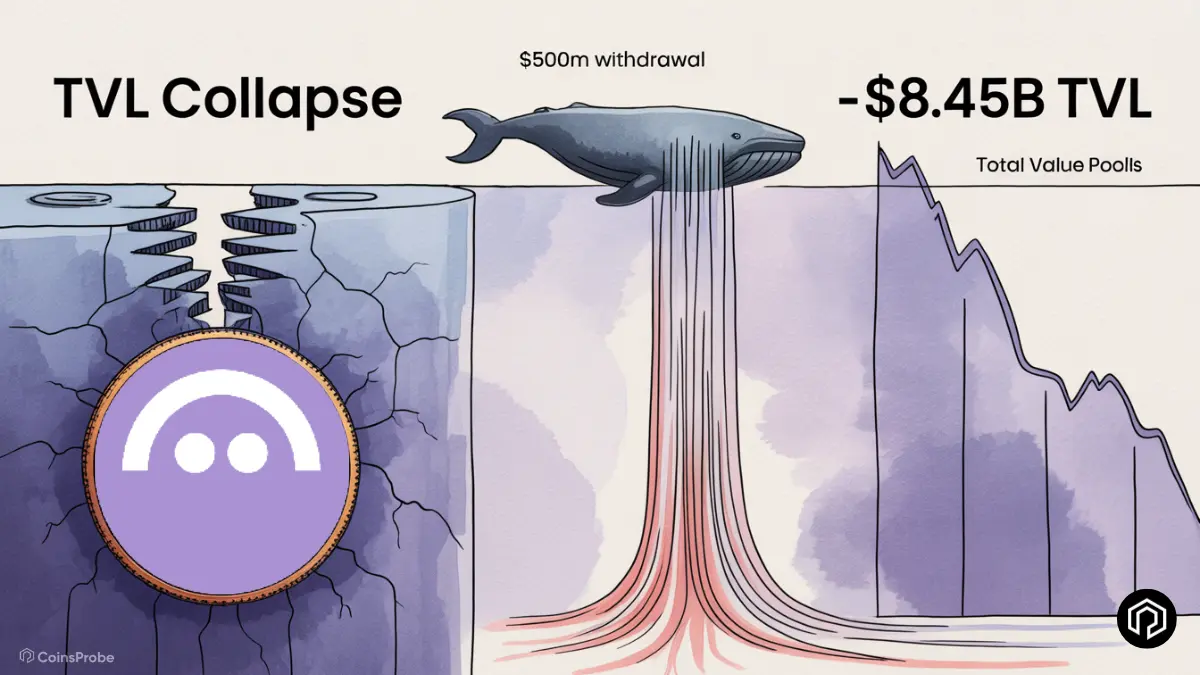
- Aave total value locked has fallen sharply by 8.45 billion dollars within just two days.
- Attackers from KelpDAO rsETH exploit deposited stolen funds as collateral on Aave creating bad debt.
- Major whale pulled out 272 million dollars in wstETH along with 221 million dollars in cbBTC from the protocol.
In a dramatic turn for the DeFi sector, Aave—the leading decentralized lending protocol—has seen its native token $AAVE plunge nearly 20% amid fallout from the recent KelpDAO rsETH bridge exploit. The incident, which did not directly hack Aave’s smart contracts, has exposed vulnerabilities in collateral risk management, sparking panic withdrawals, a sharp TVL decline, and significant whale activity. On-chain analytics from Lookonchain highlight the scale of the outflows, with one OTC whale alone pulling hundreds of millions in assets.
The Trigger: KelpDAO Exploit Creates Bad Debt on Aave
On April 19, 2026, attackers exploited a vulnerability in KelpDAO’s rsETH bridge, draining approximately $292–293 million in rsETH. The exploiters then deposited the stolen rsETH as collateral on Aave V3, borrowing over 82,600 ETH (roughly $195 million). This created substantial “bad debt” on the platform, as the collateral’s value became unreliable.
Aave responded swiftly by freezing rsETH markets on both V3 and V4 to prevent further borrowing and new deposits using the affected asset. The protocol emphasized that its core contracts remained secure, but the indirect exposure through rsETH collateral has eroded depositor confidence. Aave’s Umbrella safety module is now under review to potentially offset any shortfall, though the full extent of bad debt is still being quantified.
AAVE TVL Plummets: From $26.4B to $17.95B in Just Two Days
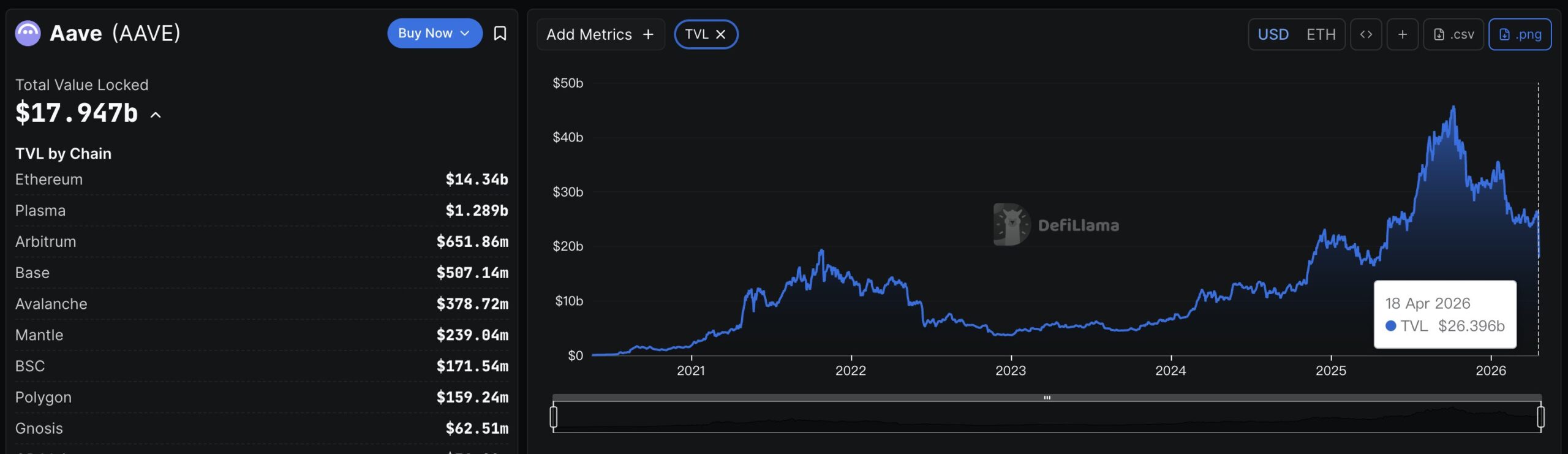
The fallout has been swift and severe. According to Lookonchain’s update on April 20, Aave’s Total Value Locked (TVL) has cratered from $26.396 billion to $17.947 billion—a staggering $8.45 billion decline in 48 hours.
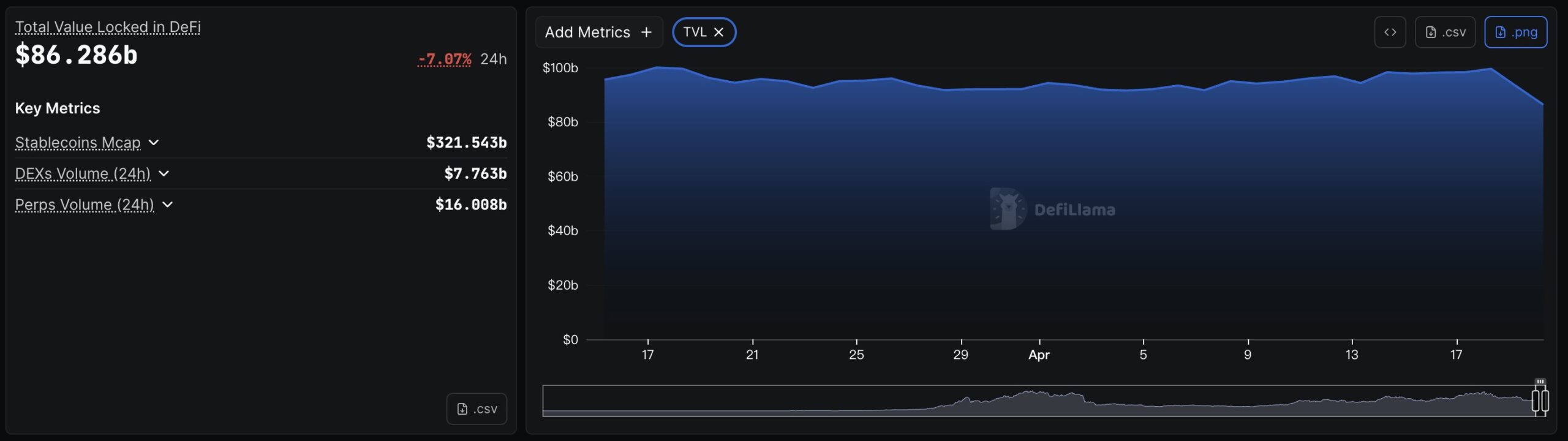
This represents one of the largest single-protocol TVL drops in recent DeFi history. The broader DeFi ecosystem has also felt the ripple effects, with total TVL across all protocols falling from $99.497 billion to $86.286 billion (a $13.21 billion drop).
Lookonchain’s earlier post detailed the initial wave of outflows, noting major withdrawals including:
- MEXC: $431M
- Whale 0x7CD0 (possibly linked to Nonco): $405.7M
- Abraxas Capital: $392M
And many others. The chart below (shared in the Lookonchain post) illustrates Aave’s TVL trajectory, showing the sharp drop starting around April 18.
The DeFi-wide TVL chart further underscores the contagion, with overall locked value sliding to $86.286B.
Whale Exodus: OTC Giant Withdraws $272M wstETH + $221.6M cbBTC
Compounding the pressure, large holders have rushed to exit. In a detailed thread, Lookonchain highlighted one prominent OTC whale (previously known for buying 163,405 ETH and 4,000 cbBTC) who withdrew a massive 98,032 wstETH ($272M) and 3,000 cbBTC ($221.6M) from Aave.
The whale was directly impacted by the KelpDAO rsETH exploit, which blocked ETH withdrawals. To exit, they swapped 7,438 aEthWETH ($16.83M) into 1,930 stETH and 5,272 ETH—incurring a loss of 237 ETH ($540K). Despite this, the wallet still holds 10,000 ETH (~$22.8M) on Aave.
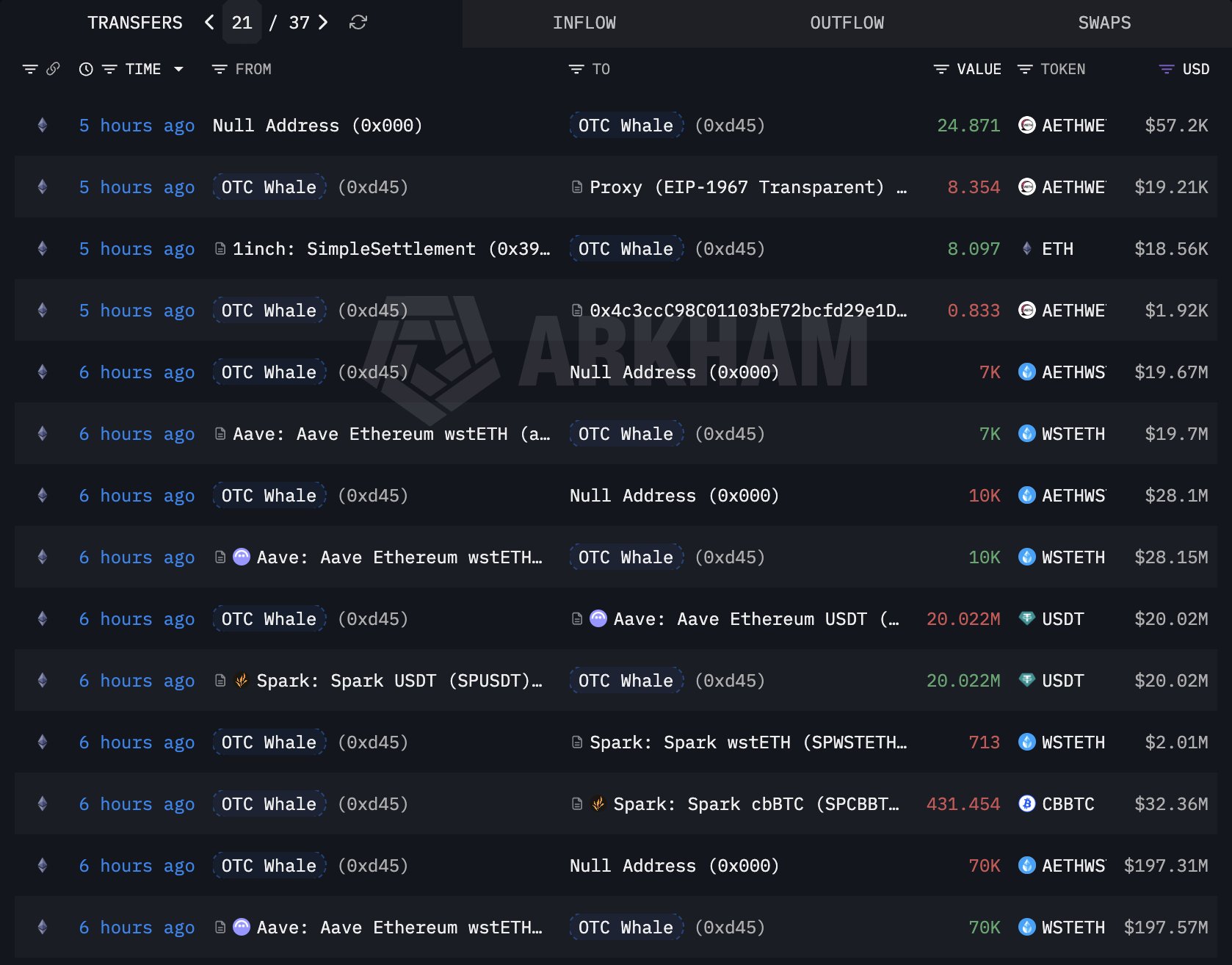
On-chain transaction logs from the event show the whale executing multiple large transfers involving wstETH, cbBTC, USDT, and AETHWE swaps to ETH, often routing through aggregators like 1inch and Spark. These moves reflect a broader risk-off sentiment among smart money.
$AAVE Token Tanks Nearly 20%
The combination of bad debt concerns, frozen markets, and record outflows has hammered $AAVE’s price. The token dropped approximately 16–22% in the 24–48 hours following the exploit, trading around $90–92 as of April 20 (down from recent highs near $115).
Daily fees on Aave spiked to nearly $2 million amid a wave of liquidations, but this has done little to stem the sell-off. Market sentiment has turned bearish, with traders citing structural risks in DeFi collateral (especially liquid restaking tokens like rsETH) as a key concern.
What’s Next for Aave?
Aave remains the largest DeFi lending protocol by TVL despite the drop, but the event has spotlighted ongoing challenges:
- Collateral risk — Over-reliance on bridged or restaked assets from external protocols.
- Deposit flight — Users shifting to perceived safer venues like Spark.
- Recovery potential — Aave’s strong treasury and governance could enable compensation mechanisms, but trust rebuilding will take time.
From a technical standpoint, key support at $80–85 remains critical, while a reclaim of $136 (200-week moving average) would be needed to signal a stronger recovery trend.
For a deeper look at the recent price action and market reaction, check our detailed Aave price crash analysis.
DeFi participants are watching closely. While the protocol’s core code remained secure, the assumptions around collateral did not — echoing past incidents where indirect exposures revealed broader systemic risks.
Frequently Asked Questions (FAQ)
Why did the AAVE price drop nearly 20%?
The price crash was triggered by the $293M KelpDAO rsETH exploit, which created significant bad debt on Aave after attackers used stolen rsETH as collateral to borrow ETH. This sparked massive withdrawals and eroded market confidence in the protocol.
How much TVL did Aave lose?
Aave’s Total Value Locked (TVL) fell sharply from $26.396 billion to $17.947 billion — a loss of $8.45 billion within 48 hours.
Was Aave itself hacked?
No. Aave’s core smart contracts were not exploited. The issue stemmed from an external exploit on KelpDAO’s rsETH bridge. Aave quickly froze rsETH markets on both V3 and V4 as a precautionary measure.
What did the whales do?
A prominent OTC whale withdrew approximately $272 million in wstETH and $221.6 million in cbBTC from Aave. Several other large entities, including MEXC and Abraxas Capital, also pulled out hundreds of millions in assets.
Will Aave recover from this event?
Aave remains the largest DeFi lending protocol despite the drop. Recovery will depend on how effectively the team handles the bad debt through the Umbrella safety module and restores depositor confidence. The protocol’s strong treasury and governance provide some cushion, but rebuilding trust will take time.
The opinions and market insights shared on CoinsProbe represent the views of individual authors based on prevailing market conditions at the time of publication. Cryptocurrency investments carry significant risk and volatility. Readers are encouraged to conduct their own research and seek professional financial advice before making investment decisions. CoinsProbe and its contributors do not accept responsibility for financial losses or decisions made based on published content.
CoinsProbe may publish sponsored articles, affiliate links, or promotional collaborations. All sponsored material is clearly labeled to maintain transparency with our audience. Our editorial decisions remain fully independent, and advertising partnerships do not influence reviews, rankings, or published opinions.
Since 2023, CoinsProbe has delivered reliable insights on cryptocurrency, blockchain, and digital assets. Our content is created by experienced researchers and analysts who follow strict editorial standards focused on accuracy, transparency, and credibility. Every article is carefully reviewed and verified using trusted sources and current market data. We provide unbiased analysis and timely updates covering everything from emerging crypto projects to major industry developments.