
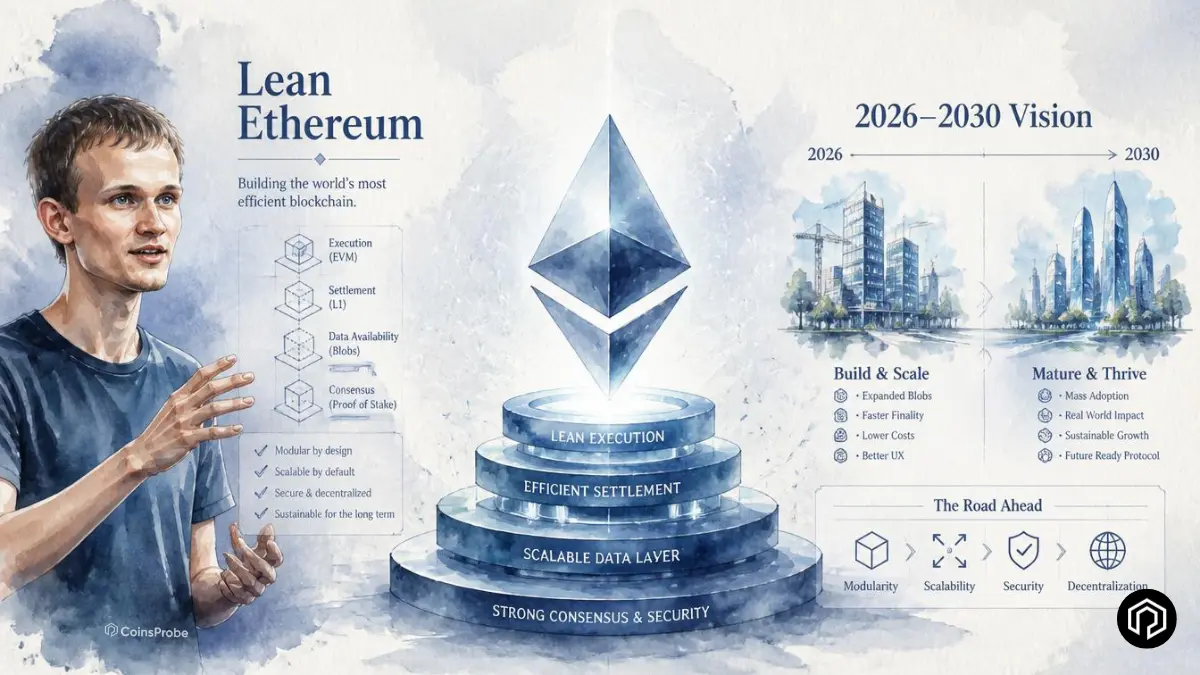

- Vitalik Buterin has unveiled "Lean Ethereum," a long-term roadmap that will reshape Ethereum over the next 3–4 years.
- The plan focuses on scalability, quantum resistance, privacy, and protocol simplification, with most core components set to be redesigned.
- Major upgrades include recursive STARK verification, post-quantum cryptography, new state architecture, and additional virtual machines.
- The roadmap is designed to remain backward compatible, allowing existing applications to continue operating while unlocking significantly lower transaction costs.
Ethereum is entering what could be the most ambitious chapter in its history. Following a series of research meetings in Berlin, co-founder Vitalik Buterin published a new long-term roadmap on July 4, 2026, outlining his vision for what he is calling “Lean Ethereum.”
This is not a single hard fork or a named upgrade in the traditional sense. It is a complete design philosophy for how Ethereum should evolve between now and 2030 — touching nearly every layer of the protocol simultaneously while preserving the ecosystem that has already been built on top of it.
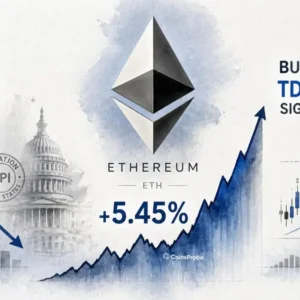
ETH Price at a Glance — July 4, 2026

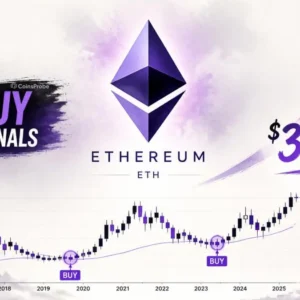
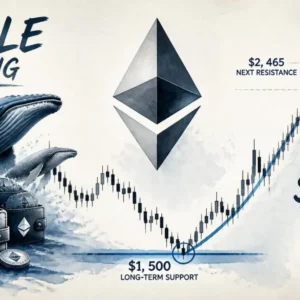
ETH has recovered meaningfully this week — consistent with the broader bottoming signals we have documented through the monthly TD Sequential buy signal and the accumulation evidence building throughout June 2026. Today’s Lean Ethereum announcement adds a fundamental development narrative on top of that technical backdrop.
What Is Lean Ethereum — In Simple Terms
The best way to understand Lean Ethereum is to compare it to what came before.
The Merge transitioned Ethereum from energy-intensive Proof-of-Work mining to efficient Proof-of-Stake validation. That was a single transformation — significant, but focused on one specific architectural layer.
Lean Ethereum is different. It is a redesign of nearly everything simultaneously — consensus, storage, cryptography, privacy, execution, and fees — executed gradually over four years while keeping the existing ecosystem running throughout.
The philosophy behind the name is deliberate. “Lean” means stripping out complexity, reducing redundancy, and making the protocol easier to verify, understand, and build on — while adding the capabilities that global-scale adoption requires.
According to Buterin, the five core priorities driving every decision in this roadmap are simplicity, scalability, quantum resistance, native privacy, and formal security. Every major change flows from at least one of these goals.
The Biggest Changes Coming
Recursive STARK Verification
Today, every validator on the Ethereum network re-executes every transaction to verify the network’s state. This works — but it is computationally expensive and limits scalability.
Recursive STARK proofs change this fundamentally. Instead of re-executing transactions, validators verify a cryptographic proof that the transactions were executed correctly. This is significantly more efficient, reduces hardware requirements for validators, and opens the door to dramatically higher throughput without sacrificing security.
Post-Quantum Cryptography
This is described in the roadmap as the highest-priority change. The cryptographic systems securing most of today’s blockchain networks — including Ethereum — could eventually become vulnerable to sufficiently powerful quantum computers.
Lean Ethereum will transition the network to post-quantum cryptographic standards, securing user assets against future advances in quantum computing before those advances become a practical threat. This is consistent with the broader industry trend we covered in our Algorand post-quantum cryptography roadmap article — the race to quantum-resistant infrastructure is a sector-wide priority, and Ethereum is formalising its plan.
Faster Consensus
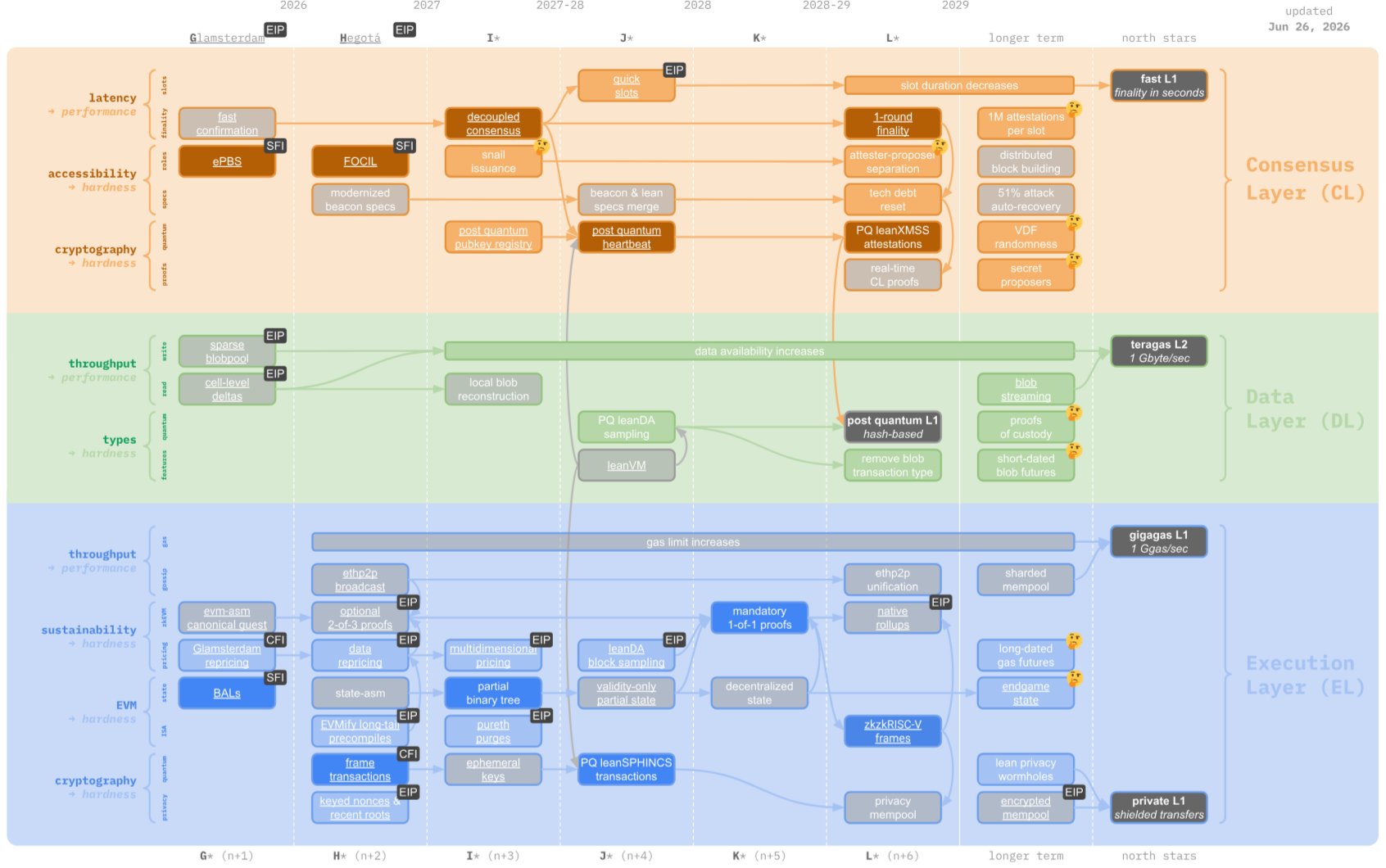
The roadmap redesigns Ethereum’s consensus model to separate data availability from transaction finality. In practical terms: transactions could achieve confirmation in just one or two rounds rather than the current multi-slot finality process. The network becomes both faster and more predictable for users and applications that depend on quick settlement.
Multidimensional Gas Fees
Currently, Ethereum charges a single gas price for every type of network resource — computation, storage, bandwidth — regardless of which is actually being consumed. This creates inefficiency: one resource can be congested while others remain underused, but the fee mechanism treats them identically.
Multidimensional gas prices each resource type independently. The result is better efficiency, reduced congestion during peak demand, and more accurate pricing that reflects actual network usage rather than a blunt single-number approximation.
A New State Architecture — The Most Transformative Change
This is the proposal with the most direct impact on transaction costs and scalability. Ethereum’s current state model uses fully dynamic storage — flexible, but storage-intensive and expensive at scale.
Lean Ethereum introduces multiple new state types optimised for different applications. By 2030, the network is expected to maintain roughly 2 TB of dynamic state while supporting up to 100 TB of more scalable state types through new structures including UTXOs, keyed nonces, ring buffers, and statically accessible state.
These new structures are specifically well-suited for ERC-20 tokens, NFTs, and many DeFi protocols — the most common use cases on Ethereum today. Moving applications to these optimised structures could reduce their transaction costs by more than 10x, making Ethereum meaningfully more competitive for everyday use cases without requiring a migration away from the existing ecosystem.
Privacy by Default
Privacy has historically been an optional add-on for Ethereum applications — requiring developers to integrate external solutions rather than relying on any native protocol feature.
Lean Ethereum changes this by integrating privacy directly into Ethereum’s mempool, state tree, and core architecture. This means developers can build applications with genuinely strong user privacy as a baseline — not as an additional engineering burden — without relying entirely on Layer 2 solutions or external privacy protocols.
New Virtual Machines Alongside the EVM
The Ethereum Virtual Machine remains central to the ecosystem and is not being replaced. But Lean Ethereum proposes introducing additional execution environments — specifically leanISA and RISC-V — that can handle applications requiring advanced privacy or performance characteristics that the EVM is not optimally suited for.
This gives developers more tools without breaking the existing tooling and application base built around the EVM.
Stronger Security Through Formal Verification
Lean Ethereum also targets Ethereum’s internal codebase directly — simplifying it and applying formal verification to critical protocol components. Formal verification is a mathematical approach to proving software correctness, significantly reducing the likelihood of the kind of critical bugs that have historically been the source of costly exploits across the broader blockchain ecosystem.
The Development Timeline
The roadmap identifies a specific transition point: the upcoming H-star (Hegota) upgrade is expected to be the last major upgrade before Lean Ethereum principles take full effect. Beginning with the I-star series of upgrades that follow Hegota, future protocol changes will increasingly align with the Lean Ethereum design philosophy.
Developers also expect the coming years to bring multiple increases in gas limits, blob capacity, network throughput, and reduced slot times. A significant gas limit expansion is specifically anticipated during the planned Glasterdam upgrade.
What This Means for Users and Developers
The most reassuring aspect of the entire roadmap is its backward compatibility commitment. Existing applications, wallets, and tokens continue working without any user-level migration. You do not need to move your ETH, change your wallet, or take any action simply because Lean Ethereum is being introduced.
For developers, the choice becomes available rather than mandatory: applications that migrate to the new state architecture — particularly ERC-20 tokens, NFTs, and simpler DeFi protocols — gain access to dramatically lower operating costs and improved scalability. Those that remain on the current architecture continue functioning as before.
This hybrid approach allows Ethereum to scale and modernise without abandoning the enormous ecosystem already built on the current network — a critical design choice given the scale of existing deployments.
Why This Matters for ETH’s Broader Narrative
Lean Ethereum arrives at a moment when the asset’s long-term narrative needed exactly this kind of substantive development milestone. As we covered in our Ethereum zero returns in 5 years article — ETH’s price performance over the past five years has been genuinely disappointing relative to expectations, with the token sitting at roughly the same level as March 2021 after multiple complete market cycles.
The core criticism embedded in that five-year flat performance is that Ethereum has not delivered the kind of fundamental improvement in cost and scalability that would justify a significantly higher valuation. Lean Ethereum is Vitalik’s direct answer to that criticism — a concrete, detailed, timeline-anchored roadmap for the specific improvements that would change that equation.
If the roadmap executes as planned — 10x+ lower transaction costs, quantum-resistant security, native privacy, and dramatically higher throughput — the use-case argument for ETH becomes substantially stronger than it has been at any point in the current cycle.
Bottom Line
Lean Ethereum is far more than another upgrade — it is Ethereum’s blueprint for the next decade. By combining recursive STARKs, post-quantum cryptography, privacy-first infrastructure, a redesigned state architecture, multidimensional fees, and formal security verification — all while maintaining backward compatibility — Buterin is laying out a credible path to an Ethereum that is significantly faster, cheaper, and more resilient than today’s network.
The roadmap does not deliver these improvements overnight. It is a four-year transformation. But having a clear, comprehensive, philosophy-driven plan is exactly what the Ethereum ecosystem has needed — and what today’s announcement provides.
Frequently Asked Questions
What is Lean Ethereum?
A multi-year roadmap published by Vitalik Buterin on July 4, 2026, outlining a comprehensive redesign of Ethereum’s protocol between 2026 and 2030 — covering scalability, quantum resistance, privacy, and simplification while maintaining backward compatibility.
Will existing Ethereum apps still work under Lean Ethereum?
Yes — the roadmap is fully backward compatible. Existing wallets, tokens, and applications continue working without any user-level migration.
What is the most important change in Lean Ethereum?
Post-quantum cryptography is listed as the highest-priority change — transitioning Ethereum to cryptographic standards that remain secure against future quantum computing advances.
What is recursive STARK verification?
A cryptographic approach where validators verify proofs of transaction correctness rather than re-executing every transaction — significantly improving scalability and reducing hardware requirements for validators.
The opinions and market insights shared on CoinsProbe represent the views of individual authors based on prevailing market conditions at the time of publication. Cryptocurrency investments carry significant risk and volatility. Readers are encouraged to conduct their own research and seek professional financial advice before making investment decisions. CoinsProbe and its contributors do not accept responsibility for financial losses or decisions made based on published content.
CoinsProbe may publish sponsored articles, affiliate links, or promotional collaborations. All sponsored material is clearly labeled to maintain transparency with our audience. Our editorial decisions remain fully independent, and advertising partnerships do not influence reviews, rankings, or published opinions.
Since 2023, CoinsProbe has delivered reliable insights on cryptocurrency, blockchain, and digital assets. Our content is created by experienced researchers and analysts who follow strict editorial standards focused on accuracy, transparency, and credibility. Every article is carefully reviewed and verified using trusted sources and current market data. We provide unbiased analysis and timely updates covering everything from emerging crypto projects to major industry developments.