
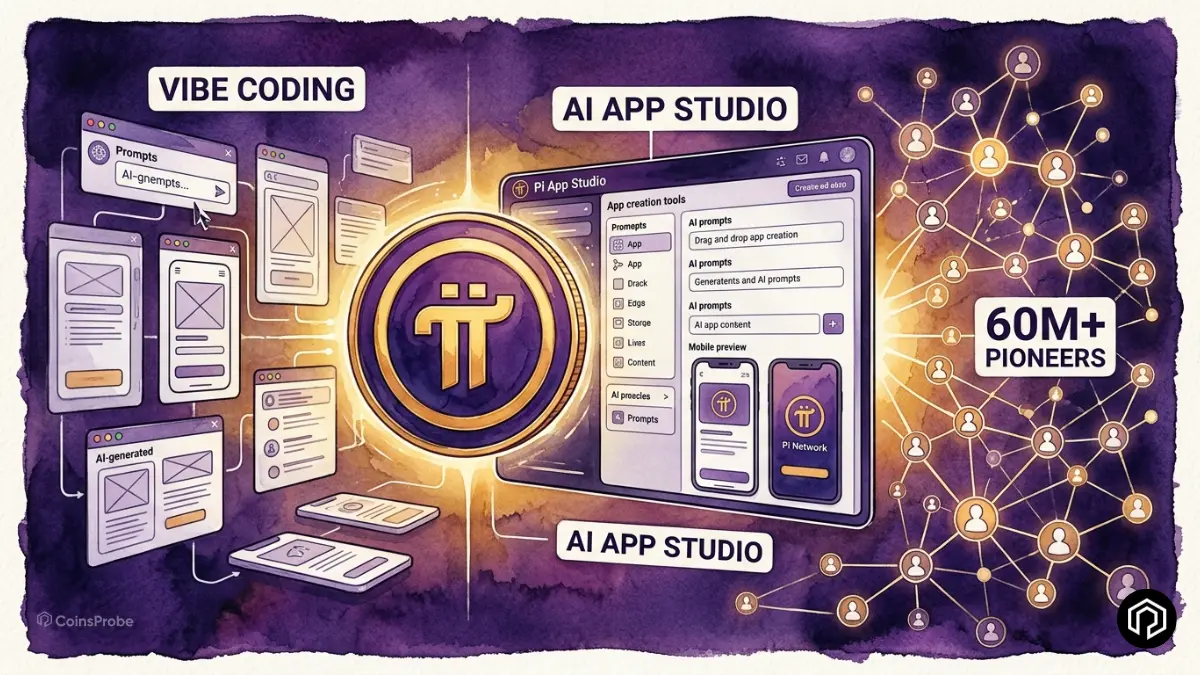

- Pi Network has updated Pi App Studio to support vibe coding — allowing creators to build apps using external AI tools like Codex, Claude Code, Replit, Cursor, and Lovable, then bring them directly into the Pi ecosystem.
- The update provides tailored copy-and-paste prompts that help creators integrate the Pi SDK, verify setup, and add Pi payments — without rebuilding integrations from scratch.
- Both technical developers and non-technical product people can now distribute their AI-created apps to 60 million+ Engaged Pioneers through Pi's real distribution network.
- The initiative directly aligns with Pi's broader AI strategy — expanding how people use AI and Pi together as Protocol 23 smart contracts deadline has been extended to May 19.
Pi Network has just made it significantly easier for the global wave of AI-assisted app builders to reach one of the largest and most engaged user bases in blockchain. A new update to Pi App Studio — announced on May 13, 2026 — opens Pi’s ecosystem to the rapidly growing community of vibe coders: creators who build apps, tools, and online services using AI coding platforms without necessarily writing traditional code themselves.
The timing is not accidental. As we covered in our Pi for AI strategy article, Pi’s AI infrastructure thesis is built on the belief that as AI lowers the cost of building software dramatically, the competition for distribution — not creation — becomes the defining challenge. With 60 million+ Engaged Pioneers and 18.1 million KYC-verified users as confirmed in the April 2026 Network Update, Pi Network is positioning itself as the answer to that distribution problem.
What Has Changed — Vibe Coding Support in Pi App Studio
Previously Pi App Studio was primarily designed to help Pioneers build apps directly within the Pi ecosystem using AI tools inside the Pi environment. The new update expands the scope significantly — adding a dedicated workflow for creators who are already building with external AI tools and want to bring their finished or in-progress apps into Pi’s distribution network.
The supported external platforms include:
- Codex — OpenAI’s code generation model
- Claude Code — Anthropic’s coding-focused AI assistant
- Replit — AI-assisted browser-based development environment
- Cursor — AI-powered code editor
- Lovable — no-code AI app builder
- And other AI-assisted coding tools
The new flow works through tailored copy-and-paste prompts that creators use inside their external AI tool of choice. These prompts guide the AI to:
- Integrate the Pi SDK into the existing app
- Verify the setup is correctly configured for Pi’s ecosystem
- Add Pi payments — enabling the app to accept $PI as its native payment currency
The result: an externally created app becomes a fully functional Pi App — accessible to Pi’s 60 million+ user base — without the creator needing to manually rebuild the integration from scratch or learn Pi-specific development workflows.
Why This Matters — The Distribution Problem in the AI Era
The strategic logic behind this update is clearly articulated in the Pi Core Team’s announcement: as AI makes building software dramatically cheaper and faster, distribution becomes the scarce resource.
In the pre-AI era, building a functional app required significant technical skill, time, and capital — which naturally limited competition. In the vibe coding era, anyone with an idea can create a working app in hours using an AI tool. The bottleneck has shifted from creation to reach.
Pi Network’s 60 million+ Engaged Pioneers represent exactly what every vibe coder needs but most cannot easily access: a large, active, identity-verified user base that is already participating in a single coherent ecosystem. By making it easy for external creators to integrate Pi SDK and payments in minutes — rather than rebuilding from scratch — Pi App Studio becomes a distribution gateway that makes Pi Network the natural destination for AI-built apps seeking real users.
As Dr. Chengdiao Fan outlined at Consensus 2026, Pi’s vision is to treat tokens as tools for genuine user acquisition and product growth — not speculation. The App Studio update is a direct operationalisation of that vision: giving builders a concrete path to the user base, and giving Pioneers access to a growing ecosystem of AI-created tools and services.
The Broader Context — Protocol 23 and Smart Contracts
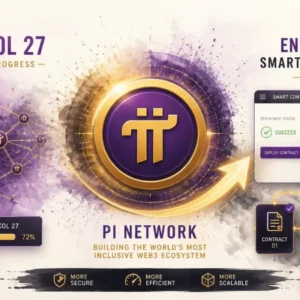
The App Studio update arrives as the Protocol 23 smart contract upgrade deadline has been extended to May 19 — the technical milestone that activates full smart contract functionality on Pi Mainnet for the first time. The convergence is significant.
Smart contracts will enable Pi apps to do things that were previously impossible — automated escrow, trustless payments, programmable reward systems, governance mechanisms, and more. The expansion of Pi App Studio to support vibe-coded apps means that when Protocol 23 goes live, the pool of developers who can build on top of that smart contract layer is dramatically larger than it would have been with developer-only tooling.
A non-technical creator who built a game, a service tool, or a marketplace using Lovable or Replit can now bring it into Pi’s ecosystem — integrate Pi payments — and eventually layer in smart contract functionality as Protocol 23 capabilities become available to app developers.
Who This Is For
Vibe coders and non-technical creators — People who have built something useful with AI tools but have no clear path to users. Pi App Studio is now that path.
Technical developers outside the Pi community — Developers already building with established AI coding tools who want access to Pi’s distribution network without rebuilding their stack.
Existing Pi App developers — The update adds capability rather than replacing the existing Pi App Studio workflow — existing builders retain full access to all prior functionality.
Pi Pioneers with product ideas — The combination of external AI tools and Pi App Studio means that any Pioneer with an idea can now build a functional app, integrate Pi payments, and launch to 60 million+ users — no traditional coding required.
Bottom Line
Pi Network’s vibe coding update to App Studio is one of the most practically significant ecosystem expansions the project has made in 2026. By connecting the exploding global community of AI-assisted app builders to Pi’s 60 million+ user distribution network — through a simple copy-and-paste integration workflow — the Pi Core Team is directly addressing the most important bottleneck in the AI software era: getting real users.
As Protocol 23 activates on May 19, the timing of this App Studio expansion could not be more deliberate. The infrastructure is ready. The smart contracts are arriving. And now the pool of builders who can reach Pi’s users has expanded to include anyone with an idea and an AI tool.
Frequently Asked Questions
What is the Pi App Studio vibe coding update?
Pi App Studio now supports creators who build apps using external AI tools — like Codex, Claude Code, Replit, Cursor, and Lovable — providing copy-and-paste prompts to integrate the Pi SDK and Pi payments, converting externally built apps into Pi Apps accessible to 60M+ Pioneers.
Who can use the new App Studio vibe coding feature?
Both technical developers and non-technical product people. Any creator using an AI coding tool to build apps, services, or online businesses can now integrate Pi’s ecosystem without rebuilding from scratch.
What AI coding platforms are supported?
The update supports Codex, Claude Code, Replit, Cursor, Lovable, and other AI-assisted coding tools — with tailored prompts for each platform’s workflow.
Why is Pi Network targeting vibe coders?
As AI dramatically lowers the cost of building software, distribution becomes the scarce resource. Pi’s 60M+ Engaged Pioneers represent a massive ready-made user base that vibe coders need — and Pi benefits from a growing ecosystem of useful apps.
How does the Pi SDK integration work in the new flow?
Creators copy tailored prompts from Pi App Studio into their external AI tool — the AI then integrates the Pi SDK, verifies the setup, and adds Pi payment functionality to the existing app automatically.
The opinions and market insights shared on CoinsProbe represent the views of individual authors based on prevailing market conditions at the time of publication. Cryptocurrency investments carry significant risk and volatility. Readers are encouraged to conduct their own research and seek professional financial advice before making investment decisions. CoinsProbe and its contributors do not accept responsibility for financial losses or decisions made based on published content.
CoinsProbe may publish sponsored articles, affiliate links, or promotional collaborations. All sponsored material is clearly labeled to maintain transparency with our audience. Our editorial decisions remain fully independent, and advertising partnerships do not influence reviews, rankings, or published opinions.
Since 2023, CoinsProbe has delivered reliable insights on cryptocurrency, blockchain, and digital assets. Our content is created by experienced researchers and analysts who follow strict editorial standards focused on accuracy, transparency, and credibility. Every article is carefully reviewed and verified using trusted sources and current market data. We provide unbiased analysis and timely updates covering everything from emerging crypto projects to major industry developments.