
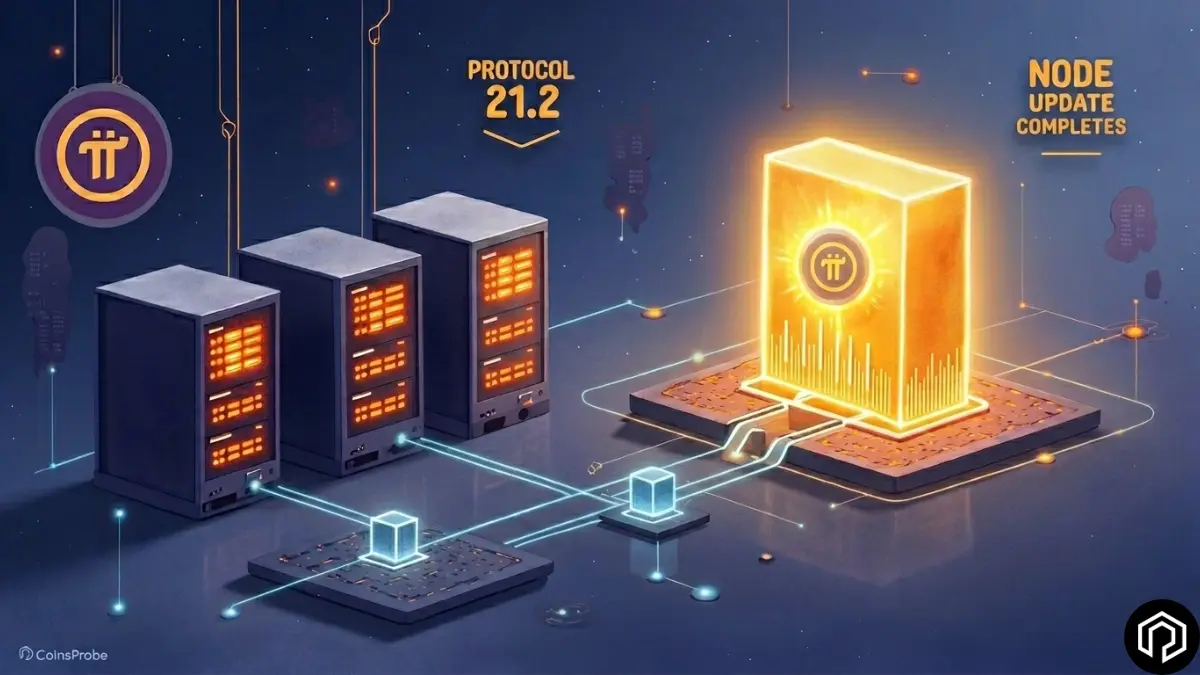

- Pi Network has successfully completed the Protocol 21.2 upgrade across all Mainnet nodes — with the network now fully stable on v21.2 following the April 6, 2026 deadline.
- Protocol 21 is a security and compatibility hard fork — delivering improved network stability, enhanced scalability for higher transaction volumes, and stronger security and synchronization across the Mainnet.
- The upgrade coincides with the full unlocking of the Pi Software Development Kit (SDK) — enabling developers to build new applications and services within the growing Pi ecosystem for the first time.
- The next two upgrade steps — Protocol 22 (April 22) and Protocol 23 (May 18) — are still marked "Do NOT start" and must not be attempted until officially activated by the Pi Core Team.
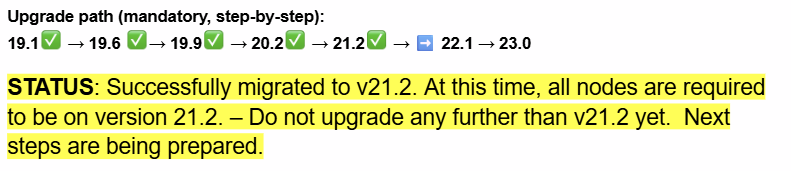
Pi Network has reached a significant technical milestone — the Pi Mainnet has successfully completed the Protocol 21.2 upgrade across the entire network. As of April 14, 2026, all nodes are confirmed to be running on version 21.2, marking the successful completion of the fourth step in Pi Network’s carefully sequenced protocol rollout toward full smart contract functionality.
The Pi Core Team has issued the official status update:
“Successfully migrated to v21.2. At this time, all nodes are required to be on version 21.2. Do not upgrade any further than v21.2 yet. Next steps are being prepared.”
What Was Accomplished
The Protocol 21.2 upgrade was the fourth in Pi Network’s mandatory sequential upgrade path — each step building directly on the previous one to progressively enhance the Mainnet’s capabilities:
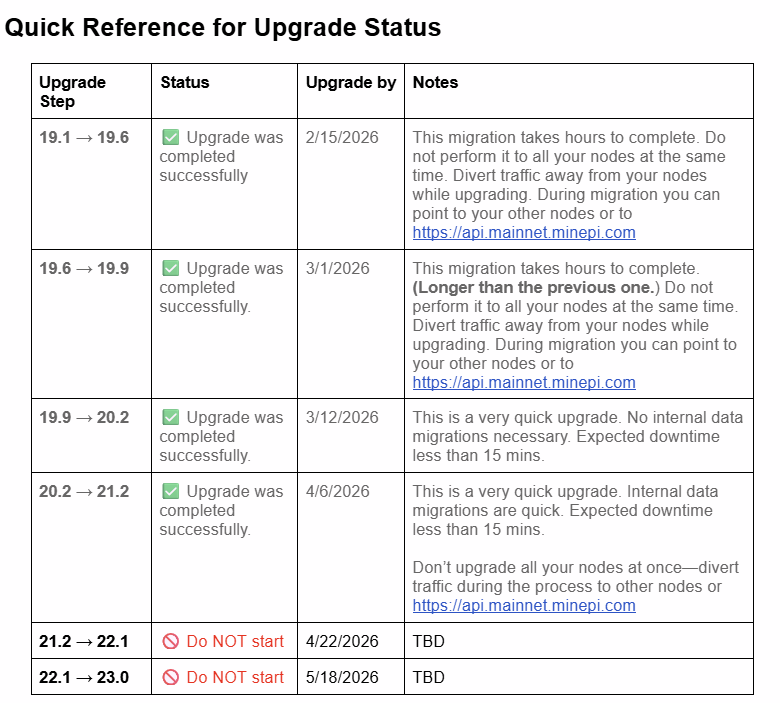
All four completed steps are now confirmed with green checkmarks — and the network is stable and fully operational on v21.2 as the Pi Core Team prepares the next upgrade steps.
Why Protocol 21 Matters
Protocol 21 is significantly more than a routine maintenance update: — it is a security and compatibility hard fork that delivers four specific improvements to the Pi Mainnet infrastructure:
Improved network stability and node performance: The upgrade addresses performance bottlenecks identified in the v20.2 deployment — delivering a more stable and consistent node experience across the global distributed network of Pi Mainnet operators.
Enhanced scalability for higher transaction volumes: As Pi Network’s ecosystem continues to expand — with over 16.5 million Pioneers already migrated to Mainnet and KYC validator rewards being distributed to over 1 million validators — the network’s ability to handle increasing transaction loads has become a critical infrastructure requirement. The recent closure of the Pi Launchpad Testnet provided valuable real-world testing data and further highlighted the importance of robust scalability as the project prepares for broader Mainnet utility.
Strengthened security and synchronization: The hard fork nature of Protocol 21 means all nodes must be on v21.2 simultaneously — ensuring uniform security standards and synchronized consensus across the entire Mainnet. Nodes remaining on older versions are incompatible with the current network state.
Infrastructure preparation for advanced features: Protocol 21 lays the specific technical groundwork required for the upcoming Protocol 22 and Protocol 23 upgrades — particularly the smart contract functionality and enhanced DeFi capabilities expected in Protocol 23. Without Protocol 21 in place, the advanced features scheduled for May 2026 cannot be deployed.
What Node Operators Should Do Right Now
With the Protocol 21.2 upgrade successfully completed, node operators have a clear and simple set of actions:
Confirm your node is running v21.2 — Check your node’s version status to confirm it is on the correct version. Nodes still on v20.2 need to upgrade immediately — the deadline has passed and these nodes are incompatible with the current network.
Do NOT attempt Protocol 22 or Protocol 23 — The 21.2 → 22.1 and 22.1 → 23.0 upgrade steps are both currently marked “Do NOT start” and must not be attempted until the Pi Core Team officially activates them. Attempting early upgrades risks node disconnection and instability.
Monitor node performance — With the network freshly migrated to v21.2, monitor your node’s sync status and performance metrics. Report any anomalies through official Pi Network channels.
Prepare for upcoming upgrade deadlines — The next two deadlines are approaching quickly — April 22 (Protocol 22) and May 18 (Protocol 23). Monitor @PiCoreTeam on X and minepi.com/blog for activation announcements.
What’s Coming Next — April 22 and May 18
The successful completion of Protocol 21.2 sets the stage for the two final and most consequential upgrades in the current sequence:
Protocol 22 (21.2 → 22.1) — April 22, 2026 Details are TBD — the Pi Core Team is currently preparing the next steps. This upgrade is the bridge between Protocol 21’s infrastructure enhancements and Protocol 23’s landmark smart contract capabilities.
Protocol 23 (22.1 → 23.0) — May 18, 2026 The most significant upcoming milestone in Pi Network’s history — Protocol 23 is anticipated to introduce broader smart contract functionality that will unlock:
- Real Mainnet token launches on the Pi Launchpad
- Pi DEX integration for on-chain token trading within the ecosystem
- Full deployment of smart contract-powered Pi Apps
- The complete developer ecosystem that the Pi RPC server and SDK unlocking have been preparing for
Protocol 23 is the upgrade that transforms Pi Network from a Mainnet with growing utility into a fully programmable blockchain ecosystem — the milestone that Pi’s global community of over 47 million Pioneers has been building toward since the project launched.
Frequently Asked Questions
Has Pi Network completed the Protocol 21.2 upgrade?
Yes — as of April 14, 2026, the Pi Mainnet has successfully completed the Protocol 21.2 upgrade across all nodes. The official Pi Core Team status update confirms the network is stable on v21.2 and all nodes are required to be on this version.
What did Protocol 21 upgrade deliver for Pi Network?
Protocol 21 delivered four key improvements — improved network stability and node performance, enhanced scalability for higher transaction volumes, strengthened security and synchronization across the Mainnet, and infrastructure preparation for the advanced smart contract features coming in Protocol 23.
Can node operators start the Protocol 22 upgrade now?
No — the 21.2 → 22.1 upgrade is currently marked “Do NOT start” and must not be attempted until officially activated by the Pi Core Team. The scheduled deadline is April 22, 2026 — but operators should wait for the official activation announcement before beginning.
What is Protocol 23 and why is it the most important upcoming upgrade?
Protocol 23 (v23.0) — expected around May 18, 2026 — is anticipated to introduce broader smart contract functionality to the Pi Mainnet. This is the upgrade that enables real Mainnet token launches on the Pi Launchpad, Pi DEX integration, and full smart contract-powered application development — transforming Pi into a fully programmable blockchain ecosystem.
The opinions and market insights shared on CoinsProbe represent the views of individual authors based on prevailing market conditions at the time of publication. Cryptocurrency investments carry significant risk and volatility. Readers are encouraged to conduct their own research and seek professional financial advice before making investment decisions. CoinsProbe and its contributors do not accept responsibility for financial losses or decisions made based on published content.
CoinsProbe may publish sponsored articles, affiliate links, or promotional collaborations. All sponsored material is clearly labeled to maintain transparency with our audience. Our editorial decisions remain fully independent, and advertising partnerships do not influence reviews, rankings, or published opinions.
Since 2023, CoinsProbe has delivered reliable insights on cryptocurrency, blockchain, and digital assets. Our content is created by experienced researchers and analysts who follow strict editorial standards focused on accuracy, transparency, and credibility. Every article is carefully reviewed and verified using trusted sources and current market data. We provide unbiased analysis and timely updates covering everything from emerging crypto projects to major industry developments.