



Pi Network, the mobile-first cryptocurrency project known for its massive global community, has taken a step toward expanding its ecosystem beyond blockchain operations. In a recent case study published on its official blog, the project revealed a successful proof-of-concept collaboration with OpenMind, demonstrating how Pi’s distributed Node network could help power decentralized artificial intelligence workloads.
The initiative highlights how the unused computing capacity of Pi Nodes may be utilized for real-world applications, particularly in supporting AI-related tasks for external projects.
Using Pi Nodes for AI Workloads
The pilot project tested whether Pi Node operators could voluntarily contribute computing power to process artificial intelligence tasks. Instead of being used solely for blockchain-related functions, these nodes were temporarily assigned external computational work.
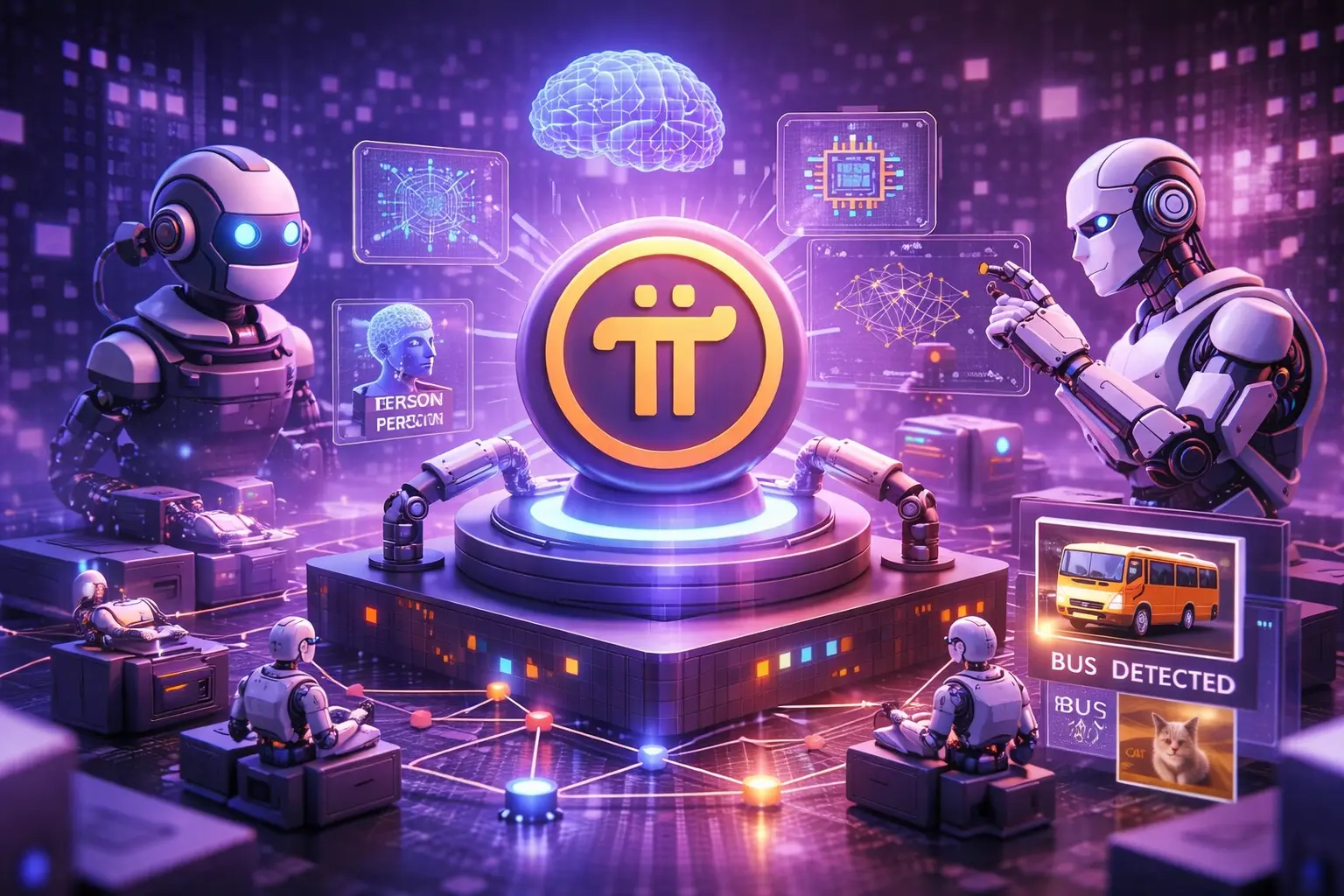
To run the experiment, OpenMind developed a specialized container that distributed AI tasks to participating nodes. These tasks involved image recognition workloads, where nodes processed AI-generated images and identified objects within them. After completing the tasks, the nodes returned results that included object classifications and bounding boxes.
The results of the pilot were promising:
- 7 Pi Node operators participated in the initial test
- Computing jobs were acknowledged within about 1 second
- Processed results were returned within roughly 4 seconds
- The distributed system successfully delivered accurate object detection results
According to the case study, this experiment confirmed that Pi Nodes can effectively handle distributed AI computations while maintaining efficiency and speed.
OpenMind and the Robotics Vision
OpenMind is a robotics-focused startup working to develop an open-source operating system and protocol for robots. The company aims to create a framework that allows machines to perceive their environment, learn from data, and collaborate with other systems.
To support these capabilities, OpenMind requires large amounts of computational resources for training and evaluating AI models. The collaboration with Pi Network explores whether decentralized computing could become a viable alternative to traditional cloud infrastructure.
The partnership also follows Pi Network Ventures’ investment in OpenMind in October 2025, marking the first external investment connected to the Pi ecosystem.
A Large Distributed Infrastructure
One of the key advantages for Pi Network is the size of its global infrastructure. The network currently reports more than 421,000 active nodes, representing over 1 million CPUs collectively.
This distributed capacity creates an opportunity to process computing tasks at scale if node operators choose to participate. Since Pi’s blockchain design does not require the full computing power of these machines for ledger operations alone, a significant portion of this capacity remains available.
Pi Network also has tens of millions of KYC-verified users, which opens the door to potential human-in-the-loop AI systems where verified participants could help review or label data in exchange for rewards.
Expanding Beyond Blockchain
The OpenMind pilot represents an early exploration of how blockchain networks could contribute to decentralized computing infrastructure.
By allowing node operators to opt in and contribute processing power, Pi Network could potentially provide AI startups with an alternative to centralized cloud providers, which often require high infrastructure costs.
While the project remains in the exploratory phase, the results suggest that distributed networks like Pi could eventually support scalable AI workloads.
As Pi Network continues evolving beyond its original mobile mining model, initiatives like this demonstrate the project’s broader ambition to connect blockchain technology, distributed computing, and artificial intelligence into a unified ecosystem.
FAQ
What is the Pi Network OpenMind proof-of-concept?
The proof-of-concept is a collaboration where Pi Network tested whether its distributed Node network could process AI-related workloads from OpenMind, demonstrating the potential for decentralized AI computing.
What tasks did Pi Nodes perform in the pilot?
Participating Pi Nodes processed image recognition tasks, identifying objects in AI-generated images and returning results such as bounding boxes and classifications.
How fast were the results in the test?
The pilot showed strong performance, with computing jobs acknowledged within about 1 second and results returned from nodes in roughly 4 seconds
Why is decentralized AI computing important?
Decentralized AI computing can reduce reliance on centralized cloud providers, lower infrastructure costs, and distribute workloads across a global network of computers.
How large is Pi Network’s node infrastructure?
Pi Network currently reports over 421,000 active nodes representing more than 1 million CPUs worldwide, creating significant distributed computing potential.
What role does OpenMind play in this collaboration?
OpenMind is a robotics-focused startup developing an open-source operating system for robots and AI systems, which requires significant computing power for training and testing AI models.
The opinions and market insights shared on CoinsProbe represent the views of individual authors based on prevailing market conditions at the time of publication. Cryptocurrency investments carry significant risk and volatility. Readers are encouraged to conduct their own research and seek professional financial advice before making investment decisions. CoinsProbe and its contributors do not accept responsibility for financial losses or decisions made based on published content.
CoinsProbe may publish sponsored articles, affiliate links, or promotional collaborations. All sponsored material is clearly labeled to maintain transparency with our audience. Our editorial decisions remain fully independent, and advertising partnerships do not influence reviews, rankings, or published opinions.
Since 2023, CoinsProbe has delivered reliable insights on cryptocurrency, blockchain, and digital assets. Our content is created by experienced researchers and analysts who follow strict editorial standards focused on accuracy, transparency, and credibility. Every article is carefully reviewed and verified using trusted sources and current market data. We provide unbiased analysis and timely updates covering everything from emerging crypto projects to major industry developments.