
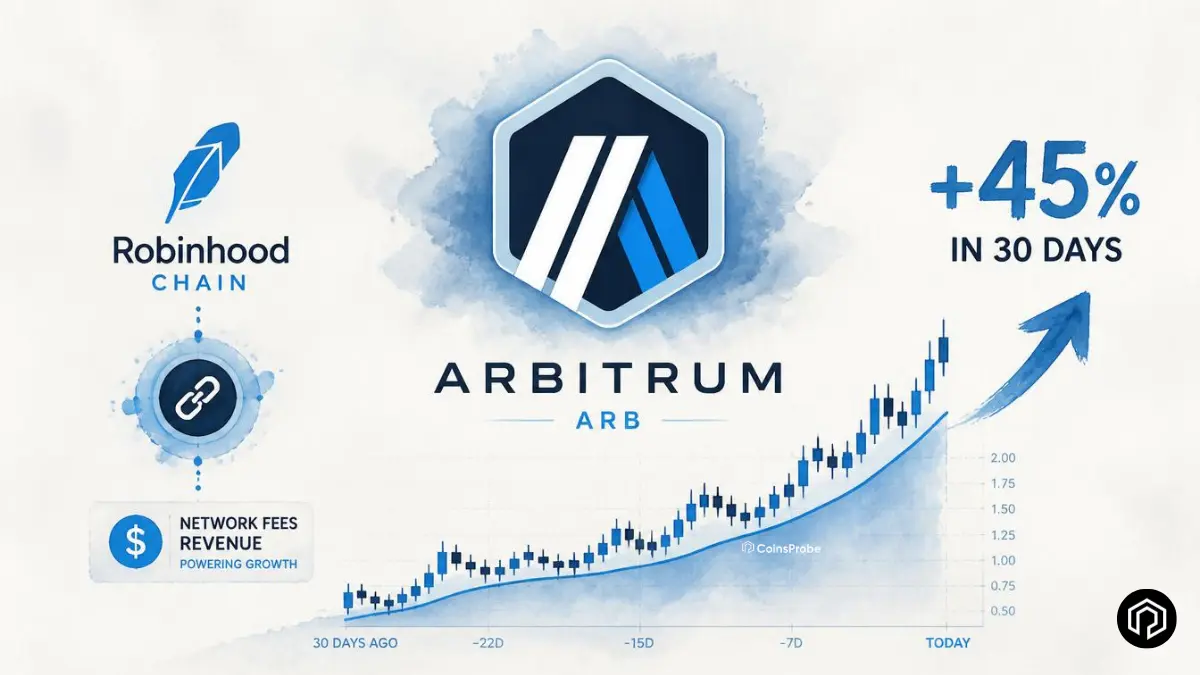

- ARB is trading at $0.1177 — up 26.81% in 7 days and 45.79% over 30 days — with a market cap of ~$766 million, driven by a direct revenue-share mechanism that links Robinhood Chain's record activity to the Arbitrum DAO treasury.
- Under the Arbitrum Expansion Program (AEP), Robinhood Chain remits 10% of Protocol Net Revenue back to Arbitrum — 8% to the DAO treasury and 2% to the Developer Guild — creating a cash-flow link that scales with every dollar of chain revenue.
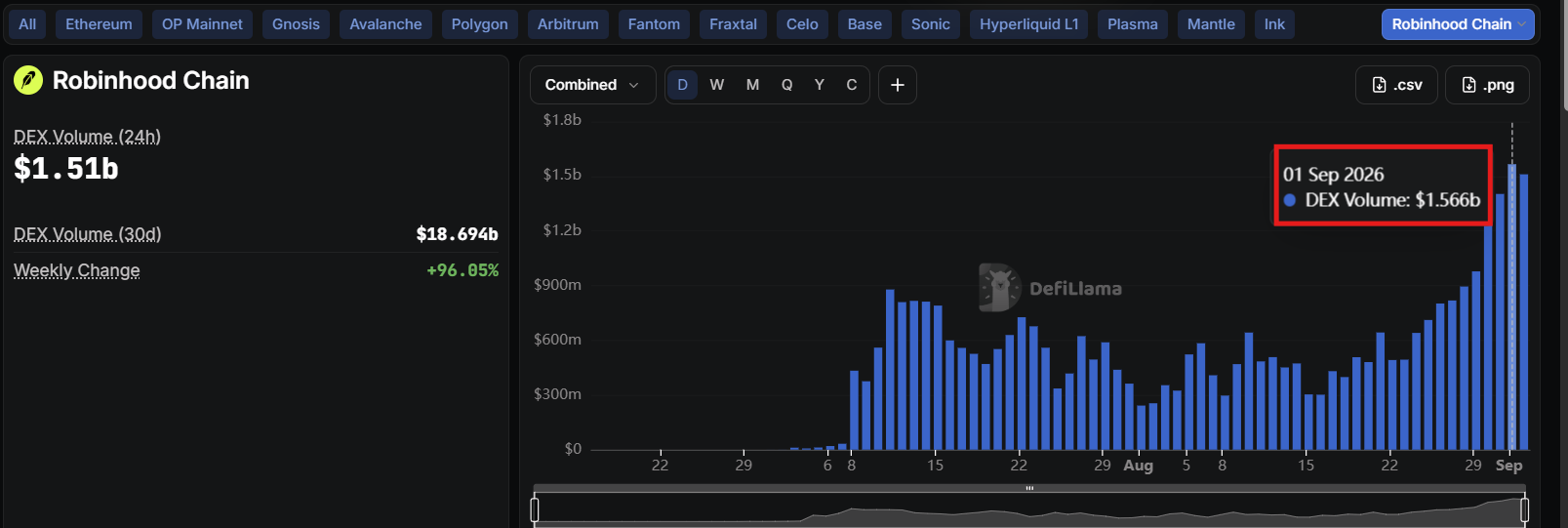
- Robinhood Chain hit a $1.566 billion daily DEX volume record and ranked #1 globally in 24-hour chain revenue — meaning Arbitrum's 10% share scales directly with the most active revenue-generating chain in crypto right now.
Arbitrum’s 45% monthly surge is not a governance token bouncing on airdrop hopes or TVL narratives. It is the market pricing in a specific, contractual revenue relationship between one of the fastest-growing chains in crypto and the Arbitrum ecosystem — and the mechanism is written into Arbitrum’s official documentation, confirmed by the Arbitrum Foundation, and scaling in real time with Robinhood Chain’s record-breaking activity.
At the time of writing, ARB is trading at approximately $0.1177 — up 9.92% in 24 hours, 26.81% over 7 days, and 45.79% over 30 days — with a market capitalization of approximately $786 million.

The Core Catalyst — Robinhood Chain’s 10% Revenue Flows to Arbitrum
The fundamental driver behind ARB’s rally is not speculative — it is a contractual obligation embedded in the Arbitrum Expansion Program (AEP), Arbitrum’s official framework for chains deployed outside Arbitrum One and Arbitrum Nova.
The AEP Revenue Share — How It Works
Robinhood Chain is built on Arbitrum’s technology stack. Under the AEP terms — which are written into Arbitrum’s official documentation and confirmed by the Arbitrum Foundation — Robinhood Chain is required to remit 10% of its Protocol Net Revenue back to the Arbitrum ecosystem.
The split is defined specifically:
| Recipient | Share |
|---|---|
| Arbitrum DAO Treasury | 8% |
| Arbitrum Developer Guild | 2% |
| Robinhood Chain (retained) | 90% |
This is not a rumor, a projection, or an informal arrangement. It is the official AEP mechanism — confirmed by the Arbitrum Foundation — that governs the relationship between Robinhood Chain and the Arbitrum ecosystem. Every dollar of net protocol revenue Robinhood Chain generates produces a direct, proportional inflow to the Arbitrum DAO treasury.
What This Means in Dollar Terms
The revenue share math is straightforward and scales directly with Robinhood Chain’s activity:
| Robinhood Chain Daily Revenue | Arbitrum’s 10% Share |
|---|---|
| $1.0 million | ~$100,000 |
| $1.92 million | ~$192,000 |
| $3.38 million | ~$338,000 |
When Robinhood Chain generates $3.38 million in a single day — as it did on September 1, 2026, ranking #1 globally in 24-hour chain revenue — Arbitrum’s ecosystem share on that day alone is approximately $338,000. That is a direct, real-time cash-flow link between Robinhood Chain’s trading activity and the Arbitrum DAO treasury.
This mechanism transforms ARB’s value proposition in a specific and meaningful way — and the market appears to be recognizing that transformation in the current price action.
Robinhood Chain — The Activity Data Behind the Revenue
Robinhood Chain has become one of the most active venues in the market. Recent DeFiLlama data showed the chain hitting a new daily DEX volume high of about $1.566 billion, with 24-hour DEX volume around $1.51 billion and 30-day volume near $18.69 billion. Weekly DEX volume was up roughly 96%.
DEX Volume Data (DeFiLlama)
Global Chain Revenue Ranking (24H)
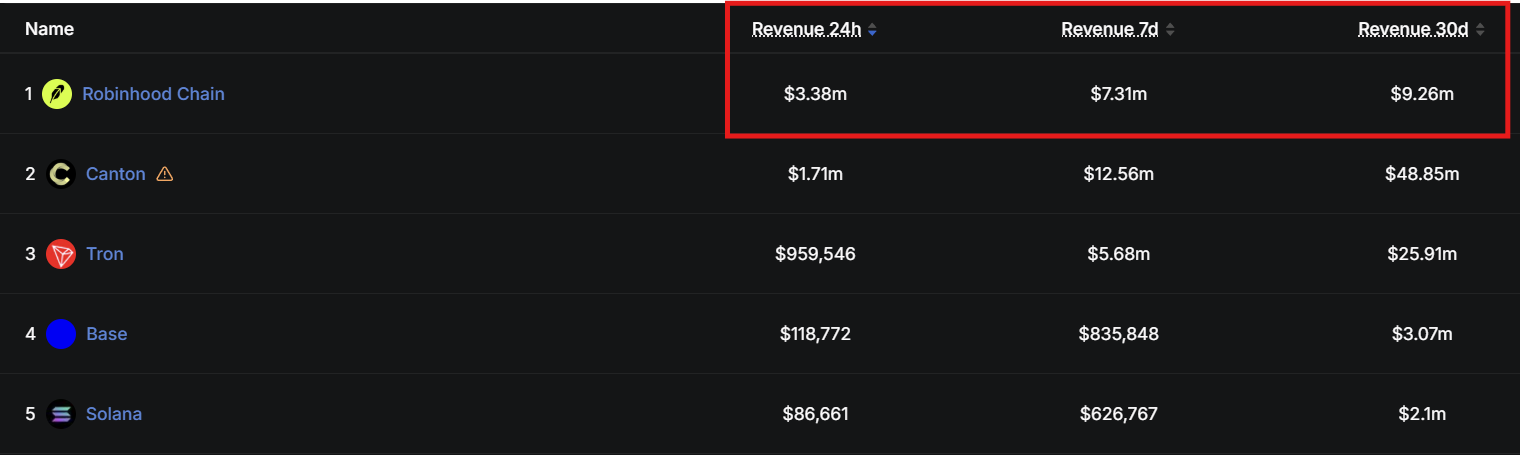
$3.38 million in 24-hour revenue — ranking #1 globally among all blockchains — is not a marginal data point. It is the highest daily chain revenue in the world, generated by a chain whose revenue share obligation to Arbitrum is contractually defined and publicly documented.
At $3.38 million in daily revenue, Arbitrum’s 10% AEP share generates approximately $338,000 per day for the ecosystem — a run rate that, if sustained, would represent meaningful treasury accumulation for a DAO governing a token with a $766 million market cap.
Why This Is Structurally Different From Standard L2 Token Narratives
Most L2 governance token price movements are driven by: TVL narratives, airdrop expectations, ecosystem incentive programs, or broad altcoin beta. ARB’s current move is driven by a fundamentally different mechanism — and the distinction matters for understanding whether the rally has structural legs or represents temporary speculation.
Standard L2 Narrative vs. ARB’s Current Driver
| Standard L2 Rally Driver | ARB’s Current Driver |
|---|---|
| TVL growth | Real protocol revenue share |
| Airdrop speculation | Contractual AEP obligation |
| Ecosystem incentives | Cash-flow linked to chain activity |
| Broad altcoin momentum | Specific revenue-generating chain |
The AEP framework turns Arbitrum into something the market has not fully priced into L2 tokens before: a software licensing business. Robinhood Chain is paying Arbitrum 10% of its revenue in exchange for the technology stack that powers the chain. The more Robinhood Chain trades, the more revenue flows through the licensing arrangement to the Arbitrum ecosystem.
This is analogous to how a software platform charges usage-based licensing fees to businesses running on its infrastructure. The difference is that Arbitrum’s “licensing revenue” flows to a DAO treasury governed by ARB holders — making ARB not just a governance token but a claim on the cash flows generated by Arbitrum’s expanding ecosystem of chains.
ARB holders do not automatically receive cash distributions from the DAO treasury — governance votes determine how treasury funds are deployed. But the accumulation of real revenue in the treasury governed by ARB holders creates a fundamental value proposition that is distinct from and more durable than TVL or airdrop narratives.
Why UNI and ARB Moved Together
The same Robinhood Chain activity surge that drove ARB’s rally also drove Uniswap’s UNI — but through a different mechanism:
UNI benefits from DEX trading volume: Uniswap is the primary DEX on Robinhood Chain. Every swap that contributes to the $1.566 billion daily volume record generates swap fees that flow through Uniswap’s contracts. More volume = more Uniswap fee revenue = stronger UNI fundamental backdrop.
ARB benefits from protocol-level revenue share: Arbitrum captures 10% of Robinhood Chain’s net protocol revenue regardless of which DEX is generating the volume. The AEP share is a chain-level mechanism, not a DEX-level one.
Both tokens rallied simultaneously because both are capturing different layers of the same Robinhood Chain activity surge — UNI at the application layer (DEX fees), ARB at the infrastructure layer (protocol revenue share). The layered nature of the value capture is what explains why both moved significantly rather than one at the expense of the other.
What Determines Whether the Rally Sustains
The sustainability of ARB’s 45% monthly gain depends on a single primary variable: whether Robinhood Chain sustains elevated revenue generation.
Bullish case for sustainability:
If Robinhood Chain holds daily DEX volume above $500 million–$1 billion and daily revenue above $1–2 million, the AEP revenue share remains a meaningful and ongoing source of Arbitrum ecosystem cash flow. At $2 million in daily chain revenue, Arbitrum’s 10% share is $200,000 per day — a run rate that represents real treasury accumulation regardless of the broader altcoin market environment.
Risk to sustainability:
The +96.05% weekly volume increase that drove September 1’s record is extraordinary and may not persist. If Robinhood Chain volume normalizes toward the pre-spike range of $300–$500 million daily, the revenue generation — and Arbitrum’s proportional share — declines accordingly. The fundamental driver remains valid at lower volume levels, but the magnitude of the near-term revenue contribution decreases proportionally.
The metric to track:
DeFiLlama’s daily Robinhood Chain revenue and DEX volume figures are publicly available and update in real time. Sustained daily revenue above $1 million on Robinhood Chain — generating $100,000+ per day for the Arbitrum ecosystem — is the threshold that keeps the revenue-share narrative structurally intact.
The ARB Rally Loop — Summarized
The mechanism driving ARB is a four-step loop that scales automatically with Robinhood Chain activity:
- Robinhood Chain volume hits record levels → $1.566B daily DEX record
- Chain revenue spikes → $3.38M in 24-hour revenue, #1 globally
- 10% flows to Arbitrum → ~$338K to the DAO and Developer Guild per day at peak revenue
- Market re-rates ARB → from L2 incentive token to revenue-linked governance asset
If the loop sustains, ARB’s fundamental valuation case improves with each high-revenue day on Robinhood Chain.
Bottom Line
Arbitrum’s 45.79% monthly surge is the market pricing in a specific, contractual, publicly documented mechanism: Robinhood Chain’s AEP obligation to remit 10% of Protocol Net Revenue to the Arbitrum ecosystem. When Robinhood Chain generates $3.38 million in a single day — ranking #1 globally in chain revenue — Arbitrum’s share scales to approximately $338,000 on that day alone.
This is not a TVL narrative or an airdrop play. It is a software-licensing revenue model applied to blockchain infrastructure — and the market is beginning to value ARB accordingly. Whether the re-rating sustains depends on whether Robinhood Chain’s activity spike represents a durable adoption inflection or a temporary surge. The DeFiLlama data will answer that question in real time.
Frequently Asked Questions
Why is Arbitrum (ARB) surging?
ARB is up 45.79% over 30 days primarily because Robinhood Chain — built on Arbitrum’s tech stack — is required under the Arbitrum Expansion Program (AEP) to remit 10% of its Protocol Net Revenue to the Arbitrum ecosystem (8% to the DAO treasury, 2% to the Developer Guild). Robinhood Chain hit a $1.566B daily DEX volume record and generated $3.38M in 24-hour revenue on September 1 — directly scaling Arbitrum’s revenue share.
What is the Arbitrum Expansion Program (AEP)?
The AEP is Arbitrum’s official framework for chains deployed outside Arbitrum One and Arbitrum Nova. Under its terms, chains built on Arbitrum’s technology stack must remit 10% of their Protocol Net Revenue to the Arbitrum ecosystem — 8% to the DAO treasury and 2% to the Developer Guild. This is confirmed by the Arbitrum Foundation and written into official DAO documentation.
Why did both UNI and ARB rally together?
Both tokens benefit from Robinhood Chain activity but through different mechanisms. UNI captures value at the application layer — Uniswap is the primary DEX on Robinhood Chain, generating swap fees from the $1.566B daily volume. ARB captures value at the infrastructure layer — the AEP 10% revenue share flows to Arbitrum regardless of which application generates the volume.
The opinions and market insights shared on CoinsProbe represent the views of individual authors based on prevailing market conditions at the time of publication. Cryptocurrency investments carry significant risk and volatility. Readers are encouraged to conduct their own research and seek professional financial advice before making investment decisions. CoinsProbe and its contributors do not accept responsibility for financial losses or decisions made based on published content.
CoinsProbe may publish sponsored articles, affiliate links, or promotional collaborations. All sponsored material is clearly labeled to maintain transparency with our audience. Our editorial decisions remain fully independent, and advertising partnerships do not influence reviews, rankings, or published opinions.
Since 2023, CoinsProbe has delivered reliable insights on cryptocurrency, blockchain, and digital assets. Our content is created by experienced researchers and analysts who follow strict editorial standards focused on accuracy, transparency, and credibility. Every article is carefully reviewed and verified using trusted sources and current market data. We provide unbiased analysis and timely updates covering everything from emerging crypto projects to major industry developments.