

- US authorities sanction Xinbi marketplace and seize $52,000,000 in crypto on September 10, 2026
- Simultaneous sanctions + seizure combination targets scam and money-laundering network at scale
- Action follows DOJ pattern: Bitfinex ($3.6B), Bitzlato, and Garantex enforcement precedents
- Watch for expanded OFAC address lists in follow-on actions — standard post-designation pattern
BREAKING
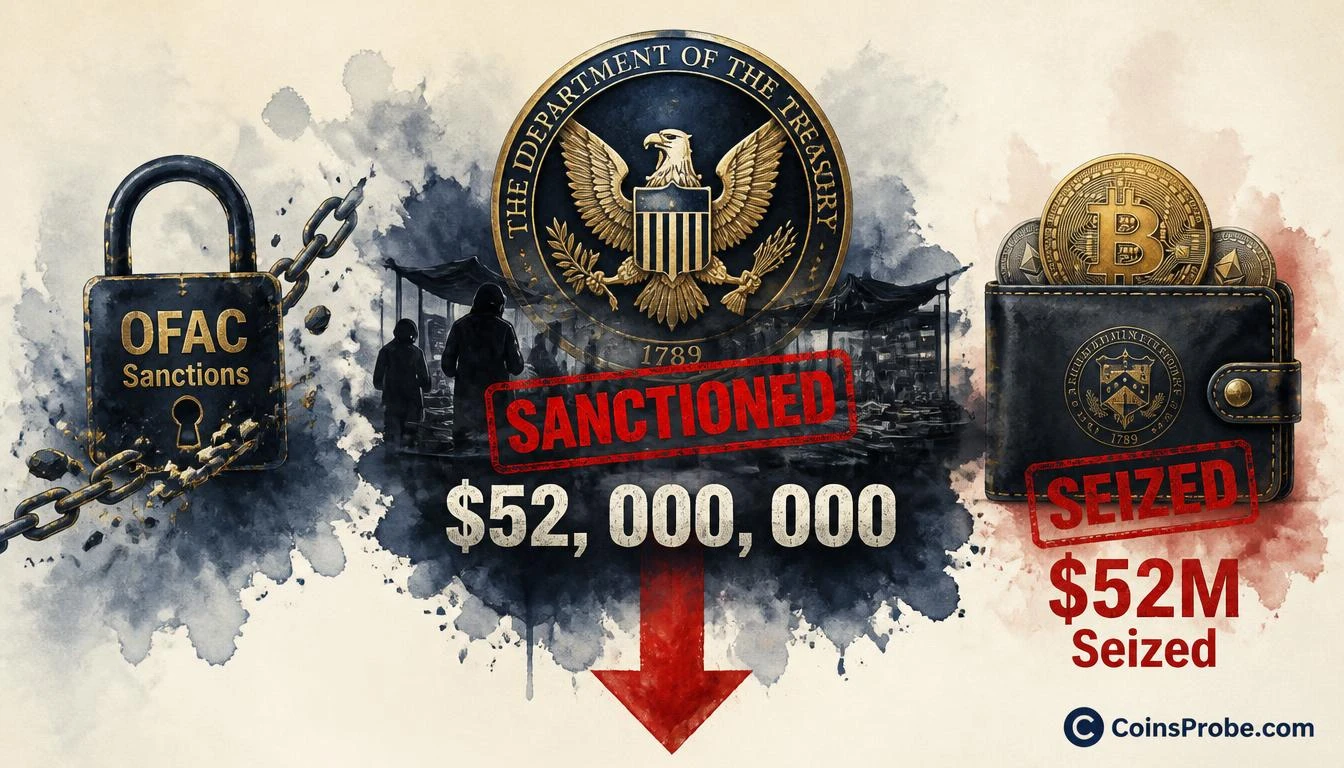
The U.S. government has executed one of its most targeted crypto enforcement actions of the year, sanctioning the Xinbi marketplace and seizing $52,000,000 in cryptocurrency directly linked to a scam and money-laundering network. The action, flagged by Whale Alert on September 10, 2026, marks a significant escalation in Washington’s push to dismantle illicit crypto infrastructure operating across global dark marketplaces.
The Smart Money Move: This was not a voluntary whale trade — it was a forced government seizure. U.S. authorities identified and confiscated $52,000,000 in crypto assets tied directly to the Xinbi marketplace, a platform allegedly facilitating fraud schemes and large-scale money laundering. The seizure was executed alongside formal sanctions designations, effectively freezing Xinbi’s ability to operate or access remaining digital assets. The action was timestamped at 05:43 UTC on September 10, 2026, per Whale Alert’s on-chain monitoring system.
Track Record — U.S. Crypto Enforcement Precedents: This seizure follows a well-documented pattern of escalating U.S. enforcement against illicit crypto marketplaces:
- In 2022, the U.S. Department of Justice seized approximately $3.6 billion in Bitcoin linked to the 2016 Bitfinex hack — then the largest crypto seizure in DOJ history.
- In 2023, authorities seized assets tied to the Bitzlato exchange, designating it a primary money-laundering concern under the Bank Secrecy Act.
- In 2024, Garantex, a Russia-linked crypto exchange, was sanctioned and taken offline in coordination with European law enforcement, with tens of millions in assets frozen.
- The Xinbi action at $52,000,000 fits the mid-tier enforcement bracket — larger than individual scam wallets, smaller than headline exchange busts — but notable for the dual sanctions-plus-seizure combination executed simultaneously.
Why This Matters: This is widely interpreted by compliance analysts and market observers as a continuation of the U.S. Treasury’s OFAC-led strategy to cut off fiat off-ramps for sanctioned entities by targeting the crypto layer directly. Analysts commonly view simultaneous sanctions-and-seizure actions as more disruptive than seizures alone — sanctions block future access while seizure removes existing liquidity. The $52M figure also signals that Xinbi was operating at meaningful scale, not as a fringe actor. For the broader crypto market, enforcement actions of this magnitude reinforce institutional narratives around regulatory clarity: bad actors are being removed, which — paradoxically — strengthens the long-term legitimacy case for compliant crypto infrastructure.
The community reaction across crypto compliance forums and on-chain monitoring channels has been largely measured, with most observers noting this as enforcement-as-expected rather than a shock event. The forward outlook centers on whether additional wallets linked to the Xinbi network will be identified and frozen in follow-on actions — a common pattern in OFAC designations where the initial announcement is followed by expanded address lists in subsequent weeks. Market participants will be watching for any spillover into broader stablecoin or exchange compliance requirements that could emerge from the Xinbi investigation’s findings.
Frequently Asked Questions
What is the Xinbi marketplace and why was it sanctioned?
How does a simultaneous sanctions and seizure action differ from a seizure alone?
What happens next after the Xinbi sanctions designation?
Source: Whale Alert · Published by CoinsProbe Markets Desk
The opinions and market insights shared on CoinsProbe represent the views of individual authors based on prevailing market conditions at the time of publication. Cryptocurrency investments carry significant risk and volatility. Readers are encouraged to conduct their own research and seek professional financial advice before making investment decisions. CoinsProbe and its contributors do not accept responsibility for financial losses or decisions made based on published content.
CoinsProbe may publish sponsored articles, affiliate links, or promotional collaborations. All sponsored material is clearly labeled to maintain transparency with our audience. Our editorial decisions remain fully independent, and advertising partnerships do not influence reviews, rankings, or published opinions.
Since 2023, CoinsProbe has delivered reliable insights on cryptocurrency, blockchain, and digital assets. Our content is created by experienced researchers and analysts who follow strict editorial standards focused on accuracy, transparency, and credibility. Every article is carefully reviewed and verified using trusted sources and current market data. We provide unbiased analysis and timely updates covering everything from emerging crypto projects to major industry developments.