

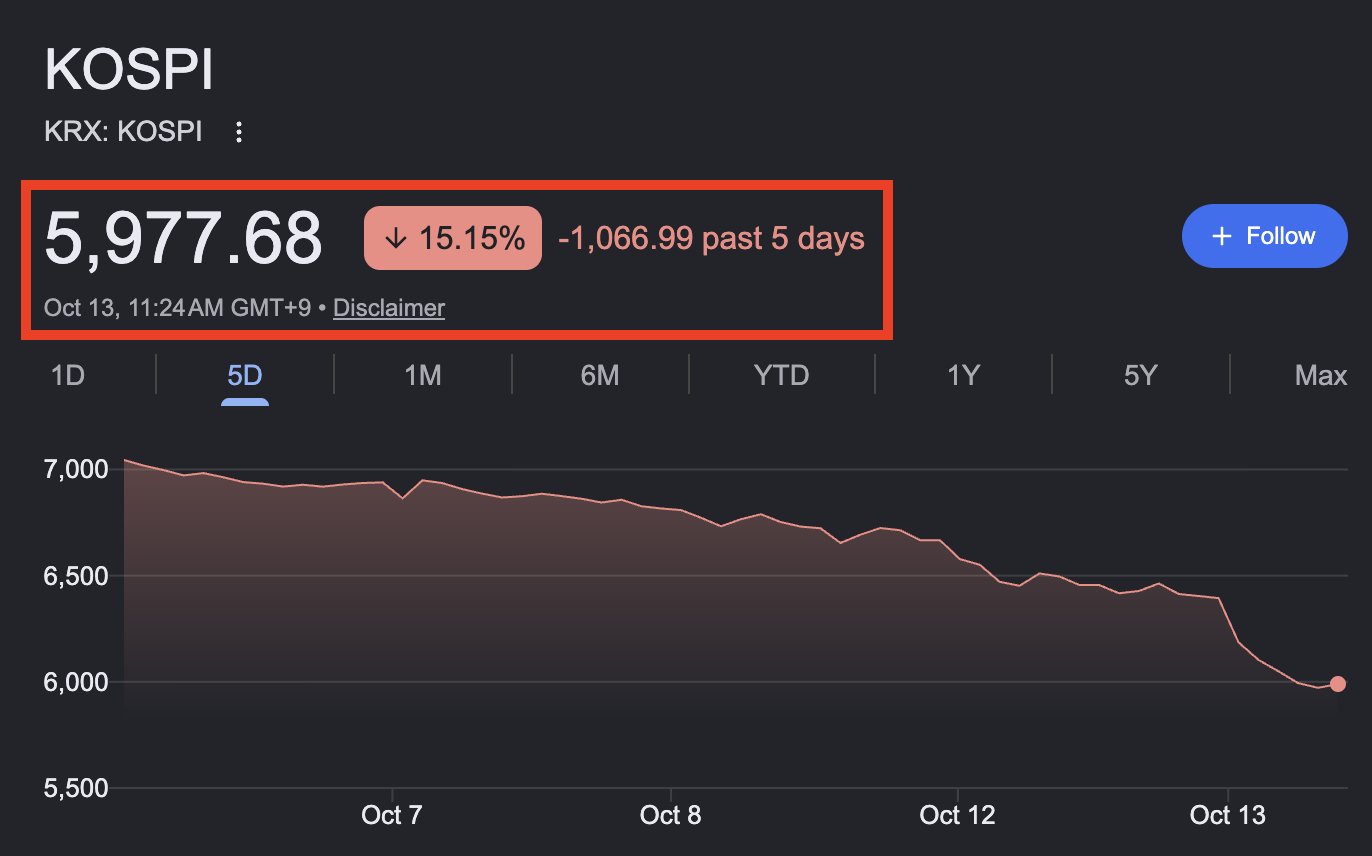
- South Korea's KOSPI has fallen 15.15% — dropping 1,066.99 points — over the past five trading sessions per @KobeissiLetter
- Nasdaq 100 futures down 1% overnight, signaling coordinated global equity stress beyond a single regional event
- Bitcoin liquidations hit ~$774M, mostly long positions, as BTC broke below the $81,500–$82,000 support zone
- A dormant whale moved 4,582 BTC (~$377.6M) after 6+ years — funds remain at recipient addresses, selling unconfirmed
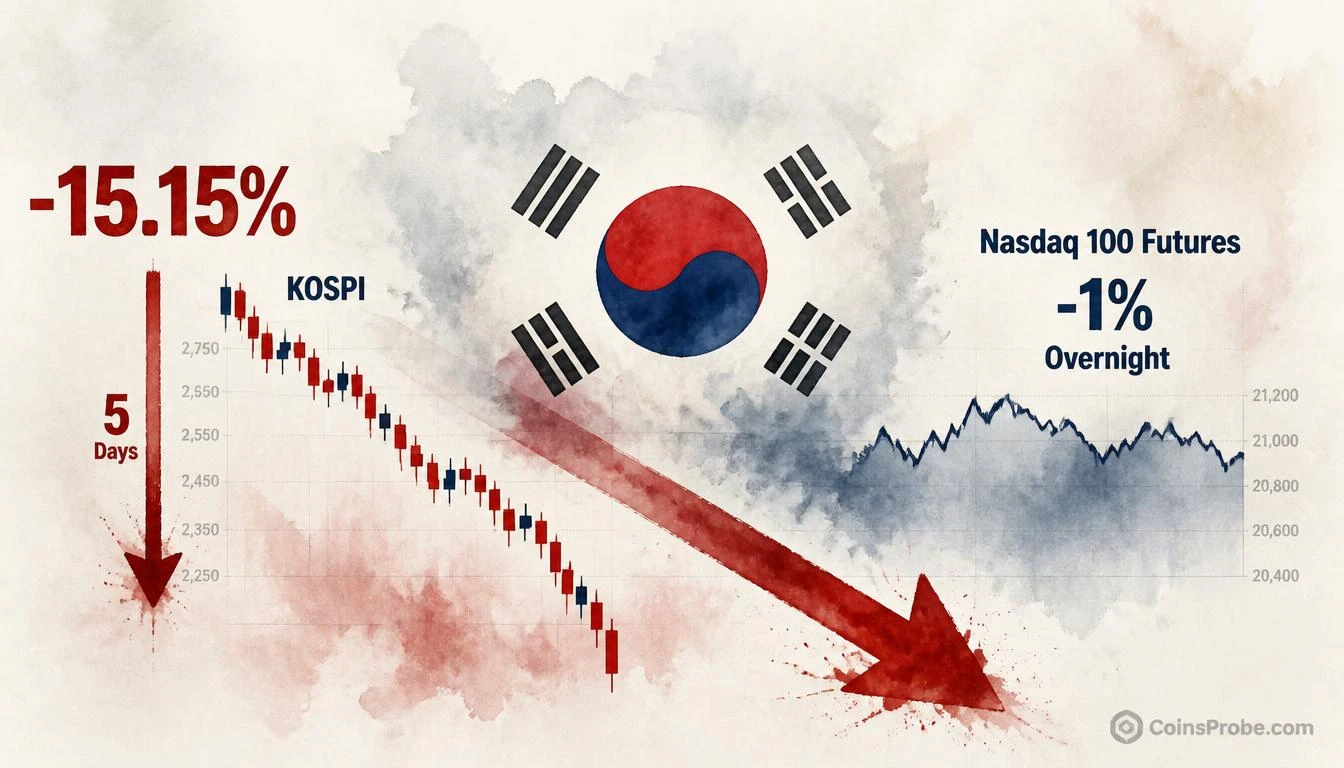
South Korea’s stock market is in freefall. The KOSPI benchmark index has dropped more than 15.15% over the past five trading days — a decline of 1,066.99 points — as a coordinated global risk-off wave hammers equity markets from Seoul to New York, according to @KobeissiLetter.
Nasdaq 100 futures are compounding the signal, falling 1% in overnight trading at the time of the report — a dual-market data point that @KobeissiLetter flags as evidence of coordinated global equity stress, not an isolated regional event.
What Is Driving the Selloff
The primary driver is macro risk-off selling, not a single country-specific shock. Rising US Treasury yields, persistent inflation fears, a strengthening dollar, and elevated oil prices have collectively pressured risk assets across Asian and Western markets. The KOSPI’s five-day chart shows a gradual decline that steepened into a near-vertical drop on October 13 — the pattern characteristic of forced liquidation accelerating an already-stressed market.
Crypto markets have not been spared. Bitcoin broke below approximately $81,500–$82,000, triggering leveraged-position liquidations totaling roughly $774 million, predominantly long positions. For context on the scale of crypto liquidation events this cycle, see our earlier coverage: Bitcoin Drops $2,000 in 20 Minutes as $400M in Longs Are Liquidated.
Separately, a dormant Bitcoin whale moved approximately 4,582 BTC — worth roughly $377.6 million — after more than six years of inactivity. The funds have remained at recipient addresses and no confirmed selling has been established. The movement adds a layer of uncertainty but is not confirmed as a catalyst for the current selloff.
Why This Matters Beyond Seoul
A 15%+ five-day decline in a major developed-market benchmark is not routine volatility. South Korea’s KOSPI is deeply integrated with global semiconductor and tech supply chains — its distress historically correlates with broader risk appetite across Asian and US equity sessions. The simultaneous weakness in Nasdaq 100 futures suggests the selling pressure is not rebounding at the open but carrying forward into Western markets.
The broader context of concentrated market-cap risk in US equities is relevant here. The AI Big 10 now represents a record 42% of US market cap — a concentration level that amplifies drawdowns when macro conditions turn. A 1% overnight decline in Nasdaq 100 futures against that backdrop carries more systemic weight than the number alone implies.
Watch whether Nasdaq 100 futures stabilize or extend losses into the US open — that single data point will determine whether the KOSPI decline remains a regional stress event or the first leg of a broader equity market repricing.
Frequently Asked Questions
Is the KOSPI decline the worst five-day drop in the index’s recent history?
Does the KOSPI crash directly affect Bitcoin and crypto prices?
What would signal that the global selloff is stabilizing?
Source: Kobeissiletter · Published by CoinsProbe Markets Desk
The opinions and market insights shared on CoinsProbe represent the views of individual authors based on prevailing market conditions at the time of publication. Cryptocurrency investments carry significant risk and volatility. Readers are encouraged to conduct their own research and seek professional financial advice before making investment decisions. CoinsProbe and its contributors do not accept responsibility for financial losses or decisions made based on published content.
CoinsProbe may publish sponsored articles, affiliate links, or promotional collaborations. All sponsored material is clearly labeled to maintain transparency with our audience. Our editorial decisions remain fully independent, and advertising partnerships do not influence reviews, rankings, or published opinions.
Since 2023, CoinsProbe has delivered reliable insights on cryptocurrency, blockchain, and digital assets. Our content is created by experienced researchers and analysts who follow strict editorial standards focused on accuracy, transparency, and credibility. Every article is carefully reviewed and verified using trusted sources and current market data. We provide unbiased analysis and timely updates covering everything from emerging crypto projects to major industry developments.