
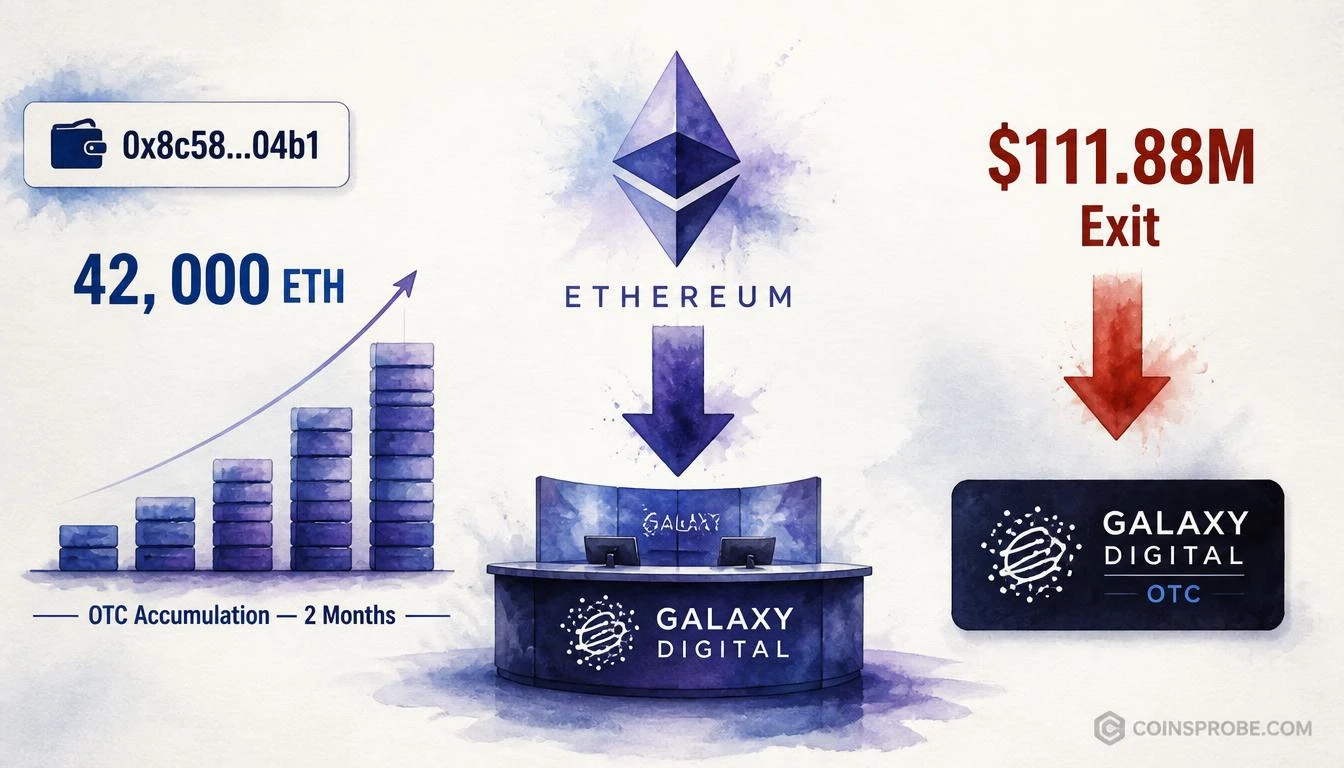

- ETH whale transferred 42,000 ETH (~$111.88M) to Galaxy Digital to sell, flagged by OnchainLens
- Wallet 0x8c585dFECE9d68a09f6a17B46c686E7a126A04b1 built the position over two months via Galaxy Digital OTC
- Full OTC accumulation-to-distribution cycle signals deliberate institutional exit, not panic selling
- Watch Ethereum exchange net inflow data on Glassnode and CryptoQuant for downstream supply impact
BREAKING
Ethereum is navigating a period of heightened on-chain activity, with large wallets making decisive moves that the broader market is watching closely. At the time of writing, ETH remains one of the most actively traded major assets, with institutional desks and OTC markets absorbing significant block trades on both sides — buying and selling — as participants reposition ahead of the final quarter of 2026.
The Smart Money Move:
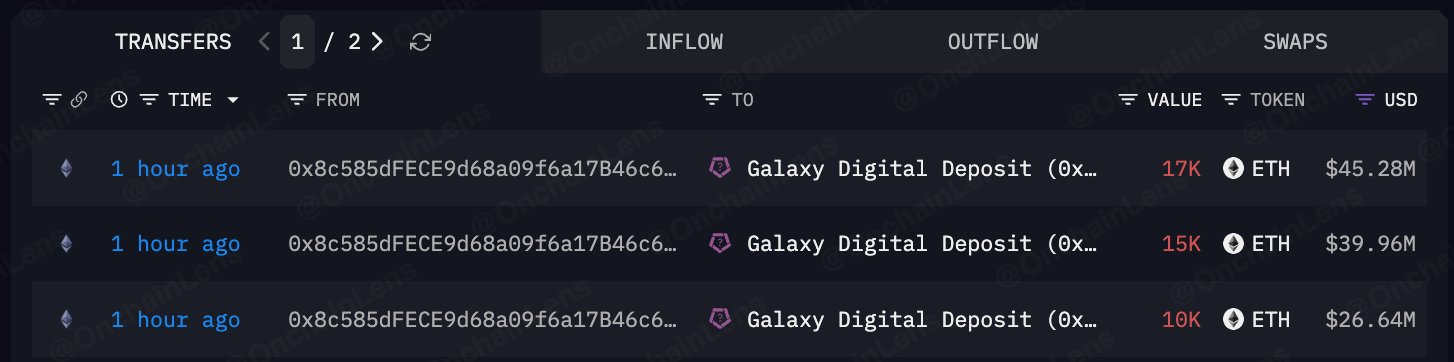
Wallet 0x8c585dFECE9d68a09f6a17B46c686E7a126A04b1 transferred exactly 42,000 ETH — valued at approximately $111.88 million — to Galaxy Digital with an explicit intent to sell. The transfer was flagged by OnchainLens and occurred roughly one hour prior to the signal being broadcast. Galaxy Digital, which operates one of the largest institutional crypto OTC desks in the market, received the full block in a single transfer — indicating this was a coordinated, pre-arranged liquidation rather than an opportunistic spot sale.
Track Record:
On-chain data reveals that this whale did not acquire the position overnight. According to Arkham Intelligence, the wallet systematically built its 42,000 ETH position over the preceding two months, executing all purchases through Galaxy Digital’s OTC desk — the same counterparty now being used for the exit. This full-cycle OTC strategy — accumulate via OTC, distribute via OTC — is a hallmark of sophisticated institutional players seeking to avoid exchange order book impact on both legs of the trade. No specific per-unit entry price data is available in the source, meaning a precise profit-and-loss calculation cannot be confirmed at this time.
Why This Matters:
A single wallet liquidating $111.88 million of ETH in one block is a material event. This is widely interpreted by on-chain analysts as a sign that at least one large participant who accumulated aggressively over July and August 2026 has now decided current price levels represent an acceptable or optimal exit. The choice of Galaxy Digital’s OTC desk for the sell — mirroring the accumulation method — suggests the whale was deliberate about minimizing slippage and market impact. Analysts commonly view this type of OTC-to-OTC cycle as a signal that a participant has reached their target return window, rather than necessarily expressing a bearish macro view on Ethereum. That said, a $111.88 million block entering the sell side through any channel adds meaningful supply pressure to the market. For context on Ethereum’s broader institutional momentum, see Ethereum Goes Bullish As BlackRock Approaches For Spot Ethereum ETF.
The community reaction to this transfer has been one of cautious attention. When a wallet of this scale completes a full accumulation-to-distribution cycle entirely through Galaxy Digital — bypassing centralized exchanges entirely — it draws scrutiny about what the whale knows or believes about near-term price dynamics. The key forward question is whether Galaxy Digital’s desk absorbs the 42,000 ETH block internally through matched institutional buyers, or whether a portion of that supply eventually reaches spot markets. If matched internally, price impact may be limited. If distributed outward, the effect becomes visible in exchange inflow data within 24 to 48 hours. Traders are advised to monitor Ethereum exchange net flows via Glassnode and CryptoQuant in the sessions ahead.
Frequently Asked Questions
Why did the ETH whale use Galaxy Digital OTC instead of selling on a centralized exchange?
Does a $111.88M ETH OTC sale mean the whale is bearish on Ethereum long-term?
How can traders track whether Galaxy Digital distributes this 42,000 ETH block to spot markets?
Source: OnchainLens · Published by CoinsProbe Markets Desk
The opinions and market insights shared on CoinsProbe represent the views of individual authors based on prevailing market conditions at the time of publication. Cryptocurrency investments carry significant risk and volatility. Readers are encouraged to conduct their own research and seek professional financial advice before making investment decisions. CoinsProbe and its contributors do not accept responsibility for financial losses or decisions made based on published content.
CoinsProbe may publish sponsored articles, affiliate links, or promotional collaborations. All sponsored material is clearly labeled to maintain transparency with our audience. Our editorial decisions remain fully independent, and advertising partnerships do not influence reviews, rankings, or published opinions.
Since 2023, CoinsProbe has delivered reliable insights on cryptocurrency, blockchain, and digital assets. Our content is created by experienced researchers and analysts who follow strict editorial standards focused on accuracy, transparency, and credibility. Every article is carefully reviewed and verified using trusted sources and current market data. We provide unbiased analysis and timely updates covering everything from emerging crypto projects to major industry developments.