
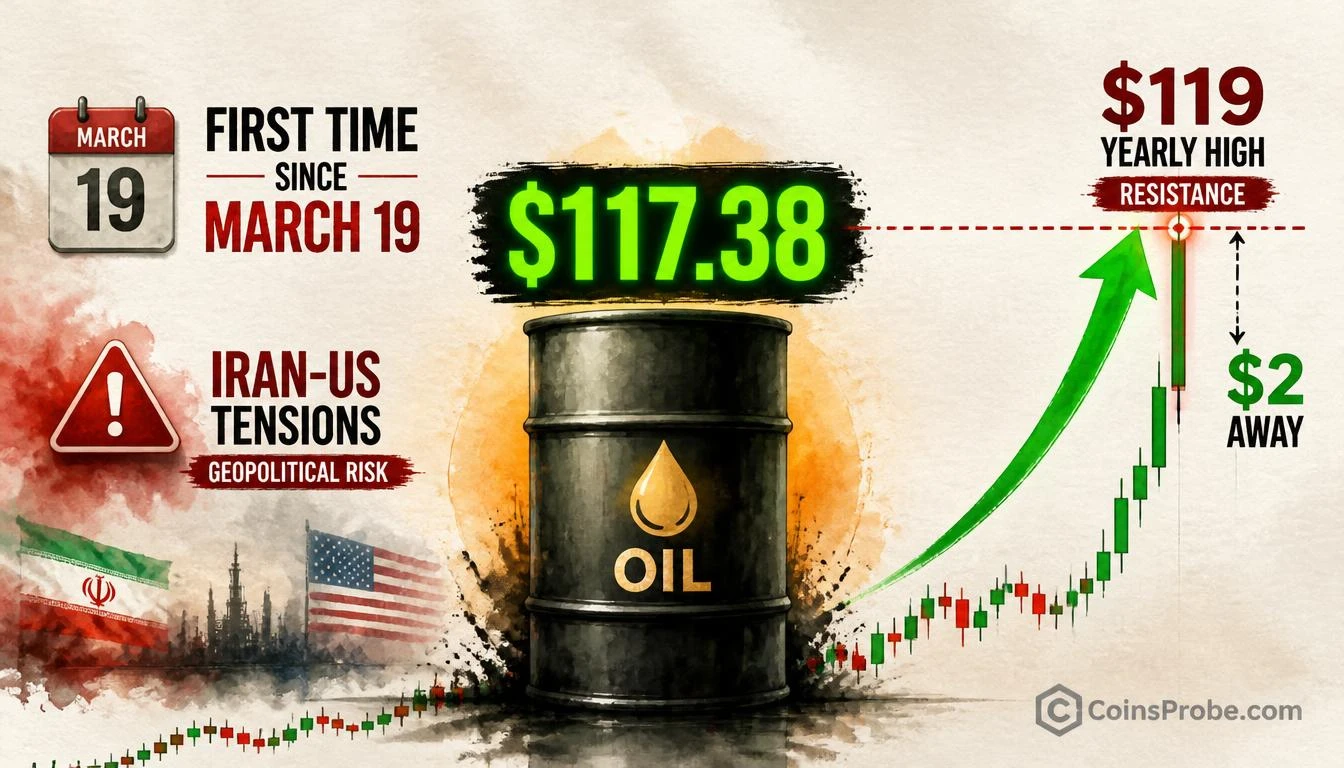

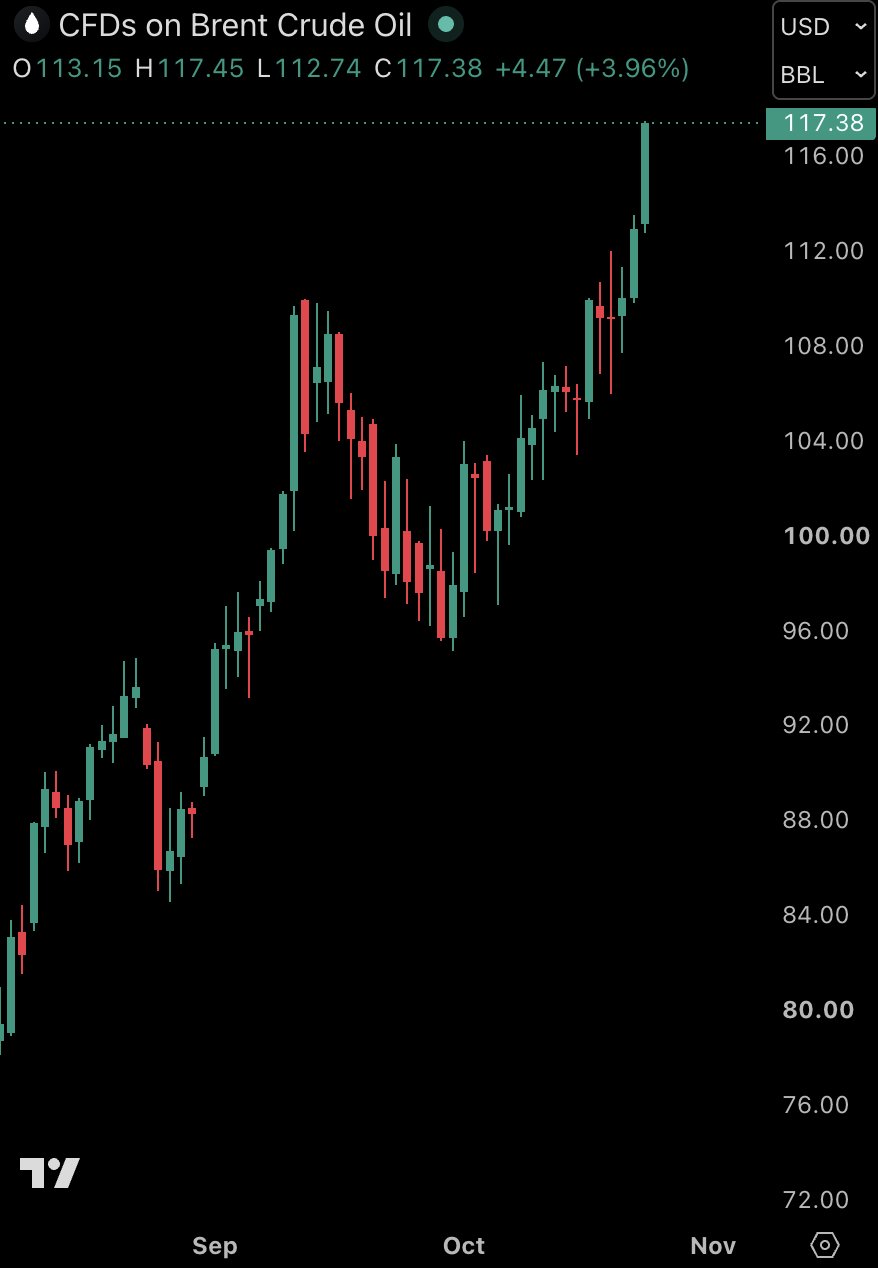
- Brent crude tops $117.38/barrel — up +3.96% — first print above $117 since March 19th per @KobeissiLetter
- Catalyst: Iran Revolutionary Guard claims 7 tankers disabled near Strait of Hormuz; Trump-Netanyahu strike talks resume
- Brent is $2 from its yearly high; break above $119 would mark fresh multi-year highs and reset inflation expectations
- Rising oil prices are pushing inflation expectations higher, threatening to delay central bank rate cuts
Brent crude oil has surged above $117 per barrel for the first time since March 19th, driven by renewed fears that the United States will resume strikes on Iran — a scenario that markets are pricing as a direct threat to Strait of Hormuz oil flows.
The move, flagged by @KobeissiLetter, puts Brent crude just $2 below its high of the year. At the time of writing, Brent is trading at approximately $117.38, up $4.47 (+3.96%) on the session — heading for a third consecutive weekly gain.
The catalyst is geopolitical, not supply-side. Iran’s Revolutionary Guard claimed it had disabled seven tankers near the Strait of Hormuz. Simultaneously, reports indicate President Trump and Israeli Prime Minister Netanyahu have resumed discussions over potential strikes following the U.S. midterm elections. The Strait of Hormuz carries a substantial share of global oil shipments — any disruption to transit would tighten supply immediately.
President Trump called Iran’s reported vessel attacks “lies intended to raise oil prices” ahead of elections. U.S. Ambassador to the UN Mike Waltz stated the U.S. could maintain its blockade of Iranian ports “for the foreseeable future.” No final decision on resumed major strikes has been confirmed — reports describe renewed action as under active consideration, not as an executed order.
The macro implication is significant. Rising energy costs are pushing inflation expectations higher at a moment when central banks remain rate-sensitive. Persistent oil above $115–$117 creates stagflationary pressure — higher prices without growth acceleration — which could delay rate cuts or keep monetary policy restrictive longer than markets have priced. That dynamic carries direct consequences for risk assets, including crypto. The S&P 500’s concentration in rate-sensitive equities makes the oil-inflation linkage particularly relevant for broader portfolio positioning.
The $119 annual high is now the sole structural ceiling. A sustained close above it would mark fresh multi-year highs for Brent and materially change the inflation narrative heading into the next FOMC window. Watch that level — a confirmed break opens a leg higher with no technical resistance until the $125 region.
Frequently Asked Questions
Why did Brent crude oil surge above $117 today?
How close is Brent crude to its yearly high?
What does higher oil mean for inflation and interest rates?
Source: Kobeissiletter · Published by CoinsProbe Markets Desk
The opinions and market insights shared on CoinsProbe represent the views of individual authors based on prevailing market conditions at the time of publication. Cryptocurrency investments carry significant risk and volatility. Readers are encouraged to conduct their own research and seek professional financial advice before making investment decisions. CoinsProbe and its contributors do not accept responsibility for financial losses or decisions made based on published content.
CoinsProbe may publish sponsored articles, affiliate links, or promotional collaborations. All sponsored material is clearly labeled to maintain transparency with our audience. Our editorial decisions remain fully independent, and advertising partnerships do not influence reviews, rankings, or published opinions.
Since 2023, CoinsProbe has delivered reliable insights on cryptocurrency, blockchain, and digital assets. Our content is created by experienced researchers and analysts who follow strict editorial standards focused on accuracy, transparency, and credibility. Every article is carefully reviewed and verified using trusted sources and current market data. We provide unbiased analysis and timely updates covering everything from emerging crypto projects to major industry developments.