
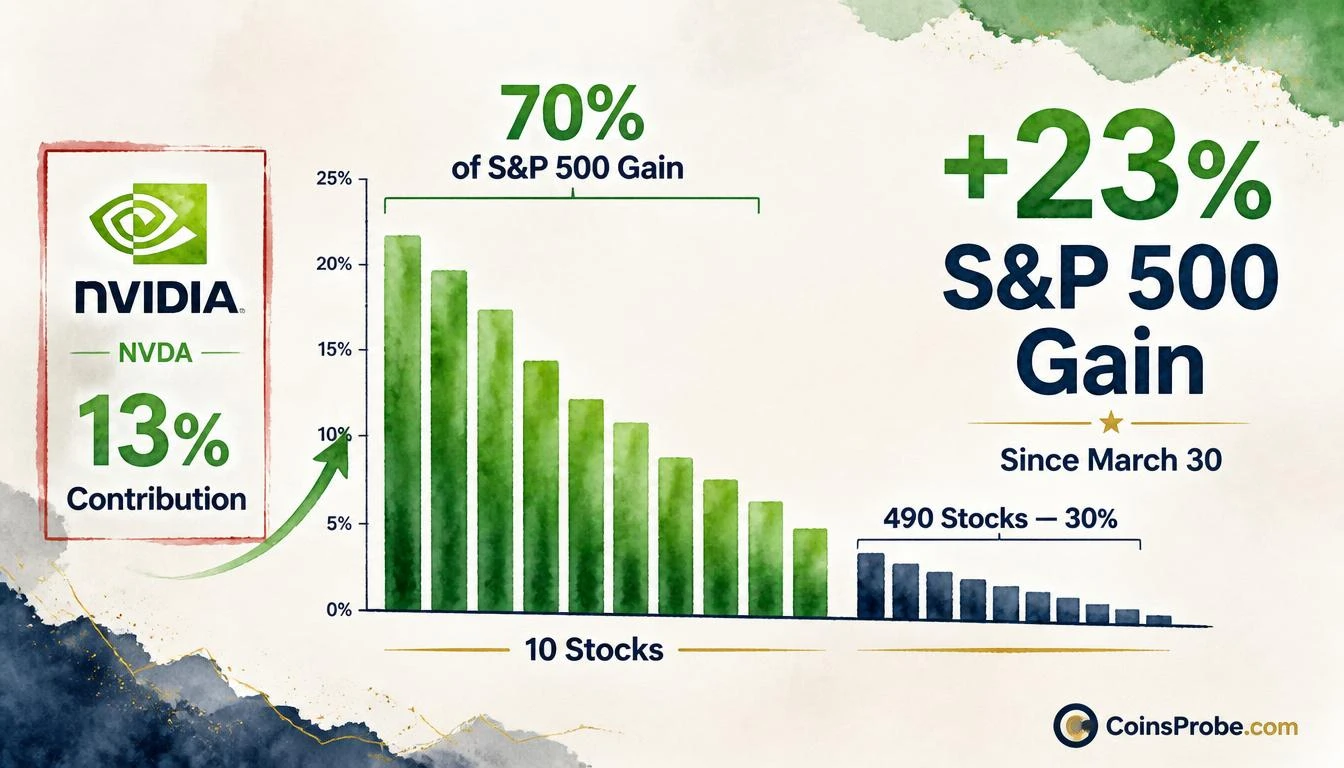
- 10 stocks drove 70% of the S&P 500's +23% gain since March 30th, adding +16 percentage points to the index
- Nvidia ($NVDA) is the single largest contributor at 13% of total S&P 500 gains since March 30th
- The remaining 490 S&P 500 stocks collectively produced just 30% of the index's advance
- Equal-weighted S&P 500 lagged the cap-weighted index significantly, confirming historically narrow rally breadth
Ten stocks have accounted for 70% of the S&P 500’s entire +23% gain since March 30th — a level of market concentration that Bloomberg terminal data and FactSet index contribution figures confirm is extraordinary by any historical measure.
The ten names collectively added +16 percentage points to the index’s advance. The remaining 490 stocks in the index produced just 30% of the gain combined, per analysis published by @KobeissiLetter.
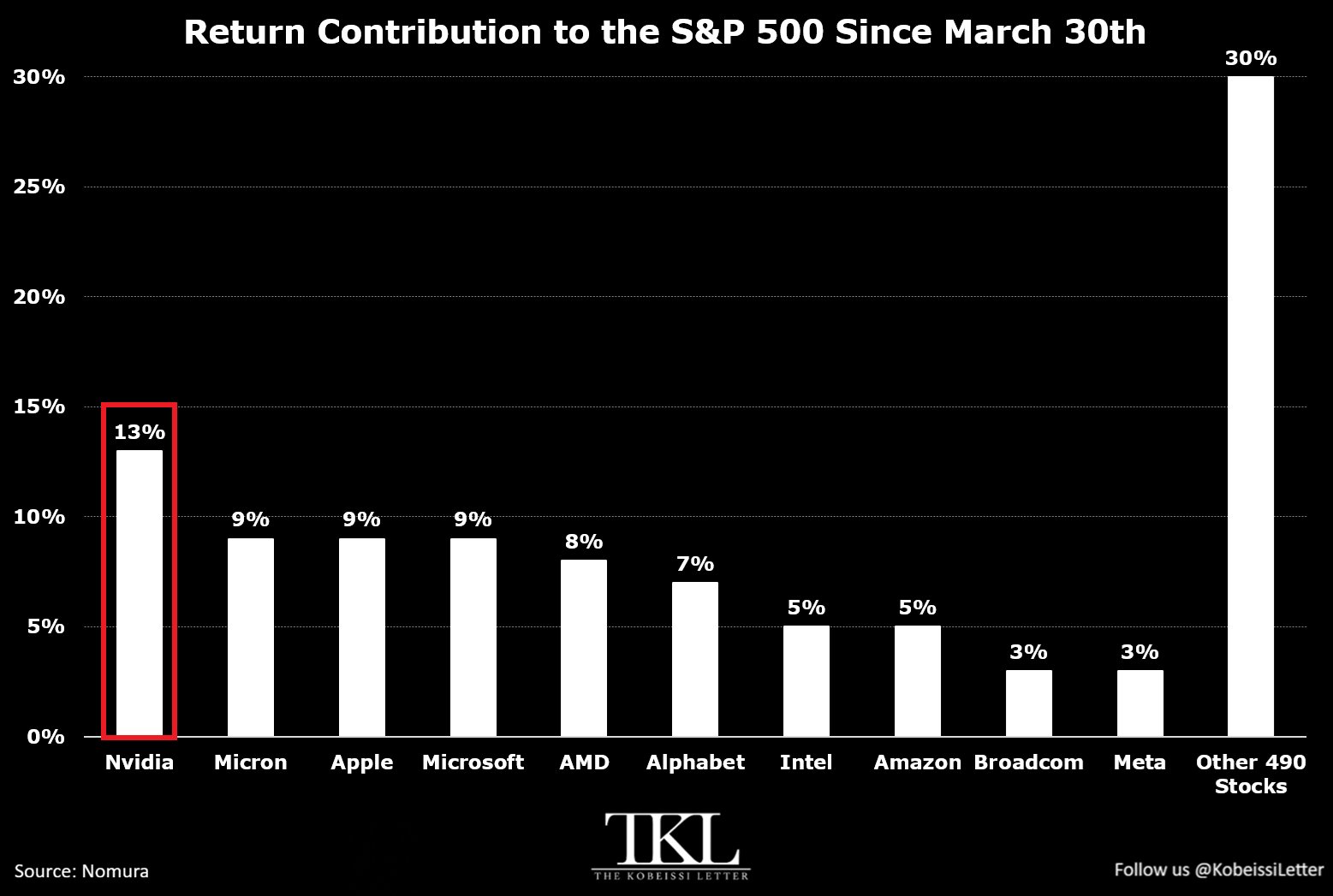
Nvidia ($NVDA) is the single largest contributor, accounting for 13% of the S&P 500’s gain — roughly +3 percentage points of the index’s total advance — driven by record data-center revenue reported across its May and August 2024 earnings cycles and sustained AI chip demand. Microsoft, Apple, AMD, Alphabet, Intel, Amazon, Broadcom, and Meta round out the dominant cluster, each contributing between 3% and 9% of the index’s total return per the chart breakdown.
The gap between the cap-weighted S&P 500 and its equal-weighted counterpart has widened sharply over this period, confirming that the rally’s breadth is historically narrow. When 490 stocks generate less cumulative return than Nvidia alone, the index’s advance reflects a sectoral re-rating — specifically AI infrastructure capex — not broad economic participation. This dynamic mirrors the liquidity concentration patterns flagged when global money market funds pulled in $166.4B in a single week, the largest inflow since April 2020 — capital that has been selectively deployed into high-conviction AI names rather than the broader market.
The concentration raises a structural question: a reversal in sentiment on AI capex expectations — or a single disappointing earnings print from Nvidia or Microsoft — carries index-level risk that a diversified rally would not. The equal-weighted S&P 500’s underperformance quantifies exactly that fragility.
Frequently Asked Questions
Which 10 stocks drove 70% of the S&P 500’s gain since March 30th?
Does narrow market breadth mean the S&P 500 rally is about to reverse?
How does the equal-weighted S&P 500 performance compare over this period?
Source: Kobeissiletter · Published by CoinsProbe Markets Desk
The opinions and market insights shared on CoinsProbe represent the views of individual authors based on prevailing market conditions at the time of publication. Cryptocurrency investments carry significant risk and volatility. Readers are encouraged to conduct their own research and seek professional financial advice before making investment decisions. CoinsProbe and its contributors do not accept responsibility for financial losses or decisions made based on published content.
CoinsProbe may publish sponsored articles, affiliate links, or promotional collaborations. All sponsored material is clearly labeled to maintain transparency with our audience. Our editorial decisions remain fully independent, and advertising partnerships do not influence reviews, rankings, or published opinions.
Since 2023, CoinsProbe has delivered reliable insights on cryptocurrency, blockchain, and digital assets. Our content is created by experienced researchers and analysts who follow strict editorial standards focused on accuracy, transparency, and credibility. Every article is carefully reviewed and verified using trusted sources and current market data. We provide unbiased analysis and timely updates covering everything from emerging crypto projects to major industry developments.