

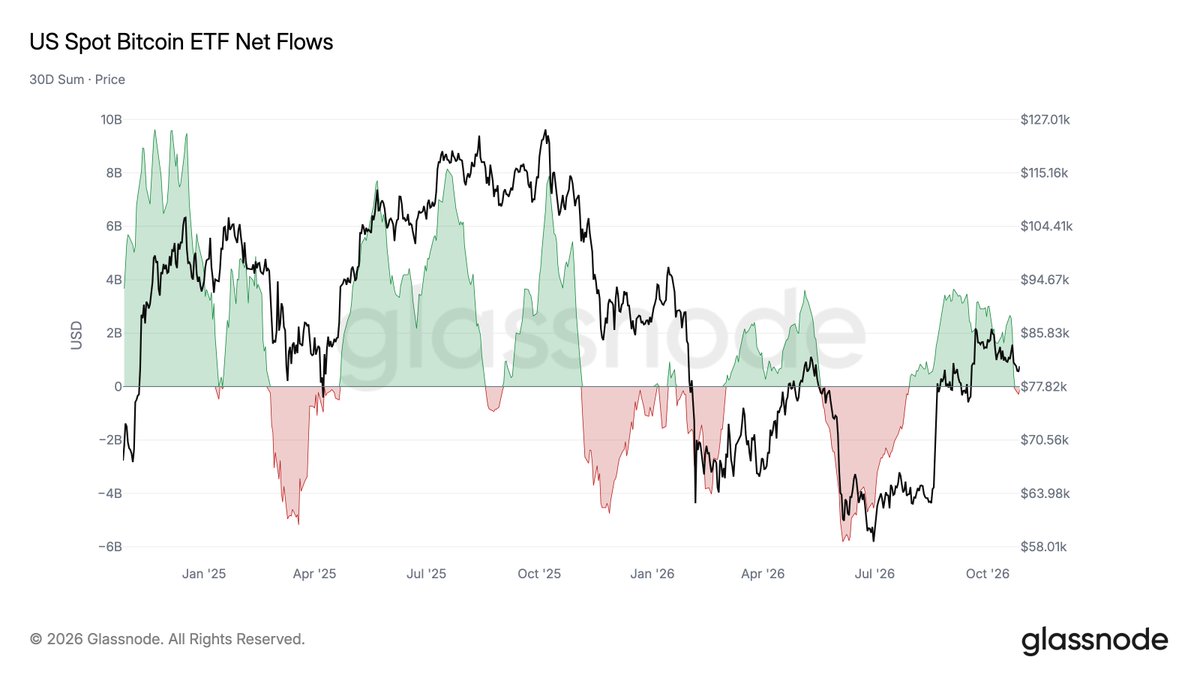
- US spot Bitcoin ETFs logged –$292M in 30-day net flows as of Oct 26 — first negative streak since late July per Glassnode
- Single-day outflow peak reached ~$140M mid-October before reversing; total ETF AUM still exceeds $58 billion
- –$292M outflow = ~0.50% of $58B AUM — shallow drawdown; inflows have returned this week
- Bitcoin trades at $81,191 (+0.81% 24h) — spot price held without a structural break during the outflow window
BREAKING
US spot Bitcoin ETFs have recorded their first 30-day net outflow period since late July, with cumulative rolling flows reaching –$292 million as of October 26, according to Glassnode’s ETF flow dashboard. Inflows have since returned this week, keeping the drawdown shallow against a total ETF AUM base that still exceeds $58 billion.
At the time of writing, Bitcoin is trading at approximately $81,191 — up 0.81% over the past 24 hours — suggesting the outflow episode has not materially destabilized spot price.
The Numbers in Context
The –$292 million 30-day figure requires a denominator to be understood clearly. Against a $58 billion AUM base, the outflow represents approximately 0.50% of total ETF assets — a drawdown shallow enough that it did not move Bitcoin below any major technical support during the window. Single-day outflows peaked at roughly $140 million mid-October before reversing, meaning no single session approached the scale of the large outflow days seen during the ETF’s early post-launch volatility.
The last comparable 30-day negative flow reading was recorded in late July, which itself proved a temporary dip before inflows resumed. Glassnode’s rolling data shows the current episode following a near-identical pattern: negative turning, then a prompt return to positive territory within weeks.
What Drove the Outflow Window
The timing aligns with Bitcoin’s September–October rally running into profit-taking and tactical position trimming ahead of the US election. Broader risk-asset volatility during the same period — not a structural shift in institutional demand — appears to be the primary driver. There is no evidence from Glassnode’s flow data of large-scale institutional exits; the flow composition remained consistent with daily retail and tactical trading activity rather than block-size redemptions from major fund holders.
BlackRock, Fidelity, and Invesco have not issued specific commentary on the outflow window. ETF executives at recent industry events have publicly reiterated that long-term institutional demand remains intact — a position consistent with the speed at which inflows have returned this week.
This flow picture aligns with broader on-chain sentiment data. A recent CryptoQuant analyst consensus placed Bitcoin’s bullish score at 82.5% — a reading that suggests the on-chain regime remained constructive even as ETF flows turned temporarily negative.
What the Data Confirms — and What It Doesn’t
The –$292 million rolling figure confirms that short-term holders and tactical traders reduced exposure during mid-to-late October. It does not confirm institutional abandonment, a trend reversal in ETF adoption, or a directional signal for Bitcoin price — outflows of this magnitude relative to AUM have resolved bullishly in prior instances, including the late July episode. What distinguishes this drawdown is its brevity: inflows returned within the same month, before the 30-day window fully closed.
The metric to track going forward is Glassnode’s rolling 30-day net flow figure, which updates in real time at glassno.de/etfs-30d-netflow. A sustained return above zero on that rolling basis — combined with daily inflow consistency across IBIT, FBTC, and peer funds — would confirm the outflow episode as resolved. A second negative inflection below –$292 million would warrant reassessment.
For now: $58 billion in AUM absorbed a –$292 million, 30-day outflow without a structural price break. That is the data. Watch the rolling 30-day flow figure — not single-session prints — as the cleaner signal for whether institutional demand is genuinely shifting.
Source: glassno.deFrequently Asked Questions
Is a –$292M 30-day ETF outflow large relative to Bitcoin ETF total assets?
When was the last time US spot Bitcoin ETFs had a 30-day net outflow before October 2024?
What is the single most important metric to track to know if the outflow episode is truly over?
Source: Glassnode · Published by CoinsProbe Markets Desk
The opinions and market insights shared on CoinsProbe represent the views of individual authors based on prevailing market conditions at the time of publication. Cryptocurrency investments carry significant risk and volatility. Readers are encouraged to conduct their own research and seek professional financial advice before making investment decisions. CoinsProbe and its contributors do not accept responsibility for financial losses or decisions made based on published content.
CoinsProbe may publish sponsored articles, affiliate links, or promotional collaborations. All sponsored material is clearly labeled to maintain transparency with our audience. Our editorial decisions remain fully independent, and advertising partnerships do not influence reviews, rankings, or published opinions.
Since 2023, CoinsProbe has delivered reliable insights on cryptocurrency, blockchain, and digital assets. Our content is created by experienced researchers and analysts who follow strict editorial standards focused on accuracy, transparency, and credibility. Every article is carefully reviewed and verified using trusted sources and current market data. We provide unbiased analysis and timely updates covering everything from emerging crypto projects to major industry developments.