
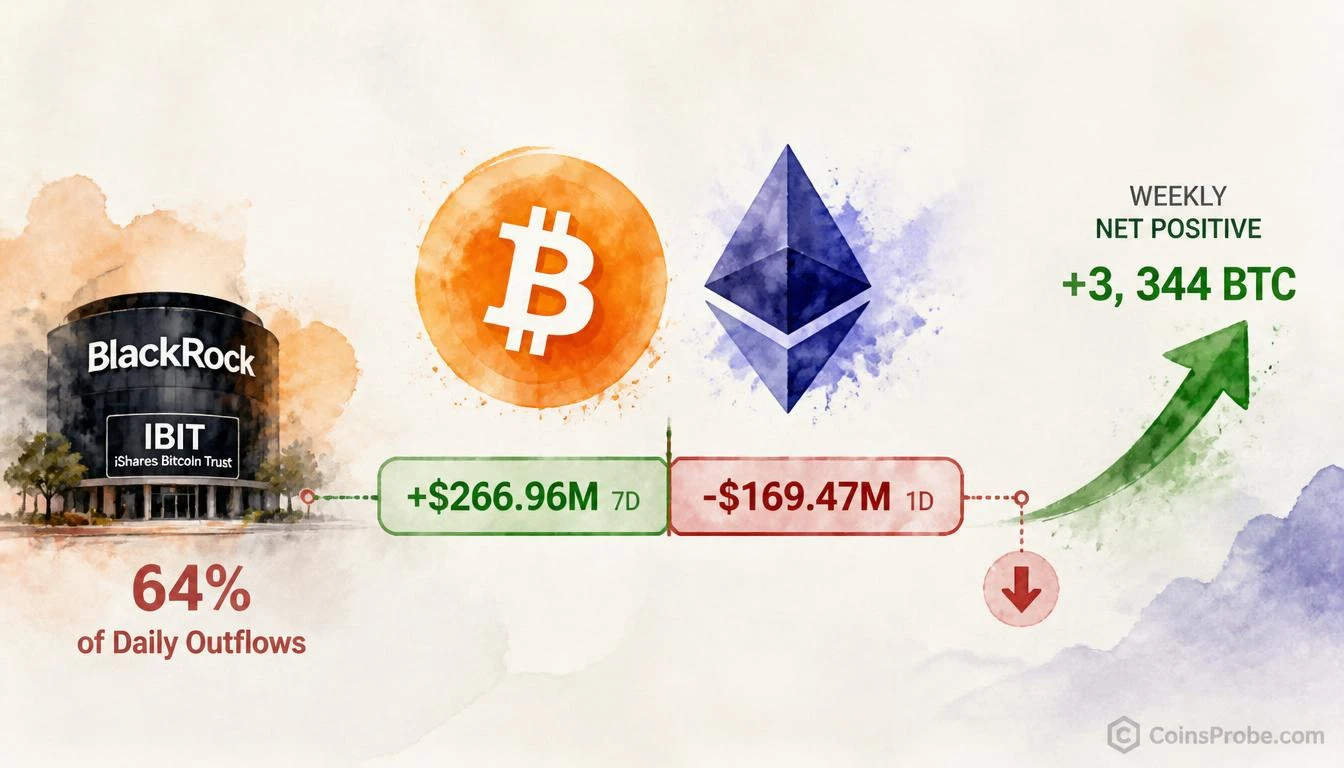

- Bitcoin ETFs posted a 1-day outflow of 2,123 BTC ($169.47M) on Oct 26 per Lookonchain
- Seven-day Bitcoin ETF net inflows remain positive at +3,344 BTC (+$266.96M) — daily exit reversed 63.5% of weekly gains
- BlackRock IBIT drove 64% of daily BTC outflows but generated 203% of weekly net BTC inflows — extreme single-fund concentration
- Ethereum ETFs posted dual red readings: −$16.07M daily and −$198.15M weekly, with ETHA's 7D outflow exceeding total ETH ETF redemptions by 113%
BREAKING
Bitcoin spot ETFs recorded a single-day net outflow of 2,123 BTC — equivalent to $169.47 million — on October 26, according to data published by Lookonchain. The daily bleed, however, sits inside a positive seven-day window: the same funds absorbed a net 3,344 BTC (+$266.96 million) over the trailing week, meaning Sunday’s selling reversed only 63.5% of the week’s institutional demand.
At the time of writing, Bitcoin is trading at approximately $80,495 — down 0.08% over the past 24 hours.
Bitcoin ETF Flows — October 26
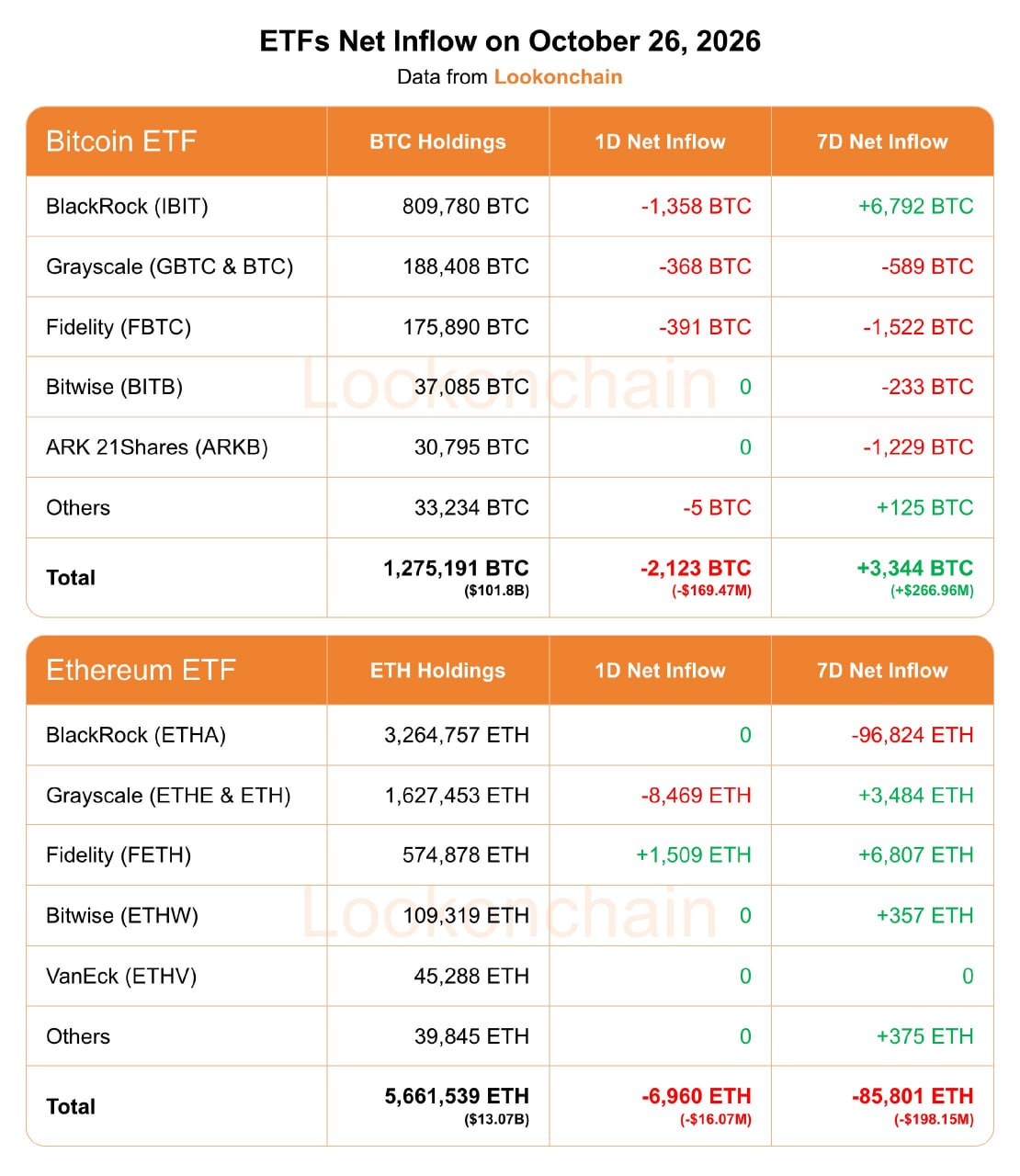
The fund-level breakdown from the Lookonchain data and the accompanying chart reveals a divergence in issuer behavior rather than a uniform sell-off. BlackRock’s IBIT — the largest holder at 809,780 BTC ($65.2B) — posted a 1-day outflow of 1,358 BTC, accounting for 64% of the total daily Bitcoin ETF redemptions. Grayscale (GBTC + BTC combined, 188,408 BTC) shed 368 BTC on the day. Fidelity’s FBTC (175,890 BTC) recorded the steepest proportional daily loss among the named funds at 391 BTC. Bitwise (BITB) and ARK 21Shares (ARKB) registered zero net movement for the session.
| Fund | 1D Net Flow (BTC) | 7D Net Flow (BTC) |
|---|---|---|
| BlackRock IBIT | −1,358 | +6,792 |
| Grayscale GBTC + BTC | −368 | −589 |
| Fidelity FBTC | −391 | −1,522 |
| Bitwise BITB | 0 | −233 |
| ARK 21Shares ARKB | 0 | −1,229 |
| Others | −5 | +125 |
| Total | −2,123 | +3,344 |
Source: Lookonchain / Chart data, October 26
The seven-day column tells a structurally different story. IBIT absorbed +6,792 BTC over the week — the only fund posting meaningful weekly inflows. Grayscale, Fidelity, Bitwise, and ARKB all recorded seven-day net outflows. IBIT’s weekly absorption represents 203% of the total seven-day net inflow figure, meaning the other four named funds were collectively net sellers while BlackRock alone drove the week positive.
Total Bitcoin held across all spot ETFs now stands at 1,275,191 BTC — valued at approximately $101.8 billion at current prices — per the chart breakdown via Lookonchain.
Ethereum ETFs — Both Timeframes Red
Ethereum spot ETFs offered no offset. The 1-day outflow registered 6,960 ETH ($16.07 million), and the seven-day figure deepened to 85,801 ETH ($198.15 million) — both firmly negative per Lookonchain. The ETH data presents a different composition: Fidelity’s FETH was the sole named fund posting a daily gain of +1,509 ETH. Grayscale (ETHE + ETH) shed 8,469 ETH on the day but was a net buyer over the week at +3,484 ETH. BlackRock’s ETHA — the largest ETH ETF at 3,264,757 ETH — recorded zero daily movement but carried a seven-day outflow of 96,824 ETH, the dominant driver of the weekly figure.
| Fund | 1D Net Flow (ETH) | 7D Net Flow (ETH) |
|---|---|---|
| BlackRock ETHA | 0 | −96,824 |
| Grayscale ETHE + ETH | −8,469 | +3,484 |
| Fidelity FETH | +1,509 | +6,807 |
| Total (all funds) | −6,960 | −85,801 |
Source: Lookonchain / Chart data, October 26
ETHA’s 96,824 ETH seven-day outflow represents 113% of the total weekly ETH ETF redemption figure — meaning Fidelity and Grayscale’s combined weekly inflows were insufficient to offset BlackRock’s single-fund drawdown.
What the Numbers Actually Say
Three structural observations emerge from the October 26 data:
1. Bitcoin’s daily outflow is a partial reversal, not a trend break. The $169.47M daily exit erased 63.5% of the $266.96M seven-day accumulation. The weekly net remains positive. No streak data is available to confirm whether this constitutes a break in a consecutive-inflow run, but the seven-day baseline has not flipped negative.
2. IBIT concentration is extreme on both sides. On the daily: IBIT contributed 64% of Bitcoin ETF outflows. On the weekly: IBIT alone generated 203% of total net Bitcoin ETF inflows (offsetting all other funds’ combined selling). This level of single-fund concentration means the aggregate headline number is increasingly a proxy for BlackRock’s institutional client behavior specifically.
3. ETH and BTC ETF dynamics are structurally diverging. Bitcoin’s seven-day figure is green (+$266.96M). Ethereum’s is red (−$198.15M). The dollar gap between those two weekly readings is $465.11M — a figure that quantifies the current institutional preference gap between the two assets in the spot ETF wrapper.
Daily ETF flow data is not a directional trading signal. A single session’s outflow inside a positive weekly trend reflects liquidity rotation, profit-taking, or portfolio rebalancing — not necessarily a change in structural demand. The metric to track: whether Bitcoin’s seven-day net inflow holds positive through the week, and whether ETHA’s weekly outflow pace moderates or accelerates.
Frequently Asked Questions
Does the $169M Bitcoin ETF daily outflow on Oct 26 signal a trend reversal?
Why does IBIT’s concentration matter so much in these flow readings?
How does the Ethereum ETF picture compare to Bitcoin’s on Oct 26?
Which Ethereum ETF drove the large weekly outflow figure?
Source: Lookonchain · Published by CoinsProbe Markets Desk
The opinions and market insights shared on CoinsProbe represent the views of individual authors based on prevailing market conditions at the time of publication. Cryptocurrency investments carry significant risk and volatility. Readers are encouraged to conduct their own research and seek professional financial advice before making investment decisions. CoinsProbe and its contributors do not accept responsibility for financial losses or decisions made based on published content.
CoinsProbe may publish sponsored articles, affiliate links, or promotional collaborations. All sponsored material is clearly labeled to maintain transparency with our audience. Our editorial decisions remain fully independent, and advertising partnerships do not influence reviews, rankings, or published opinions.
Since 2023, CoinsProbe has delivered reliable insights on cryptocurrency, blockchain, and digital assets. Our content is created by experienced researchers and analysts who follow strict editorial standards focused on accuracy, transparency, and credibility. Every article is carefully reviewed and verified using trusted sources and current market data. We provide unbiased analysis and timely updates covering everything from emerging crypto projects to major industry developments.