

- Bitcoin broke through the $82K–$86K short accumulation zone, triggering forced buying per Glassnode (September 21)
- Shorts built over multiple months between $82,000 and $86,000 are now required to buy back BTC to close positions
- The rejection from $86K was shallow — meaning bulls held the level, trapping short sellers underwater
- Sustainability depends on remaining short inventory in the band; monitor BTC perpetual futures open interest
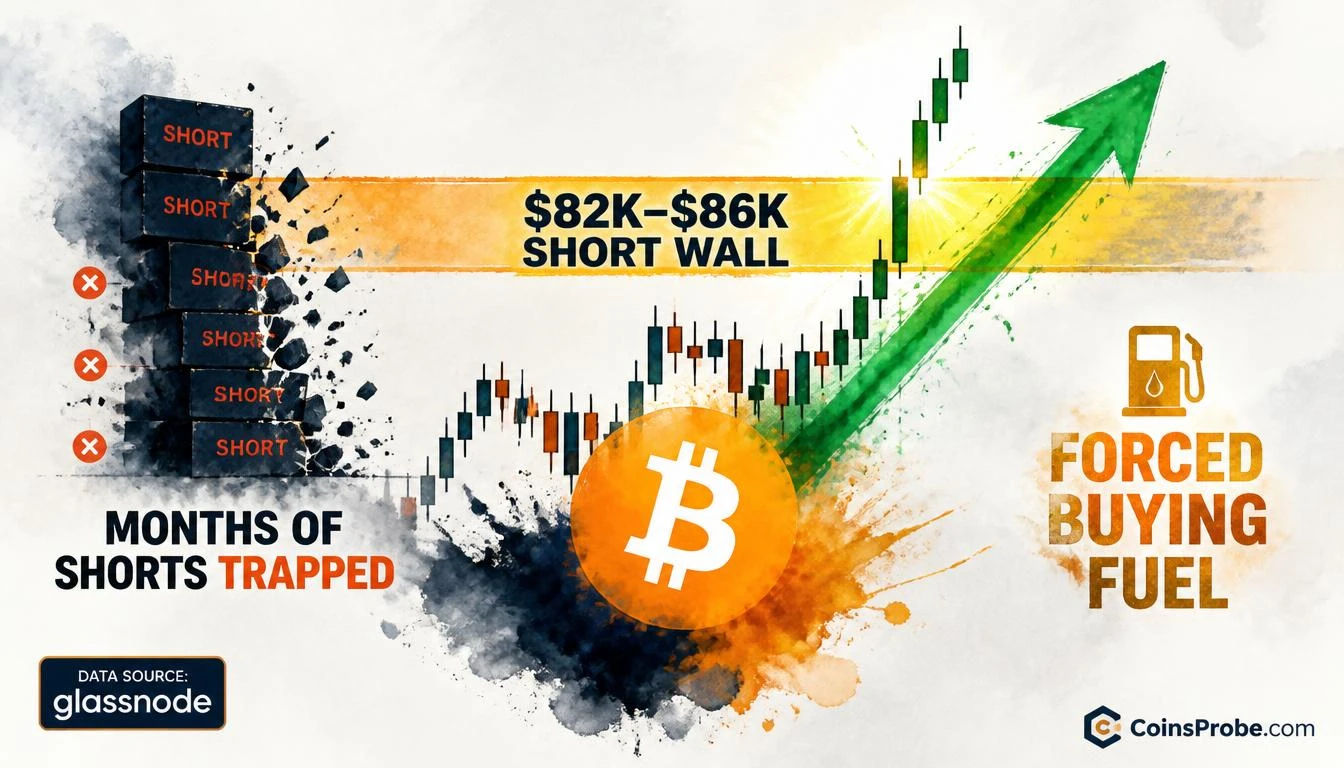
The mechanism driving Bitcoin’s push above $86,000 is not speculative demand — it is forced buying. According to Glassnode, short positions that had accumulated between $82,000 and $86,000 over several months became the fuel for Bitcoin’s acceleration once price broke through that band.
At the time of writing, Bitcoin is trading at approximately $86,000, having cleared the precise zone where bearish positioning had been concentrated for months.
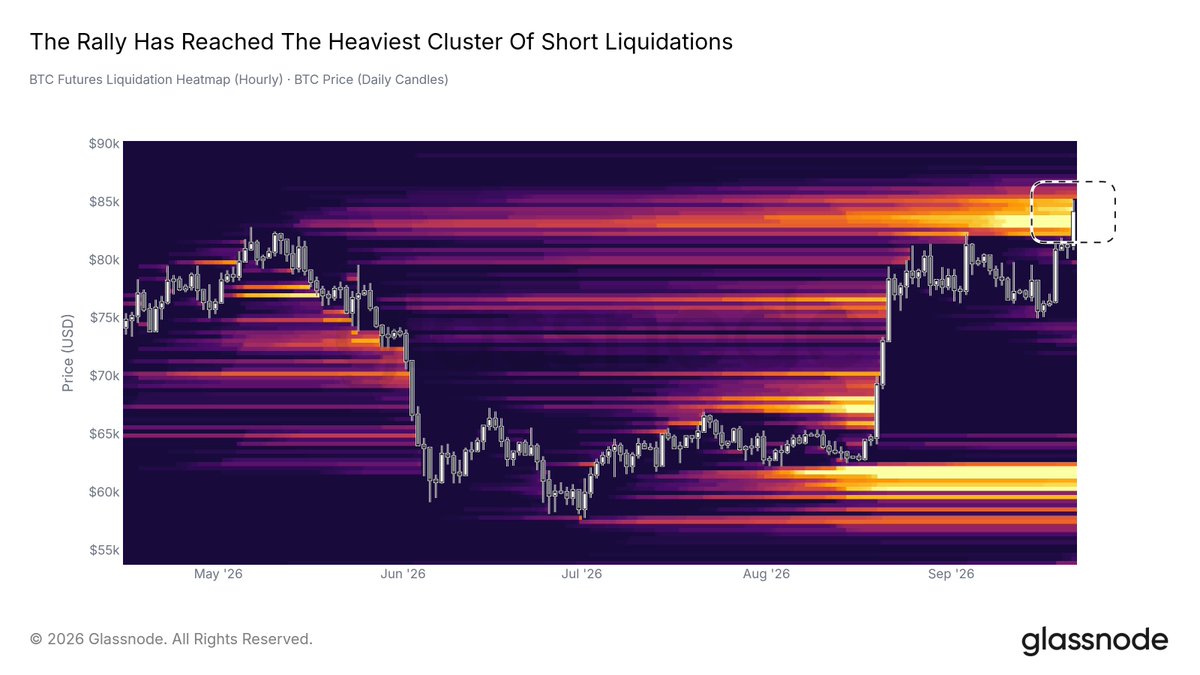
The Short Squeeze Mechanism — Months of Bearish Positioning Becomes the Catalyst
Glassnode’s September 21 note identified a specific structural dynamic: short sellers had stacked positions in the $82,000–$86,000 range over an extended accumulation window. When Bitcoin moved through that zone, the rejection was shallow — meaning bulls held the level rather than allowing price to revert, stranding those short positions underwater.
The chain of events is mechanical, not sentiment-driven:
| Step | Event | Effect |
|---|---|---|
| 1 | Shorts build between $82K–$86K over months | Large pool of leveraged bearish exposure created |
| 2 | Bitcoin breaks through $86K | Short positions move into loss territory |
| 3 | Rejection from $86K is shallow | No sustained reversal — shorts remain trapped |
| 4 | Margin calls and stop-loss triggers activate | Short sellers are forced to buy back BTC to close positions |
| 5 | Forced buying adds to upward price pressure | BTC accelerates through the zone |
Mechanism: Short Liquidation Cascade — $82K–$86K | Source: Glassnode
This is the defining feature of a short squeeze: the bearish traders themselves become buyers, not by choice, but by obligation. Glassnode described these trapped shorts as “the fuel” — a precise characterization of how forced covering amplifies directional moves.
Why This Is Structurally Different From Speculative Buying
Standard demand-driven rallies depend on new buyers entering the market. A short liquidation cascade is different — it draws on an existing pool of traders who are contractually required to purchase the asset to close their positions. The size of that fuel pool was months in the making, concentrated in a defined $4,000 range between $82K and $86K. That specificity is what gave the Glassnode observation its precision, and what makes the move structurally traceable rather than momentum-based.
This dynamic is not unprecedented. Large short stacks building against a resistance level, followed by a shallow rejection and a forced-covering cascade, have appeared in prior Bitcoin cycles — and the scale of institutional short positions in recent months had been notable, with positions like Abraxas Capital’s $980M short on ETH and BTC via Hyperliquid highlighting just how aggressively the bearish side had been positioned heading into this move.
Is the Short Squeeze Sustainable?
Short squeeze-driven moves carry a built-in limitation: once the trapped positions are fully closed, the forced buying pressure dissipates. The question Glassnode’s observation raises but does not answer is how much short inventory remains in the $82K–$86K band versus how much has already been cleared. The shallowness of the rejection suggests significant residual pressure — but the total size of outstanding short exposure in that range is the metric that determines duration.
For the move to sustain beyond the liquidation cascade, organic demand needs to step in once forced covering subsides. The specific metric to monitor: open interest in Bitcoin perpetual futures alongside funding rates — if funding turns sharply positive as OI rises, it signals new long demand replacing the closed shorts. If OI drops as price holds, it confirms the squeeze is winding down and the move requires fresh catalysts to continue.
Bitcoin’s clearance of the $82K–$86K short wall — as documented by Glassnode on September 21 — was a mechanically driven event: months of accumulated bearish positioning became forced buy orders the moment the shallow rejection failed to produce a sustained reversal. The exact depth of remaining short inventory in that band will determine whether the fuel has been fully consumed or whether additional forced covering still lies ahead. Track Bitcoin perpetual futures open interest in real time to assess which scenario is unfolding.
Frequently Asked Questions
Why is Bitcoin surging above $86,000?
What is a short liquidation cascade and how does it work?
How long will the Bitcoin short squeeze last?
What did Glassnode say about the $86K Bitcoin short wall?
Source: Glassnode · Published by CoinsProbe Markets Desk
The opinions and market insights shared on CoinsProbe represent the views of individual authors based on prevailing market conditions at the time of publication. Cryptocurrency investments carry significant risk and volatility. Readers are encouraged to conduct their own research and seek professional financial advice before making investment decisions. CoinsProbe and its contributors do not accept responsibility for financial losses or decisions made based on published content.
CoinsProbe may publish sponsored articles, affiliate links, or promotional collaborations. All sponsored material is clearly labeled to maintain transparency with our audience. Our editorial decisions remain fully independent, and advertising partnerships do not influence reviews, rankings, or published opinions.
Since 2023, CoinsProbe has delivered reliable insights on cryptocurrency, blockchain, and digital assets. Our content is created by experienced researchers and analysts who follow strict editorial standards focused on accuracy, transparency, and credibility. Every article is carefully reviewed and verified using trusted sources and current market data. We provide unbiased analysis and timely updates covering everything from emerging crypto projects to major industry developments.