
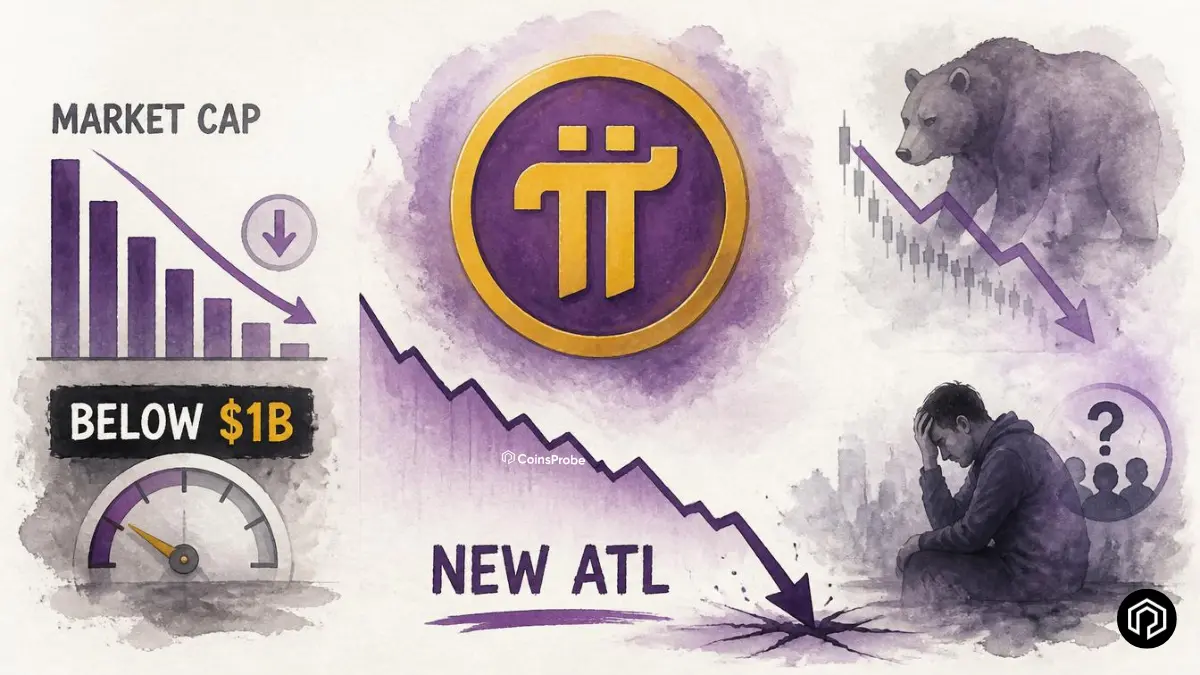

- Pi Network (PI) hit a new all-time low near $0.078, trading around $0.08196, with its market cap falling below $1 billion to approximately $896.88 million.
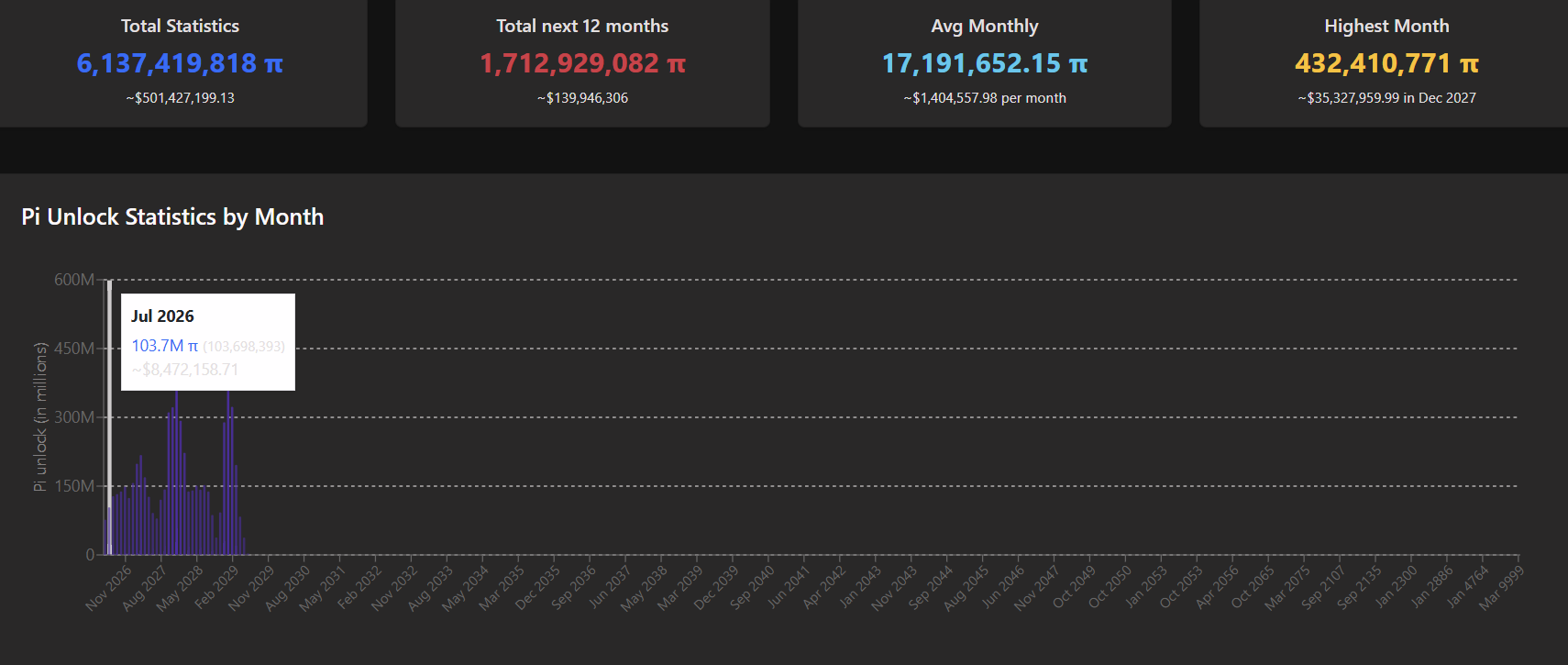
- PI remains under heavy pressure from token unlocks, with 103.7 million PI unlocking in July and 1.71 billion PI set to unlock over the next 12 months.
- The decline comes despite major ecosystem developments, including Pi2Day launches and Pi App Studio upgrades, showing that utility growth has yet to offset supply pressure.
- Average monthly unlocks of 17.19 million PI continue adding significant new supply, posing a key near-term challenge for the token.
Pi Network has crossed a painful threshold as it continues its sharp post-listing decline, hitting a new all-time low near $0.078 on July 13, 2026. The token is currently trading around $0.08196, down 15.34% in the last 24 hours and 27.03% over the past 7 days.
Pi reached its all-time high of $2.9816 during the initial listing period but has been in freefall since. Its market capitalization has now dropped below $1 billion for the first time, sitting at approximately $896.88 million and has now lost approximately 97.2% of its peak value.

The Primary Driver — Aggressive Token Unlocks
The most concrete, data-backed explanation for PI’s continued decline is straightforward: supply is growing faster than demand can absorb it.
The token unlock schedule reveals the scale of this structural pressure:
| Unlock Metric | Data |
|---|---|
| July 2026 unlocks | 103.7 million PI (~$8.47M at current prices) |
| Next 12 months projected | 1.71 billion PI |
| Average monthly unlocks | ~17.19 million PI (~$1.4M/month) |
103.7 million PI entering circulation in a single month — at a time when the token’s price is already under sustained selling pressure from early miners and ecosystem participants — represents a significant and consistent headwind. The market is receiving new supply at a pace that current buying demand has not been able to match.
The unlock pressure is not temporary. With 1.71 billion PI projected to unlock over the next 12 months — an average of roughly 142 million per month when smoothed across the full year — the structural supply inflation is a feature of PI’s tokenomics that will require sustained, growing demand to offset rather than simply improve market sentiment.
Why PI Is Struggling — Four Converging Pressures
Early miner and participant sell pressure
Pi Network’s unique origin — as a mobile mining app that distributed tokens to tens of millions of users before any trading was possible — created an enormous base of holders with a cost basis of effectively zero. For many of these holders, any price above zero represents a profit opportunity. As unlocks continue and restrictions ease, a portion of this holder base is consistently choosing to exit rather than hold through the post-listing decline.
Circulating supply growth outpacing demand
The combination of the unlock schedule and existing circulating supply is growing the total market float at a pace the current level of buying interest cannot absorb. This is a classic post-listing tokenomics challenge — but PI’s scale makes it more pronounced than for most projects.
Absence of major Tier-1 CEX listings
One of the most commonly cited near-term catalysts that could meaningfully shift PI’s demand picture — a listing on Binance, Coinbase, or another top-tier centralised exchange — has not materialised. Without a major new distribution channel bringing fresh buyer audiences to PI, demand growth has been insufficient to counter the supply pressure from unlocks.
Broader market weakness
PI’s decline is happening within a broader altcoin market that has been under sustained pressure throughout much of 2026 — as we documented in our altcoin 5-year sell pressure extreme article. A weak macro and altcoin environment reduces the available pool of speculative capital that might otherwise flow into higher-risk assets like PI.
The Disconnect — Ecosystem Progress vs Price Action
What makes PI’s current situation particularly difficult to navigate from a holder perspective is the disconnect between the project’s development activity and its price performance.
The past several months have seen genuinely meaningful ecosystem progress:
Pi Network used Pi2Day 2026 to launch three major infrastructure tools simultaneously — SoloHost for local AI compute, Pi Sign-in for third-party authentication, and PiVerify for identity verification — representing the most ambitious single-day release in Pi’s history and a clear strategic push toward external utility.
Pi App Studio received persistent backend storage and AI-assisted planning — solving two of the most significant limitations of the prior development environment and enabling meaningfully more sophisticated applications on the platform.
The full explanation of how SoloHost, Pi Sign-in, and PiVerify work reveals a coordinated infrastructure push designed to attract external developers and businesses to Pi’s ecosystem — not just retain existing Pioneers.
Yet despite all of this — the price has continued lower. This reflects an important market reality: development progress and token price are not the same thing in the short term, especially when tokenomics create structural supply pressure that development milestones alone cannot offset. The question of whether PI can recover above $1 now requires not just continued development execution but a genuine shift in the supply-demand balance — which means either a major new demand catalyst (Tier-1 CEX listing, viral utility adoption) or a meaningful reduction in unlock-driven sell pressure.
The $0.07–$0.08 zone is the immediate support cluster being watched by the community. A sustained close below $0.078 — the just-established all-time low — would represent a confirmed breakdown without any clear technical support visible below it.
What Would Change the Narrative
For PI to reverse its current trajectory, the market broadly agrees that one or more of the following would be needed:
A major Tier-1 CEX listing — Binance or Coinbase specifically would bring a significant new buyer audience to PI and create a meaningful demand catalyst that the current unlock schedule has been unable to find from existing channels.
Meaningful reduction in sell pressure — Whether through lock-up extensions, ecosystem incentives that encourage holding over selling, or simply the passage of time as the most motivated early sellers complete their exits.
Viral utility adoption — If any of the recent ecosystem launches — SoloHost, PiVerify, Pi App Studio — were to generate genuine, measurable external adoption beyond the existing Pioneer community, the demand narrative would shift materially.
Broader altcoin market recovery — A return of risk-on sentiment across the altcoin market would lift the tide for PI alongside other assets, reducing the macro headwind that has amplified the token-specific sell pressure.
Bottom Line
Pi Network’s fall below $1 billion market cap and to a new all-time low near $0.078 is the clearest signal yet that post-listing optimism has fully unwound. The project has delivered genuine ecosystem development in 2026 — from Pi2Day’s infrastructure launches to App Studio’s backend upgrades — but development progress has been consistently outweighed by the structural supply pressure from aggressive token unlocks.
With 1.71 billion PI projected to unlock over the next 12 months and no major Tier-1 CEX listing yet materialised, the path back to $1 — let alone the $2.98 all-time high — requires a demand catalyst of a scale the ecosystem has not yet produced.
The community’s long-term belief in Pi’s vision remains intact for many holders. But the short-term price reality is being written by the unlock schedule and the absence of new demand channels — and until one of those variables changes, the pressure is likely to continue.
Frequently Asked Questions
What is causing PI’s continued price decline?
Four converging pressures: aggressive token unlocks (103.7M PI in July alone), early miner sell pressure from holders with near-zero cost basis, absence of major Tier-1 CEX listings, and broader altcoin market weakness.
How many PI tokens are set to unlock over the next year?
1.71 billion PI over the next 12 months — averaging approximately 142 million per month across the full year — representing sustained, structural supply pressure.
Can PI recover above $1?
As we covered in our dedicated analysis — recovery above $1 requires either a significant new demand catalyst or a substantial shift in the supply-demand balance. Neither has materialised yet, making near-term recovery to $1 challenging under current conditions.
The opinions and market insights shared on CoinsProbe represent the views of individual authors based on prevailing market conditions at the time of publication. Cryptocurrency investments carry significant risk and volatility. Readers are encouraged to conduct their own research and seek professional financial advice before making investment decisions. CoinsProbe and its contributors do not accept responsibility for financial losses or decisions made based on published content.
CoinsProbe may publish sponsored articles, affiliate links, or promotional collaborations. All sponsored material is clearly labeled to maintain transparency with our audience. Our editorial decisions remain fully independent, and advertising partnerships do not influence reviews, rankings, or published opinions.
Since 2023, CoinsProbe has delivered reliable insights on cryptocurrency, blockchain, and digital assets. Our content is created by experienced researchers and analysts who follow strict editorial standards focused on accuracy, transparency, and credibility. Every article is carefully reviewed and verified using trusted sources and current market data. We provide unbiased analysis and timely updates covering everything from emerging crypto projects to major industry developments.