
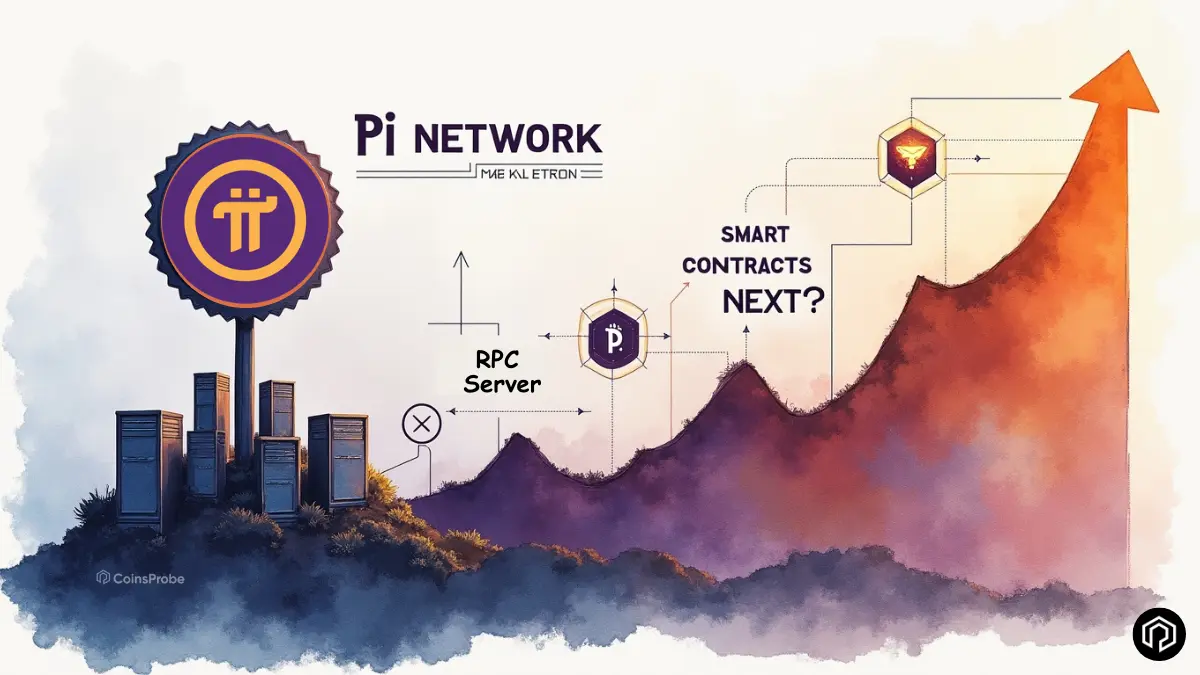

- Pi Network has launched a public RPC server on the Pi Testnet — enabling developers to directly interact with the blockchain, test smart contracts, and build decentralized applications for the first time.
- The launch builds directly on Protocol 20 — the foundational infrastructure upgrade that laid the groundwork for smart contract support — and connects to the Pi Launchpad testnet that attracted over 301,000 participants in its first week.
- Developers can now test using a live public RPC endpoint at https://rpc.testnet.minepi.com — enabling wallet connections, blockchain queries, smart contract testing, and dApp development in a completely risk-free environment.
- Upcoming protocol upgrades — including v21.2 in April and further versions in May 2026 — are expected to further enhance smart contract functionality and pave the way for Mainnet deployment.
Pi Network has taken one of its most significant technical steps yet — launching a public RPC server on the Pi Testnet on April 1, 2026. The announcement, made directly by the verified @PiCoreTeam account on X, marks a critical milestone in Pi’s transition from a mobile mining project to a fully functional Layer-1 blockchain with smart contract capabilities.
The official statement from Pi Core Team:
“Pi Testnet now has an RPC server. This is a major step toward Smart Contracts being simulated, tested, and deployed.”‘
What Is the Pi Testnet?
Before understanding why this milestone matters, it helps to understand what the Pi Testnet actually is and what role it plays in Pi Network’s development.
The Pi Testnet is Pi Network’s dedicated sandbox environment — a separate version of the blockchain where the Core Team, node operators, developers, and Pioneers can experiment with new features, protocols, and applications without risking real Pi tokens or affecting the live Mainnet.
Think of it like a flight simulator for pilots — everything looks and behaves like the real thing, but mistakes have no real-world consequences.
What the Testnet is used for:
Testing performance and security — Every major protocol upgrade is stress-tested on the Testnet before being deployed to Mainnet — ensuring that changes work correctly under real-world conditions without putting live funds at risk.
Building and debugging applications — Developers use the Testnet to build Pi Apps, smart contracts, and decentralized applications — identifying bugs and refining functionality before anything touches the live network.
Community feedback — New features like the Pi Launchpad, ecosystem tokens, and payment systems are introduced on the Testnet first — giving the community time to evaluate and provide feedback before Mainnet deployment.
Pi has maintained a Testnet since Pi Day 2020 (March 14, 2020) — when the blockchain component first went live with distributed nodes. It has evolved through multiple versions alongside each Mainnet protocol upgrade since then.
What Is an RPC Server and Why Does It Matter?
For non-technical Pioneers, the term “RPC server” might sound abstract — but its implications are concrete and significant.
RPC stands for Remote Procedure Call — a standard communication method that allows external applications, wallets, and tools to interact directly with a blockchain. In simple terms, an RPC server is the interface through which the outside world talks to the blockchain.
Without an RPC server, developers cannot:
- Connect external wallets like MetaMask to the Pi blockchain
- Query live blockchain data — transaction history, wallet balances, block information
- Test and deploy smart contracts on the network
- Build decentralized applications (dApps) that interact with the Pi ecosystem
With the RPC server now live, all of these capabilities are available on the Testnet for the first time. This is the technical infrastructure that transforms Pi from a blockchain you can mine on — to a blockchain you can build on.
The live endpoint is already publicly accessible:
bash
curl https://rpc.testnet.minepi.com \
  -H "Content-Type: application/json" \
  -d '{"jsonrpc":"2.0","id":1,"method":"getHealth"}'
Developers can run this command right now to confirm the RPC server is live and responding — marking the beginning of real technical experimentation on Pi Network.
How This Connects to Pi’s Recent Milestones
The RPC server launch does not exist in isolation — it is the latest in a series of accelerating technical milestones that Pi Network has been delivering throughout early 2026.
Protocol 20 — The Foundation The RPC server launch builds directly on Protocol 20 — the recent upgrade that established the core technical infrastructure required for smart contract support on Pi. Without Protocol 20’s foundational work, the RPC server would have no smart contract layer to expose.
Protocol 21 Upgrade — April 6 Deadline As we covered in our Pi Network Protocol 21 upgrade analysis, all Mainnet node operators must complete the upgrade from v20.2 to v21.2 by April 6, 2026 — or risk losing Mainnet connection. This upgrade continues the sequential protocol rollout building toward v23.0’s expected smart contract enhancements in May 2026.
Pi Launchpad Testnet — 301,000 Participants As we documented in our Pi Launchpad analysis, the Pi Launchpad MVP launched on Testnet around Pi Day 2026 (March 14) — attracting over 301,000 participants in its first week and confirming that the Pi community is ready and eager to engage with ecosystem tools the moment they become available.
Second Migrations — 119,000 Pioneers As covered in our second migrations report, over 119,000 Pioneers have already completed their second migrations — bringing referral bonuses on-chain and further expanding the live Mainnet ecosystem that the RPC server will eventually serve.
The RPC server launch is the next logical step in this sequence — providing the technical interface that developers need to build the applications that will run on top of all this infrastructure.
What Developers Can Do Right Now
With the public RPC endpoint live, the Testnet is now open for serious developer experimentation. Here is what is now possible that was not possible before:
Connect external wallets — Developers can configure wallets like MetaMask to connect directly to the Pi Testnet via the RPC endpoint — enabling end-to-end testing of wallet interaction flows that will eventually be used by Pi’s 47+ million KYC-verified Pioneers.
Query blockchain data — Transaction history, wallet balances, block information, and network health can all be queried directly through the RPC server — providing the data layer that dApps need to function.
Test smart contracts — Developers can now simulate, test, and debug smart contract code on the Testnet before it is deployed to Mainnet — the most critical use case that this RPC server unlocks.
Build decentralized applications — The full dApp development cycle — from smart contract writing to front-end wallet integration — is now testable end-to-end on Pi’s Testnet environment.
Stress test before Mainnet — Any application or smart contract can be thoroughly battle-tested on the Testnet before being deployed to the live network — protecting real Pi and real users from bugs and vulnerabilities.
Why Pi Is Focusing on Utility — Not Speculation
One aspect of Pi’s approach that distinguishes it from many other Layer-1 blockchains is the deliberate focus on real-world utility applications rather than speculative DeFi.
The smart contract use cases Pi is prioritizing include:
- Subscriptions — Recurring payment systems for Pi App services
- Escrow — Trustless payment holding for marketplace transactions
- NFTs — Digital ownership and collectibles within the Pi ecosystem
- Token launches — Ecosystem projects launching via the Pi Launchpad
This utility-first approach — combined with Pi’s emphasis on security, gradual rollout, and external audits before any Mainnet deployment — reflects the Core Team’s deliberate strategy of building sustainable ecosystem value rather than chasing short-term speculative attention.
What’s Next for Pi Network?
The RPC server launch is a milestone — but it is a waypoint in a larger journey rather than a destination. The roadmap ahead includes:
April 6, 2026 — Protocol 21 upgrade deadline All node operators must complete the v20.2 → v21.2 upgrade. This upgrade enhances the protocol infrastructure that the RPC server depends on.
April 22, 2026 — Protocol 22 activation The next upgrade step in Pi’s sequential rollout — building further on Protocol 21’s foundation.
May 18, 2026 — Protocol 23 (v23.0) The most significant upcoming milestone — expected to introduce broader smart contract functionality that moves Pi’s smart contract capabilities from Testnet experimentation toward Mainnet readiness.
Mainnet smart contract deployment Following successful Testnet validation and Protocol 23’s enhancements — real smart contract deployment on Pi Mainnet becomes the next major target. The RPC server launched today is the first public piece of the infrastructure that will make this possible.
What This Means for Pioneers
For the 47+ million KYC-verified Pioneers who have been building and mining Pi since its launch — today’s RPC server announcement is the clearest signal yet that Pi Network is delivering on its promise of becoming a fully functional, utility-driven blockchain.
Every milestone in Pi’s 2026 roadmap — from the second migrations bringing referral bonuses on-chain, to the Launchpad testnet attracting 301,000 participants, to the Protocol 21 upgrade deadline building toward v23.0 — is building toward a single destination: a fully decentralized, smart contract-enabled blockchain ecosystem that Pioneers can use, build on, and transact within.
The RPC server launch confirms the motion has started. The path to smart contracts is officially open.
Frequently Asked Questions
What is an RPC server and why does Pi Network need one?
An RPC (Remote Procedure Call) server is the standard interface that allows external applications, wallets, and developer tools to communicate with a blockchain. Without it, developers cannot build applications, connect wallets, or test smart contracts on the network. Pi Network’s public Testnet RPC server — launched April 1, 2026 — opens Pi’s blockchain to real developer experimentation for the first time.
Can I use the Pi Testnet RPC server right now?
Yes — the public endpoint is live at https://rpc.testnet.minepi.com. Developers can query it immediately using standard JSON-RPC calls. The Pi Core Team has shared a basic health check command to confirm connectivity.
What is the difference between Pi Testnet and Pi Mainnet?
The Testnet is a separate testing environment where developers and the Core Team can experiment with new features without risking real Pi tokens or affecting the live network. The Mainnet is the live Pi blockchain where real Pi is held, transferred, and used. All new features are tested on the Testnet first before being deployed to Mainnet.
When will smart contracts be available on Pi Mainnet?
The Pi Core Team has not announced a specific Mainnet smart contract launch date. The current Testnet RPC server enables testing and simulation — with Protocol 23 (expected May 18, 2026) anticipated to introduce broader smart contract functionality. Mainnet deployment will follow successful Testnet validation and the Core Team’s security review process.
What smart contract use cases is Pi Network prioritizing?
Pi is focusing on utility-driven use cases including subscriptions, escrow, NFTs, and ecosystem token launches via the Pi Launchpad — rather than speculative DeFi. This approach reflects the Core Team’s emphasis on building sustainable real-world utility rather than short-term speculative applications.
How does the RPC server connect to Pi’s Protocol upgrades?
The RPC server builds on the technical foundation established by Protocol 20 — which introduced the infrastructure required for smart contract support. Upcoming upgrades including Protocol 21 (April 6 deadline), Protocol 22 (April 22), and Protocol 23 (May 18) will progressively enhance the smart contract capabilities that the RPC server exposes to developers.
The opinions and market insights shared on CoinsProbe represent the views of individual authors based on prevailing market conditions at the time of publication. Cryptocurrency investments carry significant risk and volatility. Readers are encouraged to conduct their own research and seek professional financial advice before making investment decisions. CoinsProbe and its contributors do not accept responsibility for financial losses or decisions made based on published content.
CoinsProbe may publish sponsored articles, affiliate links, or promotional collaborations. All sponsored material is clearly labeled to maintain transparency with our audience. Our editorial decisions remain fully independent, and advertising partnerships do not influence reviews, rankings, or published opinions.
Since 2023, CoinsProbe has delivered reliable insights on cryptocurrency, blockchain, and digital assets. Our content is created by experienced researchers and analysts who follow strict editorial standards focused on accuracy, transparency, and credibility. Every article is carefully reviewed and verified using trusted sources and current market data. We provide unbiased analysis and timely updates covering everything from emerging crypto projects to major industry developments.