
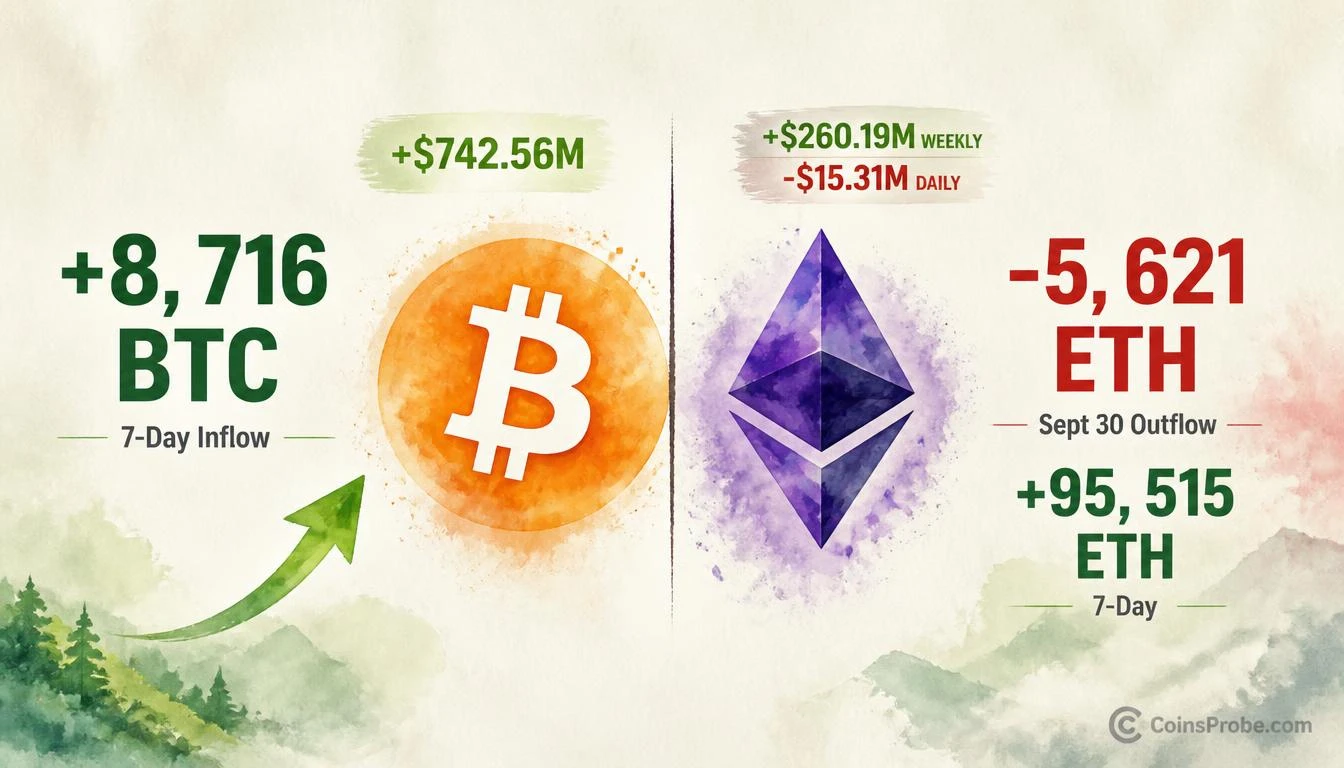

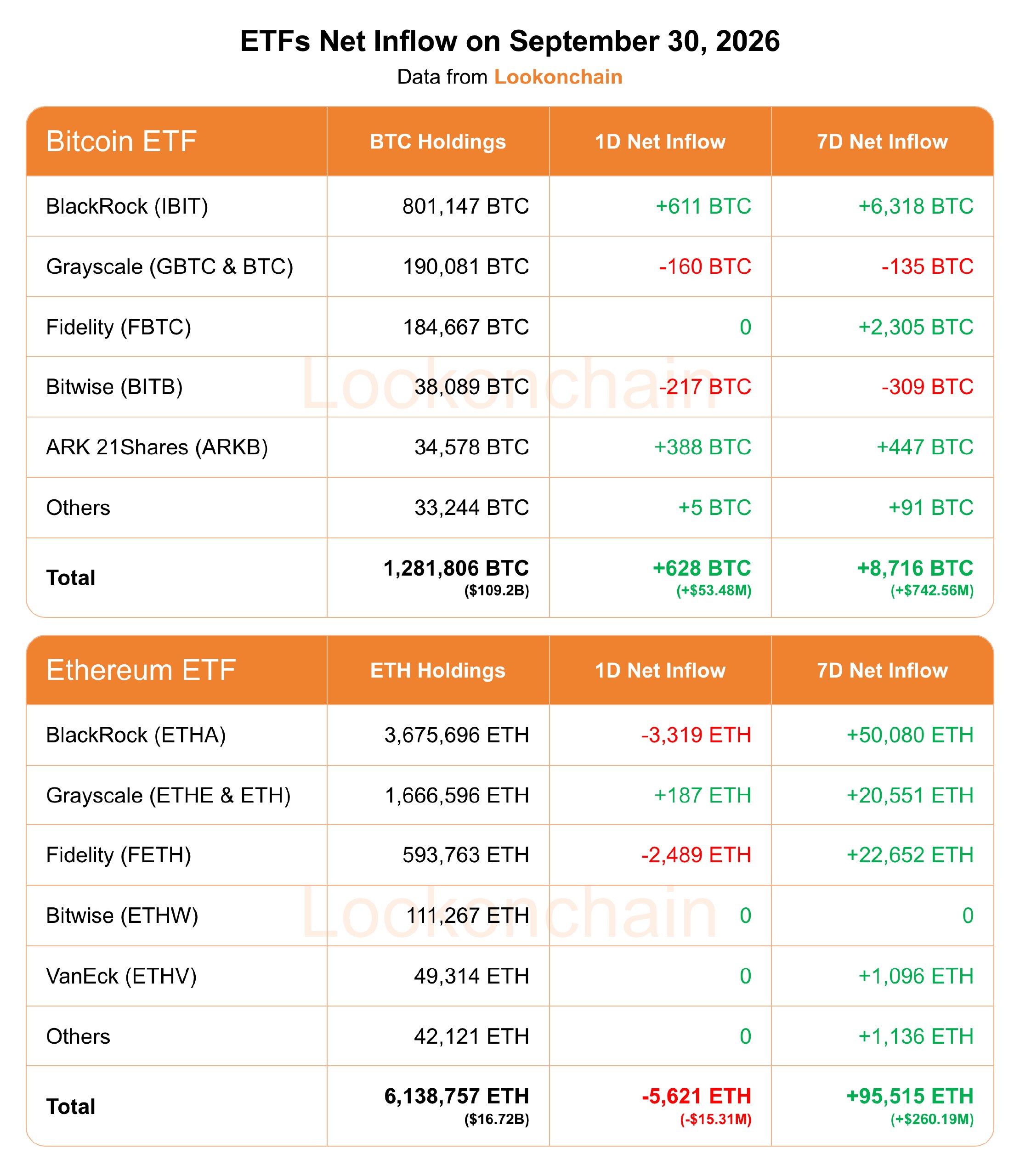
- Bitcoin ETFs recorded +8,716 BTC ($742.56M) in 7-day net inflows through September 30 per Lookonchain
- Ethereum ETFs flipped negative on the day — single-session outflow of 5,621 ETH ($15.31M) despite a positive weekly total
- Bitcoin captured 74.1% of the combined $1.0B weekly ETF inflow across both asset classes
- September 30 BTC daily inflow of +628 BTC was ~50% below the week's 1,245 BTC daily average
BREAKING
Bitcoin spot ETFs recorded a combined seven-day net inflow of +8,716 BTC — equivalent to $742.56 million — through September 30, according to Lookonchain. The same session saw Ethereum ETFs post a single-day net outflow of 5,621 ETH ($15.31 million), even as the seven-day Ethereum ETF picture remained positive.
At the time of writing, Bitcoin is trading at approximately $84,131 — down 0.07% over the past 24 hours — giving the weekly ETF inflow figure a realized dollar value of $742.56 million against a live market cap of approximately $1.69 trillion.
Bitcoin ETFs — Weekly Demand Versus Daily Pace
The seven-day inflow of 8,716 BTC translates to a daily average of approximately 1,245 BTC per session across the week. Tuesday’s single-day reading of +628 BTC ($53.48 million) came in roughly 50% below that weekly average — indicating that demand intensity decelerated into the final session of the period rather than accelerating.
At the current BTC price of $84,131, the 7-day inflow of 8,716 BTC represents approximately 0.044% of Bitcoin’s total circulating market cap absorbed by ETF vehicles in a single week. For context, the seven-day dollar inflow of $742.56 million equals roughly 2.55% of Bitcoin’s entire 24-hour global trading volume ($29.16 billion) — a ratio that indicates ETF demand is a structurally meaningful but not dominant force relative to spot market liquidity on any given day.
Ethereum ETFs — Divergence Between Daily and Weekly Signal
Ethereum ETFs present a split picture that warrants careful reading. The seven-day net inflow stands at +95,515 ETH ($260.19 million) — a positive weekly result. However, the September 30 session alone registered a net outflow of 5,621 ETH ($15.31 million), reversing direction sharply within an otherwise constructive weekly window.
The single-day outflow of 5,621 ETH represents approximately 5.89% of the entire seven-day inflow of 95,515 ETH — meaning one session erased nearly 6% of the week’s accumulated demand. Whether this reflects tactical profit-taking at the end of a calendar month or the beginning of a sustained reversal cannot be determined from flow data alone. What the data does confirm is that ETH ETF demand is less consistent than BTC ETF demand over this specific window.
Cross-Asset Concentration — Where the Institutional Dollar Went
Combining both asset classes, total seven-day net ETF inflows across Bitcoin and Ethereum products reached approximately $1.0026 billion ($742.56M BTC + $260.19M ETH). Bitcoin ETFs captured 74.1% of that combined weekly inflow; Ethereum ETFs accounted for the remaining 25.9%.
On a single-day basis, the picture inverts: Bitcoin ETFs logged +$53.48 million while Ethereum ETFs logged -$15.31 million, producing a net combined daily result of approximately +$38.17 million — with Bitcoin absorbing 140% of the combined figure while ETH flows acted as a drag.
| Asset | 1D Net Flow | 7D Net Flow | 7D Share of Combined |
|---|---|---|---|
| Bitcoin (BTC) | +$53.48M | +$742.56M | 74.1% |
| Ethereum (ETH) | -$15.31M | +$260.19M | 25.9% |
| Combined | +$38.17M | +$1,002.75M | 100% |
Source: Lookonchain — September 30 ETF Flow Update
What the Data Confirms — and What It Does Not
The seven-day Bitcoin ETF inflow of $742.56 million confirms sustained net buying pressure from regulated ETF vehicles across the full week ending September 30. It does not confirm accelerating demand — Tuesday’s below-average single-day reading of +628 BTC signals the week closed on a softer note than it opened.
The Ethereum seven-day figure of +$260.19 million confirms that ETH ETF products attracted net capital across the week. The September 30 single-day outflow of -$15.31 million does not negate the weekly trend but does introduce an end-of-month caution flag that warrants monitoring in early October sessions.
Readers tracking institutional positioning in digital assets can find additional context on exchange-level developments in our coverage of Binance’s latest bStock pair listings and on tokenization flows through Avalanche’s RWA ecosystem milestone.
Watch October 1 ETF flow data as the first post-month-end session — a meaningful retest of whether the September 30 Ethereum outflow was month-end rebalancing or the start of a directional shift. For Bitcoin, sustaining daily inflows above the 1,245 BTC weekly average would confirm institutional demand held pace entering Q4.
Frequently Asked Questions
Does the single-day Ethereum ETF outflow on September 30 cancel out the weekly positive trend?
How does the $742.56M weekly Bitcoin ETF inflow compare to spot market volume?
What is the combined total of Bitcoin and Ethereum ETF inflows for the seven-day period?
Was the September 30 single-day Bitcoin ETF inflow of +628 BTC above or below the week’s average?
Source: Lookonchain · Published by CoinsProbe Markets Desk
The opinions and market insights shared on CoinsProbe represent the views of individual authors based on prevailing market conditions at the time of publication. Cryptocurrency investments carry significant risk and volatility. Readers are encouraged to conduct their own research and seek professional financial advice before making investment decisions. CoinsProbe and its contributors do not accept responsibility for financial losses or decisions made based on published content.
CoinsProbe may publish sponsored articles, affiliate links, or promotional collaborations. All sponsored material is clearly labeled to maintain transparency with our audience. Our editorial decisions remain fully independent, and advertising partnerships do not influence reviews, rankings, or published opinions.
Since 2023, CoinsProbe has delivered reliable insights on cryptocurrency, blockchain, and digital assets. Our content is created by experienced researchers and analysts who follow strict editorial standards focused on accuracy, transparency, and credibility. Every article is carefully reviewed and verified using trusted sources and current market data. We provide unbiased analysis and timely updates covering everything from emerging crypto projects to major industry developments.