


- $6.3B stolen from Binance in the largest crypto exploit ever — linked to Lazarus Group (DPRK) via EIP-7702 batch attack
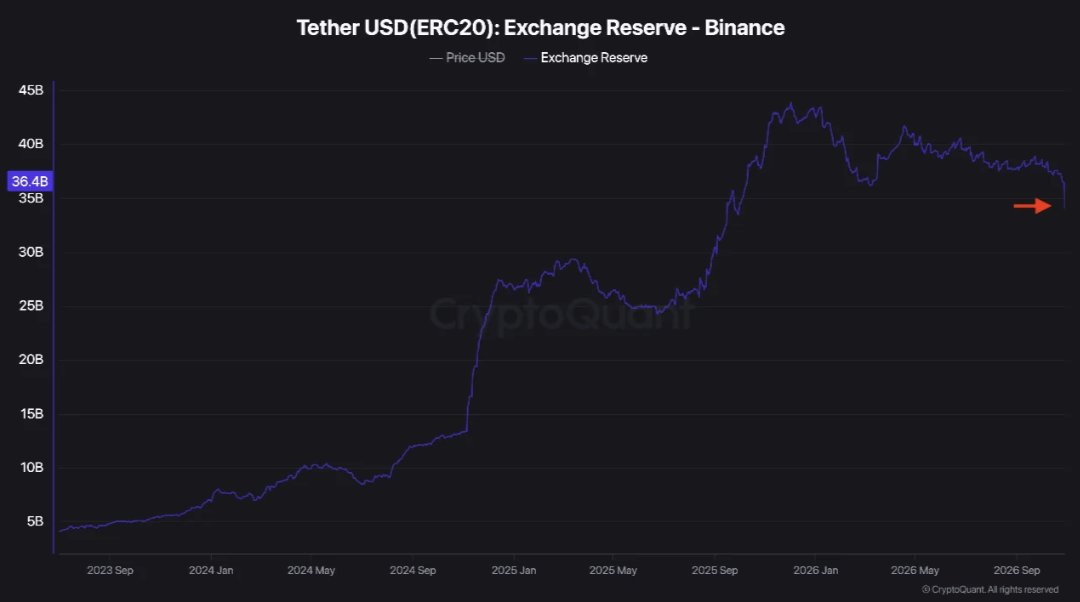
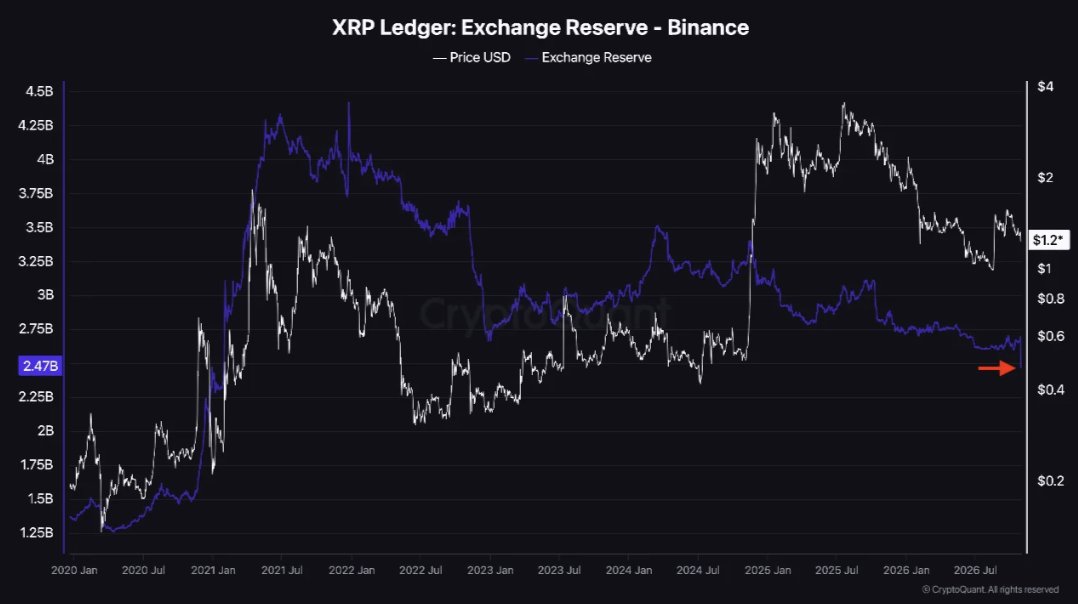
- BTC reserves fell only 3.1% to 682,000 BTC; ETH down 8.5% to 3.3M; XRP down 8% to 2.47B; USDT down 6.3% to 34.1B — per CryptoQuant's Darkfost
- Binance reports ~$3B in frozen assets including $1.567B USDT and $800M+ USDC; SAFU fund pledged to cover remaining losses
- Bitcoin trading at $77,399 (−3.34% 24h) as markets absorb the impact
The largest crypto theft ever recorded hit Binance on October 29, 2026 — $6.3 billion stolen in a single exploit linked to North Korea’s Lazarus Group. Bitcoin is trading at $77,399, down 3.34% in the past 24 hours, as markets absorb the shock. Yet the on-chain data tells a more measured story than the headline figure suggests.
CryptoQuant analyst Darkfost (@Darkfost_Coc) published a detailed reserve analysis within hours of the attack, concluding: “Even though the scale of this exploit is unprecedented, Binance’s reserves do not suggest that the impact on the platform was that severe.” The reserve data — covering BTC, ETH, XRP, and USDT simultaneously — is the basis of that assessment.
What Happened — The Attack Mechanism
According to Binance’s internal investigation, the attacker compromised a DevOps engineer’s laptop and exploited EIP-7702 batch transaction functionality. The attack used 50 pre-signed authorizations (nonce n through n+49) to slip execution of an unverified contract into Binance’s constant transaction flow. The exploit address has been linked to wallets previously identified in the Bitget exploit and the Kelp DAO exploit — both formally attributed to Lazarus Group (DPRK) by on-chain investigators.
Within the same block interval, the attacker pulled: 18,279 BTC, 185 million XRP, and $1.67 billion in USDT from the platform. Ethereum left in two separate waves — 167,464 ETH first, then 79,376 ETH — totaling 246,840 ETH. Binance has since confirmed that the attack hit multiple assets including BTC, ETH, XRP, and USDT, and that the internal investigation remains ongoing.
The Reserve Data — Four Assets, Four Charts
The critical finding from Darkfost’s CryptoQuant analysis is the percentage drawdown across each reserve pool relative to the platform’s total holdings. Despite the absolute dollar scale of the theft, the reserve movements were moderate:
| Asset | Reserve Change | Post-Exploit Level |
|---|---|---|
| BTC | −3.1% | 682,000 BTC |
| ETH | −8.5% | 3.3M ETH |
| XRP | −8.0% | 2.47B XRP |
| USDT | −6.3% | 34.1B USDT (36.4B pre-exploit peak) |
Source: CryptoQuant, analysis by @Darkfost_Coc
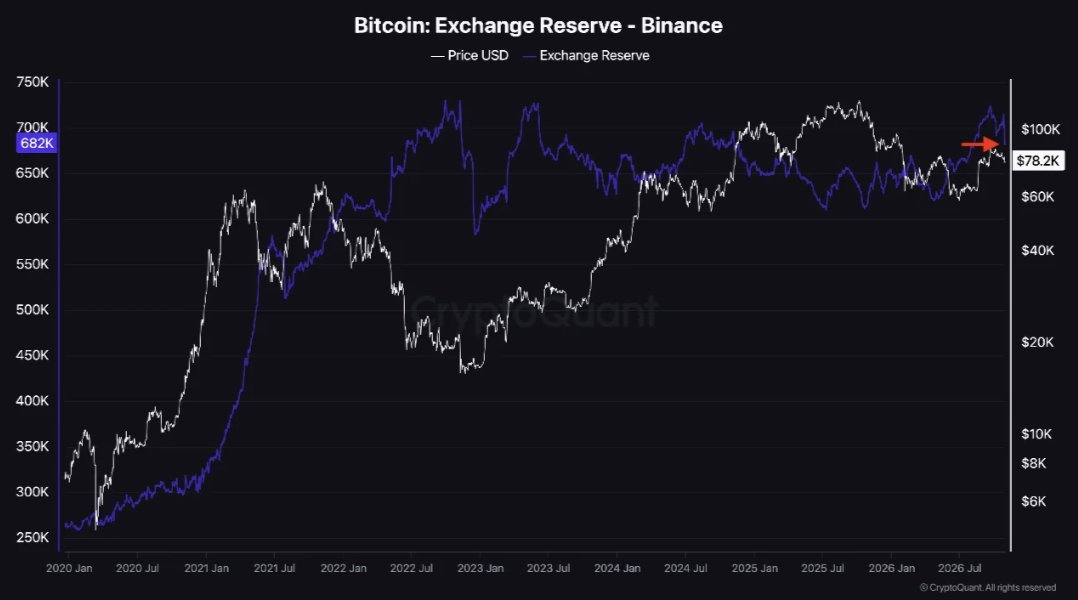
The BTC reserve chart, covering January 2020 through late 2026, shows the 682,000 BTC post-exploit level highlighted in a blue callout box. Despite the 18,279 BTC removed in the attack block, the reserve line remains within the broad ranging pattern established since 2022 — no structural collapse is visible on the chart.
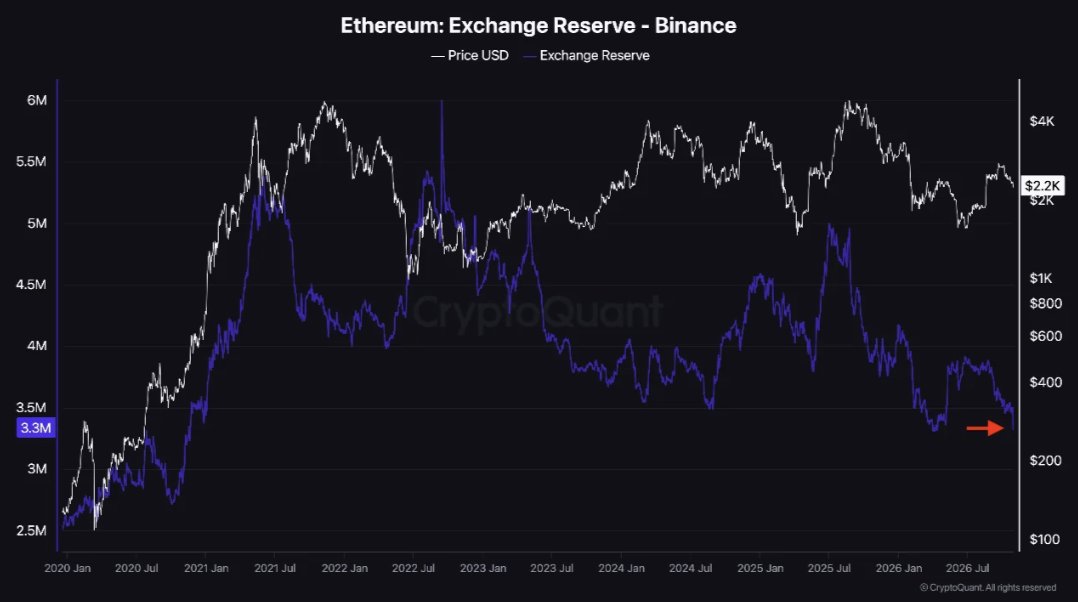
The ETH reserve chart tells a similar story. The 246,840 ETH removed represents an 8.5% drawdown, bringing reserves to approximately 3.3 million ETH — a level clearly marked by a red arrow on the chart. ETH reserves had already been on a multi-year declining trend from their 2021 peak, meaning the exploit-driven drawdown lands within an already-established downtrend rather than creating a new structural break.
The USDT reserve chart — covering September 2023 onward — shows reserves near the 36.4 billion level at the time of the exploit, declining to approximately 34.1 billion post-attack. The chart shows reserves had already pulled back from a late-2025 peak near 45 billion; the exploit-linked outflow accelerates but does not sharply diverge from the existing downward trajectory.
XRP reserves on Binance stand at 2.47 billion XRP, down 8% from pre-exploit levels. The reserve chart, dating from January 2020, shows this level against a multi-year declining trend from a peak near 4.25 billion in early 2021. XRP price is marked at approximately $1.20 on the chart. As with BTC and ETH, the reserve drawdown is visible but does not constitute a structural collapse from the historical data series.
Official Response — SAFU Fund and Frozen Assets
Binance has confirmed it is deploying its SAFU (Secure Asset Fund for Users) and company reserves to cover losses. The platform reports approximately $3 billion in frozen assets recovered or intercepted, including $1.567 billion in USDT and more than $800 million in USDC. The investigation is ongoing and no final tally of recovered versus unrecovered funds has been published at the time of writing.
The $3 billion in frozen assets represents roughly 47.6% of the total $6.3 billion exploited — a significant partial recovery if confirmed, though the internal investigation’s conclusion will determine the final user-impact figure.
What Users Should Know
Darkfost’s analysis emphasizes that the reserve drawdowns — ranging from 3.1% (BTC) to 8.5% (ETH) — are moderate relative to total platform holdings. This means Binance retains the majority of its custodied assets across all four affected tokens. Binance has pledged to cover losses through the SAFU fund and company reserves, and has not announced any withdrawal freezes beyond what was required for the investigation at the time of writing.
Users holding BTC, ETH, XRP, or USDT on Binance should monitor official Binance announcements directly for the latest status on withdrawals, the investigation outcome, and SAFU disbursement timelines. The on-chain reserve data from CryptoQuant will update in real time as assets move.
The reserve picture is stabilizing — but the investigation into the $6.3 billion exploit, the largest in crypto history, remains open. Watch Binance’s official SAFU coverage announcement and the on-chain reserve trajectory as the story develops.
Source: x.comFrequently Asked Questions
How much of Binance’s Bitcoin reserves were lost in the Lazarus exploit?
How did the attacker access Binance’s funds in the $6.3B exploit?
Will Binance users be reimbursed for losses from the Lazarus Group hack?
Which assets were affected by the Binance exploit and by how much?
Source: CryptoQuant · Published by CoinsProbe Markets Desk
The opinions and market insights shared on CoinsProbe represent the views of individual authors based on prevailing market conditions at the time of publication. Cryptocurrency investments carry significant risk and volatility. Readers are encouraged to conduct their own research and seek professional financial advice before making investment decisions. CoinsProbe and its contributors do not accept responsibility for financial losses or decisions made based on published content.
CoinsProbe may publish sponsored articles, affiliate links, or promotional collaborations. All sponsored material is clearly labeled to maintain transparency with our audience. Our editorial decisions remain fully independent, and advertising partnerships do not influence reviews, rankings, or published opinions.
Since 2023, CoinsProbe has delivered reliable insights on cryptocurrency, blockchain, and digital assets. Our content is created by experienced researchers and analysts who follow strict editorial standards focused on accuracy, transparency, and credibility. Every article is carefully reviewed and verified using trusted sources and current market data. We provide unbiased analysis and timely updates covering everything from emerging crypto projects to major industry developments.