

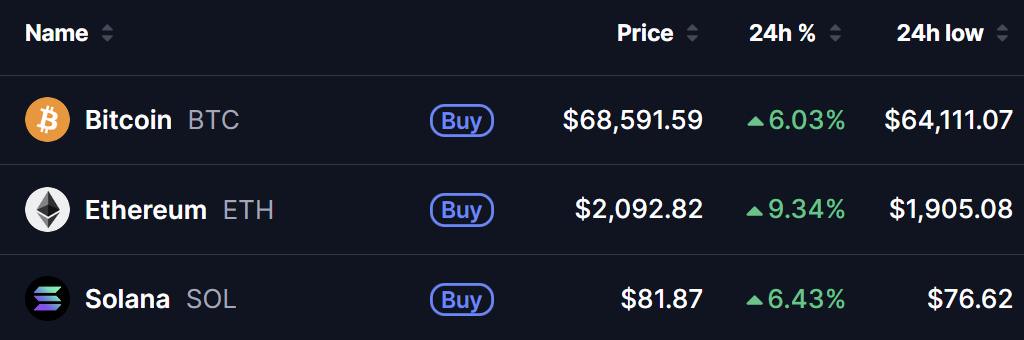
- Bitcoin surged past $68,500 on August 19, 2026 — up over 6% — while Ethereum jumped more than 9% to near $2,100 and Solana advanced approximately 6.4%.
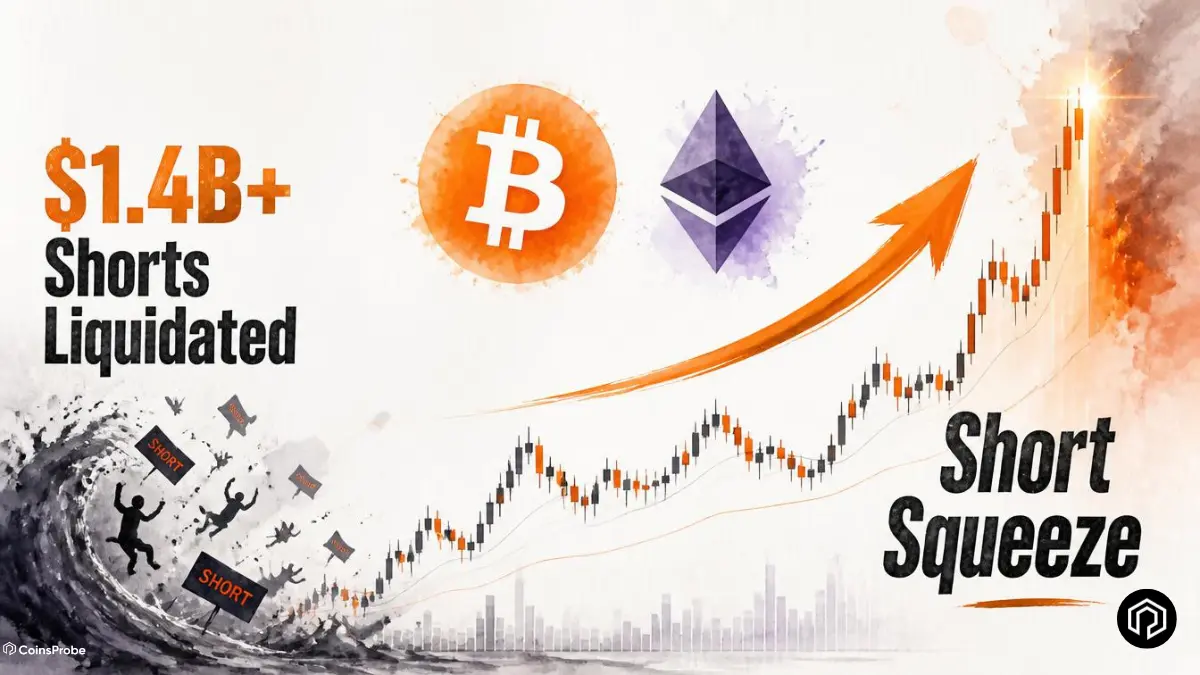
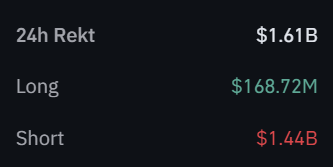
- $1.44 billion in short positions were liquidated in 24 hours — out of $1.61 billion total — creating a feedback loop that amplified the initial macro catalyst into an accelerated price advance.
- The U.S. Treasury announced it will at least double its long-end bond buybacks from $2 billion to $4 billion per operation (effective September 9) — the primary macro trigger that sent yields lower and risk assets surging.
The crypto market delivered one of its sharpest single-session advances of 2026 on August 19 — and the move was not a random spike. It was the product of a specific sequence: a meaningful macro catalyst landed, institutional ETF flows confirmed the bid, and a market that had been heavily positioned short got caught on the wrong side of all of it simultaneously. The result was $1.44 billion in forced short closures that turned a constructive macro environment into an accelerated, self-reinforcing rally.
Bitcoin briefly approached $69,000 during the session before settling near $68,500. Ethereum successfully reclaimed the $2,000 level and extended to near $2,100 — a level that had been a significant psychological and technical barrier. Solana advanced approximately 6.4%, with gains extending broadly across the major asset universe.
The Short Liquidation Cascade — How $1.44 Billion Got Wiped Out
Before examining the catalysts, understanding the mechanics of the price action is essential — because the $1.44 billion in short liquidations is not just a number. It is the mechanism that explains why the move was as large and fast as it was.
How a Short Squeeze Works
When traders open short positions, they are borrowing and selling an asset with the expectation of buying it back at a lower price. Leveraged short positions require margin — and when price moves against a short, the losses accumulate rapidly. If losses exceed the margin threshold, the exchange automatically closes the position by buying back the asset — regardless of the trader’s intent.
This forced buying is what creates the cascade: rising prices trigger forced short closures, which generate more buying, which pushes prices higher, which triggers more short closures. Each wave of liquidations adds momentum to the move — and with $1.44 billion in shorts concentrated in the market, the cascade was proportionally significant.
As covered in our Bitcoin whale accumulation pre-CPI and Hyperliquid leverage analysis, the setup for a significant short squeeze had been building for weeks — with large short positions accumulating at specific liquidation levels. The August 19 macro catalyst provided the trigger that the setup was waiting for.
The asymmetry in the liquidation data tells the story directly: $1.44 billion in shorts versus $168 million in longs — meaning short-side exposure was approximately 8.6x larger than long-side exposure in the liquidation event. This degree of short-side concentration is characteristic of a market that had been heavily positioned for continued downside — and was caught entirely off-guard by the macro catalyst that arrived on August 19.
The Four Catalysts Behind the August 19 Crypto Rally
1. U.S. Treasury Bond Buybacks — The Primary Macro Trigger
The single most important catalyst behind the August 19 move came from traditional finance: the U.S. Treasury announced it will at least double the size of its long-end liquidity support buybacks — from $2 billion to at least $4 billion per operation — covering 10–20 year and 20–30 year securities. The change takes effect September 9, 2026.
The market impact was immediate and significant. Treasury buybacks of long-dated bonds inject liquidity directly into the long-end of the yield curve — and the announcement caused long-term Treasury yields to drop sharply on the day.
For Bitcoin and crypto specifically, falling long-term yields are a direct tailwind through two channels:
Opportunity cost reduction: Lower Treasury yields reduce the return available from risk-free assets — making the relative attractiveness of non-yielding assets like Bitcoin more favorable. When the “safe” alternative yields less, the case for risk assets strengthens.
Risk-on sentiment: Falling yields across the long end of the curve historically signal easier financial conditions — improving the macro environment for all risk assets simultaneously. The combination of a weaker dollar (which also moved on the day) and falling yields created the most favorable single-session macro backdrop for crypto since earlier in 2026.
2. Strong Bitcoin ETF Inflows — Institutional Demand Returns
Complementing the macro catalyst, U.S. spot Bitcoin ETFs recorded consecutive days of significant inflows heading into the August 19 session:
| Date | ETF Inflow |
|---|---|
| August 17, 2026 | ~$297.6 million |
| August 18, 2026 | ~$189.3 million |
| 2-Day Total | ~$487 million |
BlackRock’s IBIT led the flows — continuing its pattern as the dominant vehicle for institutional Bitcoin exposure through the ETF structure. The two-day total of approximately $487 million reversed the recent outflow pressure that had been weighing on sentiment and confirmed that institutional demand was returning ahead of the macro catalyst landing.
As documented in our Bitcoin spot demand flashing potential bullish reversal analysis and Bitcoin highest demand reading of 2026 analysis, the structural improvement in Bitcoin’s demand environment had been building through August. The ETF inflow data on August 17–18 was the institutional flow confirmation of that structural improvement — arriving just as the Treasury announcement provided the macro trigger.
3. Positive Regulatory and Political Backdrop
Two regulatory developments added constructive sentiment to the market environment in the days preceding the August 19 rally:
White House crypto meeting: The White House hosted a meeting bringing together President Trump, senior crypto executives, SEC and CFTC leadership, and major traditional finance participants — a level of regulatory and political engagement with the crypto sector that significantly elevates the perceived legitimacy and near-term policy trajectory for the industry.
SEC Regulation Crypto Assets proposal: The SEC recently proposed a new Regulation Crypto Assets framework specifically designed to provide clearer fundraising rules for the sector — a development that reduces regulatory uncertainty and is broadly interpreted as constructive for institutional participation.
Together, these regulatory signals improved the overall sentiment backdrop against which the macro and demand catalysts landed on August 19 — amplifying rather than creating the move, but contributing meaningfully to its scale.
4. Falling Yields and a Weaker U.S. Dollar
The Treasury buyback announcement combined with existing softness in U.S. economic data to produce a weaker U.S. dollar alongside falling yields — a macro combination that is historically among the most favorable for Bitcoin and crypto broadly. Dollar weakness reduces the relative cost of holding non-dollar assets and typically accompanies periods of increased risk appetite across global markets.
Why This Rally Feels Different From a Standard Short Squeeze
Short squeezes can produce sharp but temporary price moves — historically, rallies driven purely by forced short covering tend to fade once the squeeze is exhausted and the underlying demand is insufficient to sustain higher prices. The August 19 move has structural characteristics that differentiate it from a purely mechanical short squeeze:
Concrete macro support: The Treasury doubling long-end buybacks is a real, scheduled, policy-level change — not a rumor or speculative catalyst. Its effect on yields and financial conditions is measurable and will persist beyond the initial market reaction.
Genuine institutional inflows: The $487 million in ETF inflows over August 17–18 represents real capital entering the Bitcoin market through regulated vehicles — not leveraged speculation. This capital does not disappear when the short squeeze fades.
Regulatory clarity improving: The White House meeting and SEC framework proposal represent structural, longer-term positives for the sector rather than temporary sentiment boosts.
The combination of these structural positives with the mechanical amplification from $1.44 billion in short liquidations is what distinguishes August 19 from a standard short squeeze event — and what makes the question of whether higher prices hold more analytically interesting than it would be after a purely mechanics-driven move.
What to Watch — The Key Questions After the Rally
Do ETF inflows continue? The August 17–18 inflow streak needs to extend into subsequent sessions to confirm that institutional demand is genuinely returning rather than representing a two-day positioning event ahead of the macro catalyst.
Does the Treasury yield move hold? Long-term Treasury yields need to remain at lower levels following the buyback announcement — if yields rebound toward prior levels, the macro tailwind that drove the initial move weakens proportionally.
Can Bitcoin hold above $65,000–$66,000? The critical question after any short squeeze is whether the underlying organic demand is sufficient to sustain prices at the post-squeeze level. As documented in our Bitcoin is coiling for a big move — two rare signals analysis, the structural on-chain setup heading into August 19 was among the most constructive seen in 2026 — which increases the probability that the post-squeeze price level reflects genuine value re-rating rather than temporary mechanics.
Fed communications: The Federal Reserve’s upcoming communications will determine whether the broader easing narrative — which the Treasury buyback announcement is consistent with — gains further traction or stalls. Dovish Fed signals would reinforce the macro tailwind; hawkish surprises would create headwinds.
As covered in our Bitcoin nears major accumulation levels as two bottom signals align and Bitcoin network activity hits 12-month high, the on-chain and macro framework building through August 2026 has been pointing toward exactly the kind of demand-driven macro breakout that August 19 may represent. Whether it proves to be the beginning of a sustained recovery or a high-volatility consolidation at higher levels will be determined by the data in the sessions and weeks ahead.
Bottom Line
August 19, 2026 delivered what the on-chain and macro setups had been building toward — a convergence of a concrete macro catalyst (U.S. Treasury doubling long-end buybacks), returning institutional demand ($487M in two-day ETF inflows), an improving regulatory backdrop, and a market that was heavily short into all of it. The result: $1.44 billion in forced short closures that amplified the initial catalyst into a 6%+ Bitcoin move, a 9%+ Ethereum recovery above $2,000, and broad-market participation.
The structural characteristics of the rally — policy-level macro support, genuine institutional flows, and regulatory clarity improving — differentiate it from a purely mechanical short squeeze. Whether those structural positives are sufficient to sustain Bitcoin above $65,000–$68,000 as the mechanical short covering fades will be the defining question for the days ahead.
Frequently Asked Questions
Why is the crypto market surging today?
The rally is driven by a combination of U.S. Treasury bond buyback announcements (which lowered yields), strong Bitcoin ETF inflows, positive regulatory sentiment, and a massive short squeeze that liquidated over $1.4 billion in short positions.
What caused the $1.4+ billion short liquidations?
As Bitcoin and Ethereum prices rose sharply, leveraged short traders were forced to close their positions by buying back the assets. This created a feedback loop that accelerated the upward price movement.
What is the significance of the U.S. Treasury buyback announcement?
The Treasury decided to at least double the size of its long-end bond buybacks to $4 billion or more per operation. Lower long-term yields typically support risk assets like Bitcoin.
Is this rally sustainable?
While the short squeeze provided strong short-term momentum, continued ETF inflows and supportive macro conditions (lower yields) will be important for sustaining higher prices. Markets remain volatile.
The opinions and market insights shared on CoinsProbe represent the views of individual authors based on prevailing market conditions at the time of publication. Cryptocurrency investments carry significant risk and volatility. Readers are encouraged to conduct their own research and seek professional financial advice before making investment decisions. CoinsProbe and its contributors do not accept responsibility for financial losses or decisions made based on published content.
CoinsProbe may publish sponsored articles, affiliate links, or promotional collaborations. All sponsored material is clearly labeled to maintain transparency with our audience. Our editorial decisions remain fully independent, and advertising partnerships do not influence reviews, rankings, or published opinions.
Since 2023, CoinsProbe has delivered reliable insights on cryptocurrency, blockchain, and digital assets. Our content is created by experienced researchers and analysts who follow strict editorial standards focused on accuracy, transparency, and credibility. Every article is carefully reviewed and verified using trusted sources and current market data. We provide unbiased analysis and timely updates covering everything from emerging crypto projects to major industry developments.