
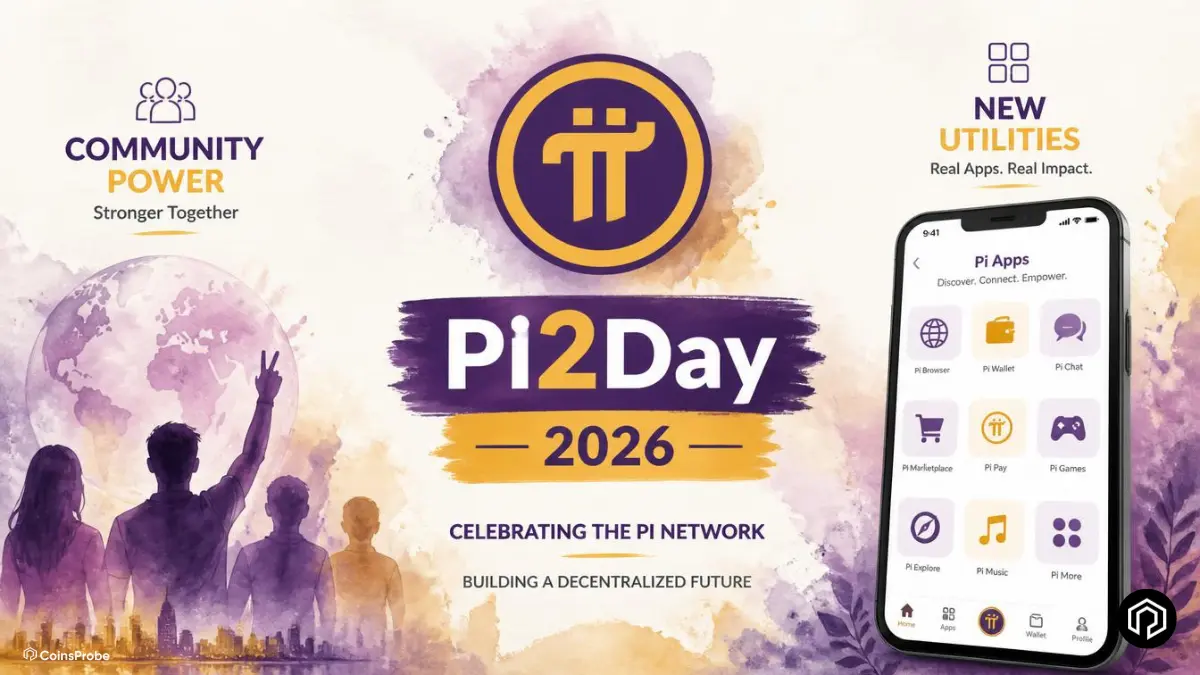

- Over 2.56 million Pioneers started the Pi2Day 2026 Ecosystem Quest, with 1.78 million completing all steps.
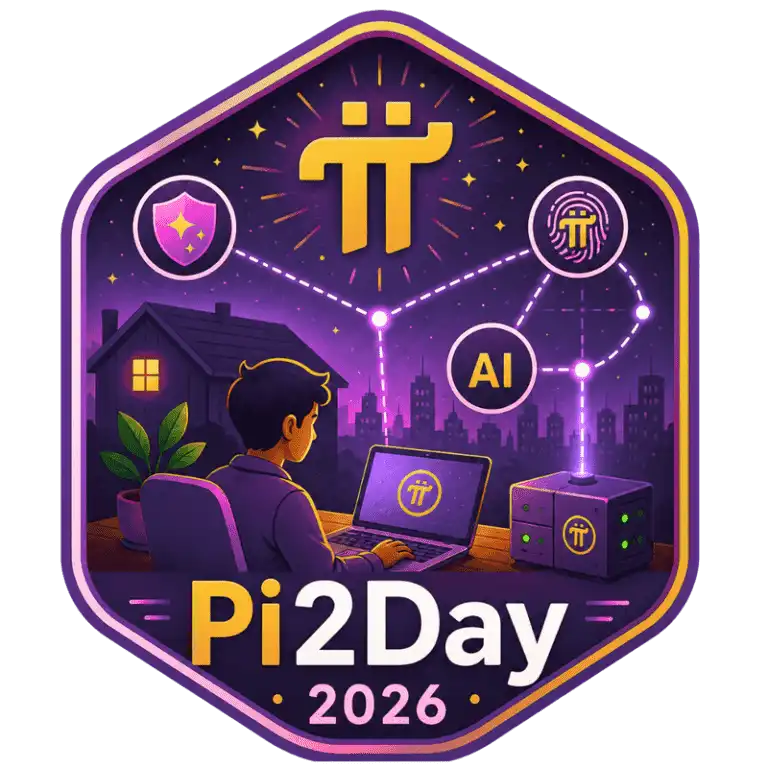
- The special-edition Pi2Day badge is now live in Pi Chats and Pi Social Profiles.
- Pi Network launched three major tools: SoloHost, Pi Sign-in, and PiVerify.
- Community developers have already deployed 110 apps on SoloHost, reaching over 420,000 Node operators.
Pi Network marked Pi2Day 2026 with its most utility-focused event to date — a two-week Ecosystem Quest that ran from June 28 to July 13, paired with three simultaneous product launches designed to expand Pi’s reach well beyond its existing user base.
The event combined hands-on community education with real infrastructure releases, giving Pioneers direct exposure to new features while developers and external platforms gained access to a new set of tools built on Pi’s verified identity and compute infrastructure.
This comes alongside broader network developments throughout 2026, including the Protocol v26.1 upgrade, the SLICE Launchpad test distribution, and the ongoing platform build-out that has been central to Pi Network’s roadmap since its 7th anniversary milestone.
Pi2Day 2026 Ecosystem Quest Results
The Pi2Day Ecosystem Quest produced one of the strongest community participation numbers Pi Network has reported for a structured event.
More than 2.56 million Pioneers started the quest. Of those, over 1.78 million completed every step — earning this year’s special-edition in-app badge, which is now accessible directly inside Pi Chats and Pi Social Profiles.
The quest was structured around three core activities, each tied to a specific new feature or functionality:
Exploring SoloHost Apps on Pi Desktop
Pioneers learned how Node operators and Pi Desktop users can run and manage SoloHost applications. This included local AI agents and other utility-layer tools that extend Pi Desktop’s role beyond standard blockchain validation — giving Node operators a new category of productive use for their infrastructure.
Participating in Ecosystem Directory Staking
Users engaged with the refreshed Ecosystem Interface and practiced staking PI to support apps directly. Staking determines app visibility and ranking within the directory, making this a practical introduction to how community engagement shapes the ecosystem’s structure going forward.
Discovering Vibe-Coded Apps
Pioneers explored apps built using external AI tools and Pi App Studio, practiced staking PI to support rankings, and shared favorites in the Vibe Code channel on Fireside Forum. The activity highlighted a new category of app development that lowers the barrier to entry for community builders without traditional coding backgrounds.
The high completion rate across all three activities points to genuine community interest in testing new utilities at launch — rather than passive observation.
Three Major Pi2Day 2026 Releases
Pi Network used Pi2Day 2026 to introduce three infrastructure-level tools. Each targets a different use case, and together they represent Pi’s clearest push yet toward building utility that extends to external developers and platforms.
1. SoloHost
SoloHost is an open, permissionless framework on Pi Desktop that allows developers to build and list applications supporting local AI and, in upcoming phases, distributed computing.
The early Beta phase has already seen meaningful adoption: 110 community-developed apps have been deployed, with potential reach to over 420,000 Pi Node operators and a growing Pi Desktop user base. The permissionless design means any developer can participate without approval gates — an intentional design choice to accelerate ecosystem growth.
2. Pi Sign-in
Pi Sign-in lets Pioneers use their Pi account credentials to authenticate on supported third-party websites and apps outside the Pi Browser. This moves Pi’s identity layer beyond its own ecosystem, giving external platforms access to Pi’s large base of real, verified users — while giving Pioneers a seamless way to carry their Pi identity into the broader internet.
The feature directly addresses one of Pi’s persistent challenges: building relevance and integration points outside its own app environment.
3. PiVerify
PiVerify makes Pi’s real-human verification and KYC infrastructure available to third-party clients as a standalone service. External platforms can integrate PiVerify to reduce fake or duplicate accounts and support compliance requirements — using the verification work Pi has already done across its Pioneer base.
Critically, clients pay for PiVerify access in PI — creating a direct utility demand loop where external adoption generates real token usage. This is one of the more structurally significant revenue models Pi has introduced, as it ties ecosystem growth to currency demand in a measurable way.
What These Releases Mean Together
The three Pi2Day launches — SoloHost, Pi Sign-in, and PiVerify — address three distinct infrastructure layers: compute, identity authentication, and verification services.
By making each of these available to external developers and businesses, Pi Network is attempting to position itself as a useful infrastructure provider rather than a self-contained ecosystem. The strategic logic is straightforward: if outside parties find genuine value in Pi’s services and pay for them in PI, the supply-demand dynamic shifts in the token’s favor over time.
As covered in our earlier analysis of Pi Network’s August unlock pressure, the token faces consistent supply-side headwinds from accelerating unlocks. Utility releases like PiVerify and Pi Sign-in are among the most direct paths to generating the demand-side growth needed to counterbalance that pressure.
Looking Ahead
Pi2Day 2026 delivered on two fronts simultaneously: community engagement through the Ecosystem Quest, and ecosystem expansion through three utility-focused product launches.
The 1.78 million quest completions represent one of the strongest participation rates Pi has seen for a structured activity, while the 110 SoloHost apps already deployed in early Beta indicate developer interest is moving faster than many anticipated.
Pioneers who completed the quest can now display their special-edition badge in Pi Chats and Pi Social Profiles. Developers and external platforms, meanwhile, have a new set of tools — SoloHost, Pi Sign-in, and PiVerify — available to build on and integrate with Pi Network.
Whether the ecosystem traction from these launches translates into meaningful token demand remains the key question, particularly given the supply pressure that continues to characterize PI’s market structure through the remainder of 2026.
Frequently Asked Questions
How many Pioneers participated in the Pi2Day 2026 Ecosystem Quest?
Over 2.56 million Pioneers started the quest, and more than 1.78 million completed all steps to earn the special-edition Pi2Day 2026 badge.
What is SoloHost on Pi Network?
SoloHost is an open, permissionless framework on Pi Desktop that lets developers build and list applications supporting local AI and distributed computing. In early Beta, 110 community apps have already been deployed, reaching over 420,000 Pi Node operators.
What does Pi Sign-in do?
Pi Sign-in allows Pioneers to use their Pi account to authenticate on supported third-party websites and apps outside the Pi Browser, extending Pi’s identity layer to the broader internet.
How does PiVerify create utility for the PI token?
PiVerify makes Pi’s real-human verification and KYC capabilities available to external platforms as a paid service. Clients pay in PI — directly linking external platform adoption to token demand.
What were the three Pi2Day 2026 Ecosystem Quest activities?
The three activities were: exploring SoloHost apps on Pi Desktop, participating in Ecosystem Directory Staking, and discovering Vibe-Coded apps built with AI tools and Pi App Studio.
The opinions and market insights shared on CoinsProbe represent the views of individual authors based on prevailing market conditions at the time of publication. Cryptocurrency investments carry significant risk and volatility. Readers are encouraged to conduct their own research and seek professional financial advice before making investment decisions. CoinsProbe and its contributors do not accept responsibility for financial losses or decisions made based on published content.
CoinsProbe may publish sponsored articles, affiliate links, or promotional collaborations. All sponsored material is clearly labeled to maintain transparency with our audience. Our editorial decisions remain fully independent, and advertising partnerships do not influence reviews, rankings, or published opinions.
Since 2023, CoinsProbe has delivered reliable insights on cryptocurrency, blockchain, and digital assets. Our content is created by experienced researchers and analysts who follow strict editorial standards focused on accuracy, transparency, and credibility. Every article is carefully reviewed and verified using trusted sources and current market data. We provide unbiased analysis and timely updates covering everything from emerging crypto projects to major industry developments.