
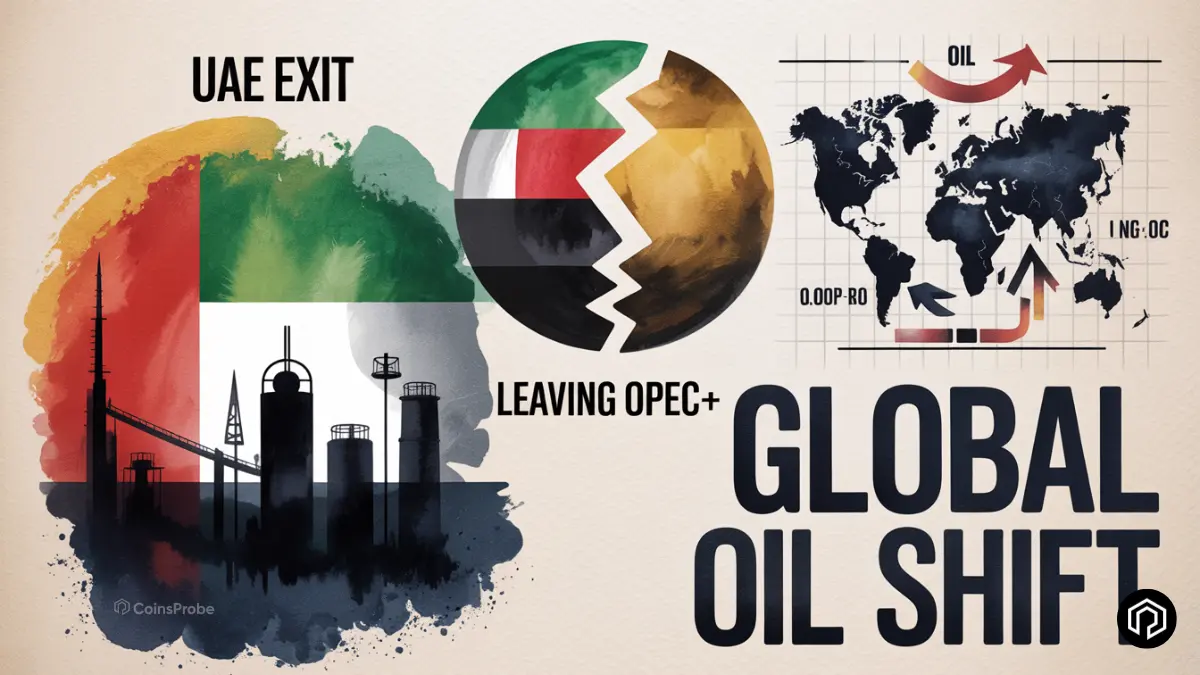
- The UAE will exit OPEC and OPEC+ on May 1, 2026, ending nearly 60 years of membership.
- The move gives the UAE greater control over oil production and aligns with its long-term energy strategy.
- Plans to increase output toward ~5 million bpd could reshape global supply dynamics.
- The exit may weaken OPEC+ coordination and increase volatility in global oil prices.
The United Arab Emirates has officially confirmed it will withdraw from both OPEC and the OPEC+ alliance, with the decision set to take effect on May 1, 2026. This move brings an end to nearly six decades of participation, dating back to 1967 when Abu Dhabi first joined the organization before the UAE’s formation in 1971.
Over the years, the UAE has grown into one of OPEC’s most influential producers, making its exit a significant development for global energy markets.
Official Position and Strategic Shift
According to the Emirates News Agency, the decision reflects the UAE’s long-term economic strategy and evolving energy priorities. The country has conducted a comprehensive review of its production policies, future capacity, and national interests before arriving at this move.
The UAE emphasized that it will continue to act as a reliable global energy supplier, gradually increasing production in line with market demand. However, stepping away from OPEC+ gives the country greater flexibility to respond quickly to changing market conditions without being bound by coordinated production quotas.
Why the UAE Is Leaving
Several key factors are driving this decision:
- A strategic push to gain full control over oil production and maximize its low-cost, lower-carbon reserves
- Alignment with broader economic diversification goals, including investments in gas, renewables, and clean energy
- A response to ongoing geopolitical and supply uncertainties, particularly in critical regions like the Strait of Hormuz
- Positioning for long-term global energy demand growth, while adapting to near-term volatility
While the UAE acknowledged its long-standing cooperation with OPEC and OPEC+, it made clear that national priorities and market agility are now taking precedence.
Impact on Oil Prices
The UAE’s exit is expected to have mixed effects on oil markets:
Short-Term Bullish:
In the near term, the move could add a bullish tone to oil prices. With existing supply constraints—especially linked to disruptions in key shipping routes—the UAE’s ability to adjust output independently may help stabilize flows. At the same time, geopolitical uncertainty could keep a risk premium embedded in prices like Brent and WTI.
Long-Term Bearish:
Over time, the exit could weaken OPEC+’s ability to enforce coordinated production cuts. The UAE is aiming to gradually increase output toward its ~5 million barrels per day capacity, which could add to global supply. If other producers follow a similar path, it may increase the risk of oversupply or even a price war, particularly if demand slows.
Higher Volatility Ahead:
Analysts expect sharp price swings, potentially ranging several dollars per barrel, depending on how key players like Saudi Arabia and Russia respond, as well as broader geopolitical and economic developments.
Market Implications
The UAE’s departure is widely seen as a major shift in OPEC+ cohesion, potentially altering the balance of power within global oil markets. With one of its most disciplined and efficient producers stepping away, the alliance may face greater challenges in managing supply.
As a result, markets are likely to become more sensitive to real-time supply-demand dynamics, as well as production decisions from non-OPEC players such as U.S. shale producers.
Bottom Line
The UAE’s decision to exit OPEC+ marks a turning point for the global energy landscape. While it opens the door for greater production flexibility and strategic independence for the UAE, it also introduces new uncertainties for oil markets.
In the coming months, all eyes will be on how major producers respond—and whether this move signals a broader shift toward a more competitive and less coordinated oil market.
Frequently Asked Questions (FAQ)
Why is the UAE leaving OPEC?
The UAE aims to gain full control over its oil production strategy and align with long-term economic diversification goals.
When will the UAE exit take effect?
The withdrawal will officially take effect on May 1, 2026.
How will this impact oil prices?
In the short term, prices may remain supported due to supply risks, but in the long term, increased production could put downward pressure on prices.
Will OPEC+ be weakened by this move?
Yes, losing a major producer like the UAE could reduce OPEC+’s ability to coordinate supply effectively.
Could this lead to more market volatility?
Yes, analysts expect higher volatility as markets react to shifting supply dynamics and responses from other major producers.
The opinions and market insights shared on CoinsProbe represent the views of individual authors based on prevailing market conditions at the time of publication. Cryptocurrency investments carry significant risk and volatility. Readers are encouraged to conduct their own research and seek professional financial advice before making investment decisions. CoinsProbe and its contributors do not accept responsibility for financial losses or decisions made based on published content.
CoinsProbe may publish sponsored articles, affiliate links, or promotional collaborations. All sponsored material is clearly labeled to maintain transparency with our audience. Our editorial decisions remain fully independent, and advertising partnerships do not influence reviews, rankings, or published opinions.
Since 2023, CoinsProbe has delivered reliable insights on cryptocurrency, blockchain, and digital assets. Our content is created by experienced researchers and analysts who follow strict editorial standards focused on accuracy, transparency, and credibility. Every article is carefully reviewed and verified using trusted sources and current market data. We provide unbiased analysis and timely updates covering everything from emerging crypto projects to major industry developments.