
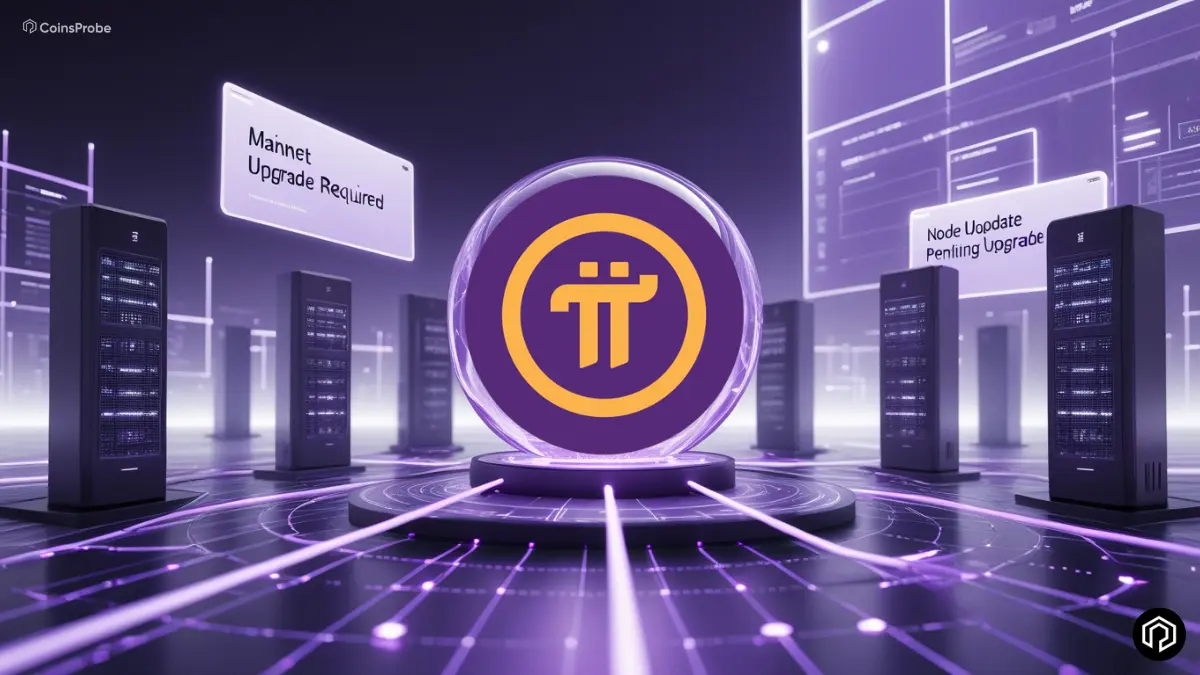

- Pi Core Team has issued an urgent upgrade directive — all Mainnet node operators must complete the Protocol 21 upgrade (20.2 → 21.2) by April 6, 2026 or risk losing Mainnet connection.
- The upgrade is a quick process with under 15 minutes of expected downtime — but operators must not upgrade all nodes simultaneously to maintain network stability.
- Protocol 21 builds directly on the recently completed Protocol 20 upgrade — advancing Pi Network toward v23.0 expected around May 18, 2026, which is anticipated to introduce broader smart contract functionality.
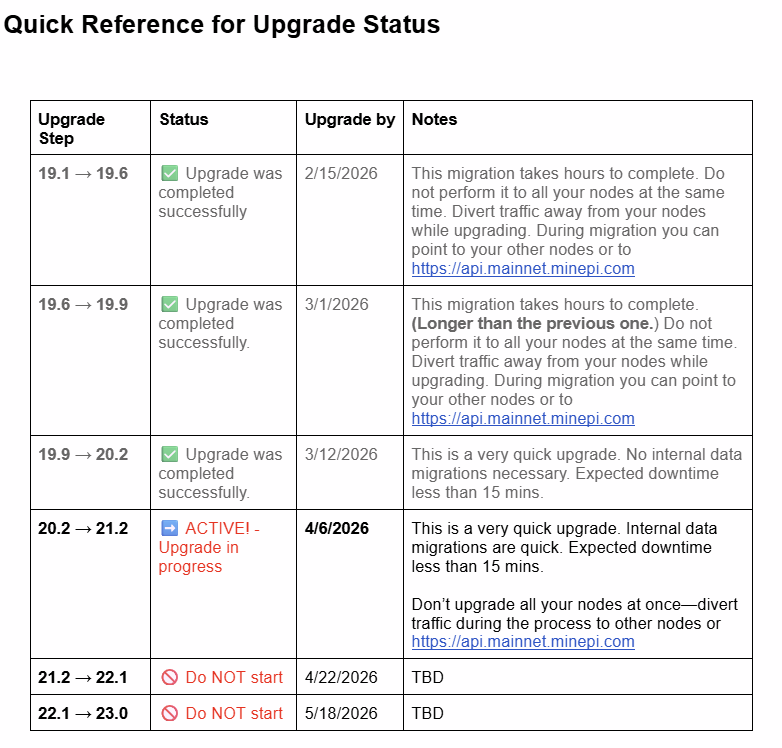
- The upgrade path follows a carefully sequenced rollout: 19.1 → 19.6 → 19.9 → 20.2 → 21.2 → 22.1 → 23.0 — only the active step (20.2 → 21.2) should be attempted now.
Pi Core Team has issued an directive to all Mainnet node operators — complete the mandatory upgrade to Protocol 21 (from version 20.2 to 21.2) by April 6, 2026. Nodes that fail to upgrade by this deadline risk losing connection to the Pi Mainnet entirely. The announcement was made on March 27, 2026 — marking the next critical step in Pi Network’s carefully structured protocol rollout that is building toward significant smart contract functionality expected in May 2026.
Why This Deadline Matters
Pi Network is advancing its Mainnet through a precisely sequenced upgrade path — each version building on the last to progressively unlock new capabilities while maintaining network stability and security:
19.1 → 19.6 → 19.9 → 20.2 → 21.2 → 22.1 → 23.0
The v23.0 upgrade — expected around May 18, 2026 — is anticipated to introduce significant enhancements including broader smart contract functionality that will unlock the next phase of Pi Network’s ecosystem development. This upgrade milestone builds directly on the foundation established by the ecosystem developments we have been tracking — including the Pi Launchpad testnet launch that attracted over 301,000 participants in its first week and the second migrations rollout that has already processed over 119,000 Pioneers.
Missing any step in the upgrade sequence — especially the currently active Protocol 21 upgrade — could require full resynchronization of the node later, creating unnecessary downtime and additional complexity for operators.
Current Upgrade Status — March 28, 2026
Here is the full upgrade roadmap and current status as of March 28, 2026:
How to Upgrade — Instructions by Node Type
1. Pi Desktop (Windows & macOS)
No manual steps needed. Simply restart your Pi Node via Pi Desktop, and the upgrade will trigger automatically.
2. Linux Node CLI (Recommended)
- If auto-update is enabled: No action required.
- If disabled: Run the command
pi-node update-protocol - Monitor with: watch pi-node status
- Upgrade is complete when your node shows “Synced” and ingest_latest_ledger matches the network (check via curl http://localhost:31401 against https://api.mainnet.minepi.com).
3. Self-Managed Docker (Legacy)
Update your docker-compose.yml with the new image:
pinetwork/pi-node-docker:organization_mainnet-v1.0-p21.2
Then run:
docker-compose up -d Downtime is usually under 5 minutes.
Critical Tip for All Operators:
Do not upgrade every node at the same time. Divert traffic to your other nodes or point to the official API (https://api.mainnet.minepi.com) during the process to maintain network stability.
What’s Next After Protocol 21?
The Protocol 21 upgrade is not the final step — it is part of a carefully staged rollout that is building toward Pi Network’s most significant technical milestone of 2026.
Following the April 6 deadline for Protocol 21, the next scheduled upgrade is:
21.2 → 22.1 — Deadline April 22, 2026 (do not attempt until Pi Core Team marks it active)
22.1 → 23.0 — Expected May 18, 2026 — the most significant upgrade in the current sequence, anticipated to introduce broader smart contract functionality that will unlock the next phase of ecosystem development.
This technical progression runs parallel to the ecosystem growth we have been covering — the Pi Launchpad testnet connecting ecosystem projects with Pioneers, the second migrations bringing referral bonuses on-chain, and the Pi Day 2026 updates expanding Mainnet functionality — all building toward a fully decentralized, utility-driven blockchain ecosystem.
Node operators play a vital role in keeping the Pi Mainnet decentralized and performant. Upgrading on time ensures your node remains connected and actively supports the network as it prepares for the May 2026 smart contract milestone.
For full technical details and the complete upgrade guide, visit the official Pi Node documentation at minepi.com/pi-node.
Frequently Asked Questions
What happens if I don’t upgrade my Pi node before April 6, 2026?
Nodes that fail to complete the Protocol 21 upgrade (20.2 → 21.2) by the April 6, 2026 deadline risk losing connection to the Pi Mainnet entirely. Missing the active upgrade step may also require full node resynchronization later — creating additional downtime and complexity for operators.
How long does the Protocol 21 upgrade take?
The upgrade is expected to take under 15 minutes of downtime for most node types — significantly faster than earlier upgrades like 19.1 → 19.6 which required hours-long migrations. Pi Desktop users simply need to restart the application, while Linux CLI and Docker operators have a few additional steps to complete.
Can I upgrade to Protocol 22 or 23 at the same time?
No — only the currently active upgrade step (20.2 → 21.2) should be attempted. The Pi Core Team has explicitly instructed operators not to begin the 21.2 → 22.1 or 22.1 → 23.0 upgrades until they are officially marked as active. Attempting future steps prematurely could destabilize your node.
Why should I not upgrade all nodes simultaneously?
Upgrading all nodes at the same time creates network stability risks during the transition period. Pi Core Team recommends diverting traffic to other nodes or pointing to the official API at https://api.mainnet.minepi.com during the upgrade process to maintain continuous network availability.
What is the significance of the v23.0 upgrade expected in May 2026?
The v23.0 upgrade — expected around May 18, 2026 — is anticipated to introduce broader smart contract functionality to the Pi Mainnet. This represents one of the most significant technical milestones in Pi Network’s development — building on the foundation established by Protocol 20 and 21 to unlock the next phase of ecosystem development and utility.
The opinions and market insights shared on CoinsProbe represent the views of individual authors based on prevailing market conditions at the time of publication. Cryptocurrency investments carry significant risk and volatility. Readers are encouraged to conduct their own research and seek professional financial advice before making investment decisions. CoinsProbe and its contributors do not accept responsibility for financial losses or decisions made based on published content.
CoinsProbe may publish sponsored articles, affiliate links, or promotional collaborations. All sponsored material is clearly labeled to maintain transparency with our audience. Our editorial decisions remain fully independent, and advertising partnerships do not influence reviews, rankings, or published opinions.
Since 2023, CoinsProbe has delivered reliable insights on cryptocurrency, blockchain, and digital assets. Our content is created by experienced researchers and analysts who follow strict editorial standards focused on accuracy, transparency, and credibility. Every article is carefully reviewed and verified using trusted sources and current market data. We provide unbiased analysis and timely updates covering everything from emerging crypto projects to major industry developments.