


Digital assets have transitioned from speculative experiments to essential tools in global financial strategies. As blockchain technology matures, leading protocols continue to push boundaries in utility, decentralization, and adoption. Amid increasing demand for alternatives to legacy financial systems, some projects are redefining how communities interact with digital value and cross-border settlements.Among the standouts this season is Qubetics ($TICS)—a rising force in Web3 infrastructure.
While established names like XRP and EOS have long demonstrated their relevance as scalable, enterprise-facing solutions, Qubetics is capturing significant attention with its high-performance architecture and successful presale. Together, these three projects offer distinct perspectives on scalability, interoperability, and global adoption, making them the best cryptos to watch in today’s evolving digital economy.
Qubetics (TICS): Empowering Cross-Border Settlements with Scalable Blockchain Infrastructure
Qubetics has rapidly positioned itself as one of the best cryptos to watch, largely due to its ambitious utility offerings and unmatched early-stage adoption. At the core of its functionality is a Cross-Border Transactions feature designed to bridge gaps in global payment systems. While traditional remittance models rely on intermediaries, fees, and days-long settlement times, Qubetics introduces a decentralized system capable of processing instantaneous, low-cost transfers across regions and currencies.
This functionality has real-world relevance for professionals, enterprises, and users alike. A mid-sized logistics company operating between the UAE and Southeast Asia, for instance, can use the Qubetics network to pay suppliers and contractors in seconds, bypassing banking delays and currency exchange inefficiencies. Similarly, digital freelancers working with international clients can receive compensation in $TICS instantly, eliminating dependency on legacy payment providers. By removing the traditional friction of borders, Qubetics opens the door for universal participation in decentralized commerce.

What sets Qubetics apart further is its modular and adaptable architecture. The protocol seamlessly integrates with enterprise systems while remaining accessible to individual users. Its smart contract layer allows for programmable logic in financial flows—automating settlements, revenue sharing, and compliance controls without human intervention.
Qubetics Presale Momentum and ROI Forecasts
The Qubetics crypto presale is now in Stage 36, and community interest continues to grow at an impressive pace. To date, over 514 million $TICS tokens have been sold to a base of 27,300+ token holders, resulting in more than $17.5 million raised. The token is currently priced at $0.3064, creating a time-sensitive opportunity for backers seeking early-stage exposure to a utility-first blockchain platform.
Crypto analysts across multiple sectors have weighed in on the presale’s momentum, projecting significant upside potential. Should $TICS reach $1 after the presale, participants could realize a 226% ROI. Longer-term forecasts push this further: a $5 valuation equates to a 1,531% return, and a $10 price delivers over 3,163% gains. Upon mainnet launch, the projection extends to $15, translating to a possible 4,794% ROI from the current presale stage.
Qubetics delivers real-world functionality for global transactions, combines enterprise-grade scalability with user accessibility, and is showing one of the most successful early fundraising campaigns in 2025. These milestones make it a standout among the best cryptos to watch this year.
XRP: Enterprise Liquidity and Institutional Settlement Powerhouse
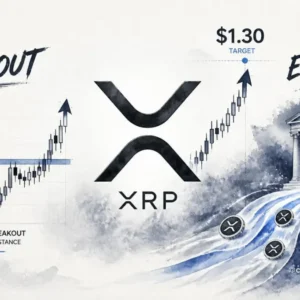
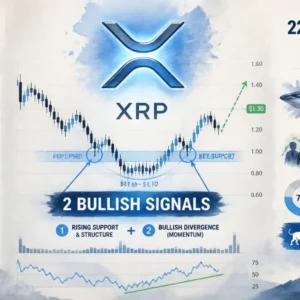
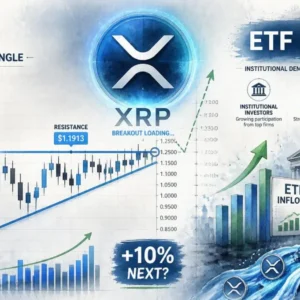
XRP has maintained its reputation as one of the most utility-driven digital assets in the global financial ecosystem. Originally developed by Ripple Labs, XRP’s primary use case lies in facilitating real-time gross settlement (RTGS), remittances, and currency exchange between financial institutions. Its speed and low transaction cost have made it a preferred alternative to SWIFT for cross-border transfers.
Unlike most cryptocurrencies, XRP doesn’t rely on mining. Its consensus algorithm enables near-instant confirmation with minimal energy expenditure, making it attractive to institutions seeking sustainability alongside speed. The RippleNet ecosystem, powered by XRP, connects a wide range of banks, payment providers, and liquidity hubs, facilitating the movement of capital across borders with minimal friction.
The project has demonstrated resilience through regulatory challenges and continues to build out its global footprint. Partnerships with central banks and payment corridors in Asia, the Middle East, and Latin America underscore XRP’s commitment to transforming international finance. Meanwhile, its community remains committed, with long-term adopters supporting network development, validator expansion, and use case diversification.
Among crypto participants, XRP is recognized for bringing blockchain utility into the institutional domain. It’s often viewed as the bridge between the old and the new—offering traditional finance the benefits of decentralization without the volatility and latency associated with many public blockchains.
XRP has carved out a niche as the institutional-grade solution for real-time settlement. Its established network, global partnerships, and proven performance make it a staple among the best cryptos to watch for stability, adoption, and long-term utility.
EOS: Scalable Infrastructure for Decentralized Applications
EOS is a smart contract platform built for high-throughput decentralized application (dApp) development. Launched by Block.one, EOS was engineered with scalability in mind—offering faster transaction speeds and greater bandwidth compared to many early blockchain systems. It operates using a Delegated Proof of Stake (DPoS) mechanism, allowing for efficient network validation while maintaining decentralization through community-elected block producers.
EOS is known for removing transaction fees, making it ideal for developers building consumer-facing applications. In contrast to platforms that require users to pay per transaction, EOS allows dApps to operate with zero-cost micro-interactions, enabling a user experience closer to traditional web platforms. This architecture has attracted use cases ranging from gaming and social media to supply chain management and DeFi.
Its development framework, EOSIO, supports modular architecture and easy integration with Web2 systems—making it a valuable asset for enterprises seeking to adopt blockchain without overhauling their infrastructure. EOS has maintained a loyal base of contributors, developers, and independent projects who continue to build within the ecosystem, even through market shifts.
While newer platforms have emerged in recent years, EOS retains relevance for those focused on enterprise-grade scalability and real-world deployment. Its governance model, performance metrics, and resource allocation system offer a blueprint for the next wave of decentralized systems looking to operate at commercial scale.
EOS remains one of the strongest candidates for developers and enterprises building scalable decentralized applications. Its no-fee model and robust ecosystem make it a key entry on any list of the best cryptos to watch.
Final Thoughts
The digital asset space continues to evolve, but some fundamentals remain unchanged: utility, adoption, and ecosystem strength are the metrics that matter. XRP and EOS have proven their value as infrastructure pillars—serving enterprise needs and enabling global transactions, smart contracts, and application development at scale.
However, Qubetics is now entering this arena with momentum, relevance, and a robust technological foundation. From streamlining cross-border transactions to raising over $17.5 million in its presale, Qubetics is proving it has both the vision and execution to compete among the leaders.
Those seeking exposure to crypto projects with real-world functionality and early-stage entry points should look closely at the ongoing Qubetics presale. With $TICS priced at $0.3064 and multiple ROI projections from analysts, participation at this stage offers unmatched potential.
Join the Qubetics presale today and secure your stake in one of the most utility-focused blockchain projects of 2025.

For More Information:
Qubetics: https://qubetics.com
Presale: https://buy.qubetics.com/
Telegram: https://t.me/qubetics
Twitter: https://x.com/qubetics
FAQs
1. What makes Qubetics a standout among current crypto projects?
Qubetics offers cross-border transaction functionality, multi-chain integration, and a fast-growing presale with over $17.5M raised.
2. How many $TICS tokens have been sold so far in the presale?
More than 514 million $TICS tokens have been distributed to over 27,300 holders.
3. What is XRP known for in the crypto ecosystem?
XRP is known for enabling institutional-grade, real-time settlements and building partnerships with global banks and payment networks.
4. Why is EOS still relevant in 2025?
EOS continues to provide scalable, fee-free infrastructure for developers building dApps, with high throughput and enterprise integration potential.
5. What is the price of $TICS in the current stage of the Qubetics presale?
$TICS is priced at $0.3064 in Stage 36 of the presale.
Disclaimer: This article is a sponsored press release for informational purposes only. Coinsprobe does not endorse or guarantee the accuracy, quality, or reliability of any content, products, or services mentioned. The views expressed do not reflect those of Coinsprobe and are not financial, legal, or investment advice. Investing in crypto assets carries significant risk. Readers should conduct their own research and act at their own risk. Coinsprobe is not liable for any losses or damages arising from reliance on this content.
The opinions and market insights shared on CoinsProbe represent the views of individual authors based on prevailing market conditions at the time of publication. Cryptocurrency investments carry significant risk and volatility. Readers are encouraged to conduct their own research and seek professional financial advice before making investment decisions. CoinsProbe and its contributors do not accept responsibility for financial losses or decisions made based on published content.
CoinsProbe may publish sponsored articles, affiliate links, or promotional collaborations. All sponsored material is clearly labeled to maintain transparency with our audience. Our editorial decisions remain fully independent, and advertising partnerships do not influence reviews, rankings, or published opinions.
Since 2023, CoinsProbe has delivered reliable insights on cryptocurrency, blockchain, and digital assets. Our content is created by experienced researchers and analysts who follow strict editorial standards focused on accuracy, transparency, and credibility. Every article is carefully reviewed and verified using trusted sources and current market data. We provide unbiased analysis and timely updates covering everything from emerging crypto projects to major industry developments.