

- US 30-year Treasury yield hits 5.623% — highest level since 2002, per @KobeissiLetter
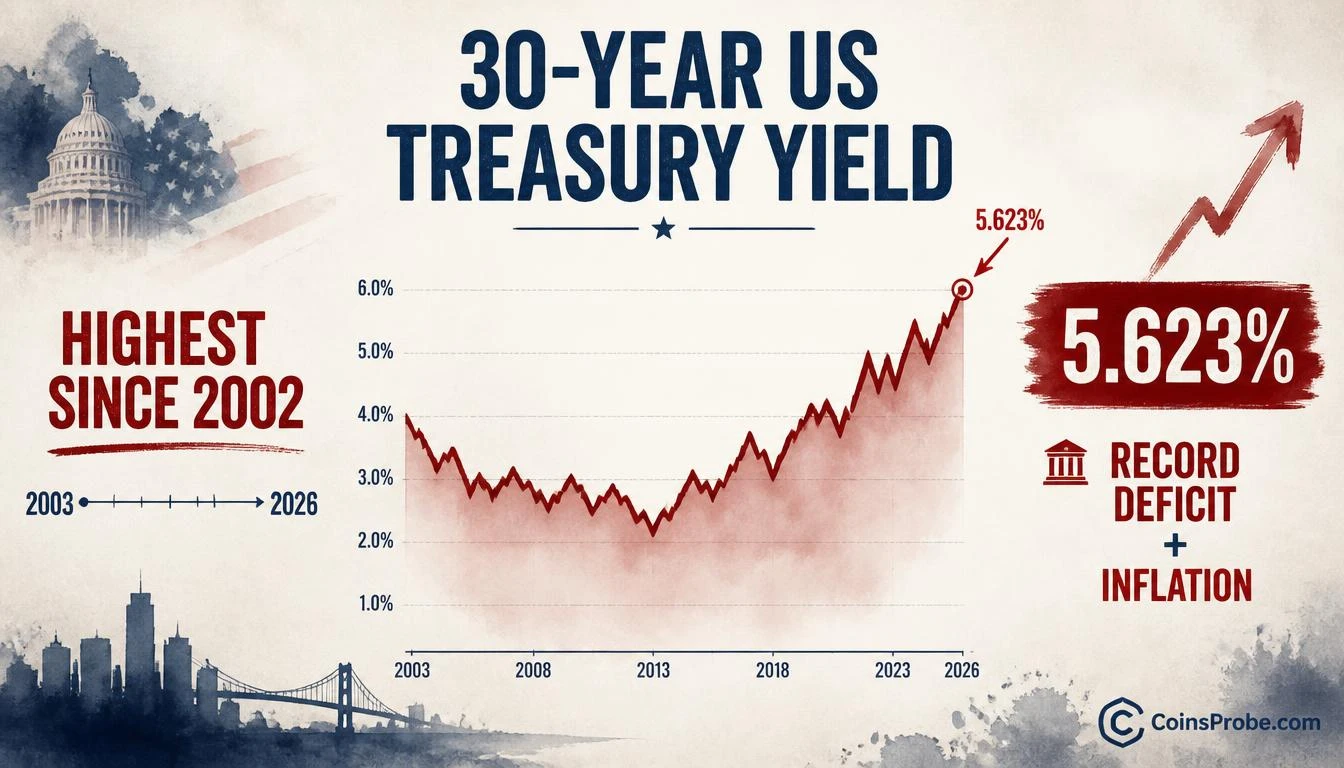
- Quarterly chart shows V-shaped recovery from 2020–2021 trough back to early 2000s highs
- Catalyst: record deficit spending and persistent inflation pressuring long-duration sovereign debt
- Kobeissi conclusion: own hard assets — the bond market is pricing a structural shift in cost of capital
The US 30-year Treasury yield has climbed to 5.623% — its highest level since 2002 — as record deficit spending and persistent inflation continue to pressure long-duration sovereign debt, according to @KobeissiLetter.
The quarterly chart shows the yield opened at 5.637%, reached a session high of 5.692%, and is currently printing at 5.623% — completing a large V-shaped recovery from the 2020–2021 trough back to levels last seen in the early 2000s. The multi-decade pattern is unmistakable: a prolonged decline from 2003 highs collapsed to near-zero during the pandemic era, followed by one of the sharpest sustained reversals in modern bond market history.
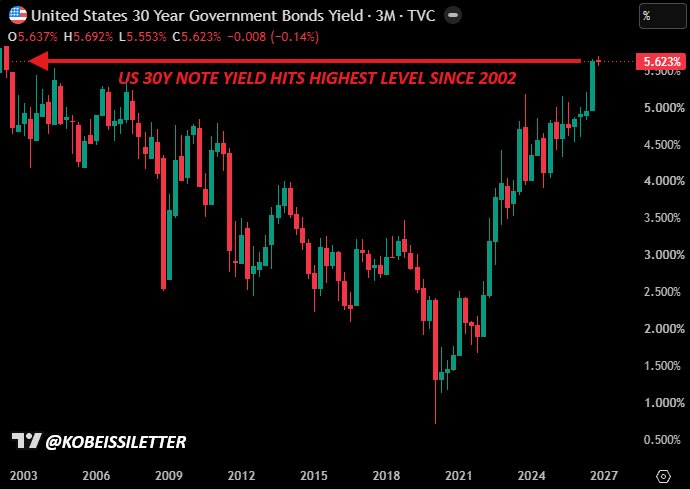
The Kobeissi Letter frames the move as a direct consequence of two compounding structural forces: deficit spending that has reached record levels and inflation that has yet to be fully subdued. Together, they are pushing the market’s long-run rate expectations to levels most investors have never priced into their portfolios.
The macro implication is direct. When the risk-free rate on 30-year government paper rises to 5.6%, the relative attractiveness of every asset class — equities, real estate, and hard assets including crypto — recalibrates. Historically, periods of sustained high long-bond yields have compressed equity multiples and accelerated rotation into inflation-resistant stores of value. The same dynamic that pushed investors toward Bitcoin and commodities during the 2022 rate shock is now re-emerging at a structurally higher yield baseline. For context on how AI and alternative assets are being positioned in this macro environment, see Elon Musk: AI Will Beat All Fields by End of 2027 or 2028.
The Kobeissi Letter’s conclusion is unhedged: own assets or be left behind. With the 30-year yield at a 23-year high, the bond market is pricing in a structural — not cyclical — shift in the cost of capital. That is the signal the market is sending.
Source: x.comFrequently Asked Questions
What is the current US 30-year Treasury yield and why does it matter?
What is driving the 30-year yield to a 23-year high?
How does a rising 30-year yield affect crypto and hard assets?
Source: Kobeissiletter · Published by CoinsProbe Markets Desk
The opinions and market insights shared on CoinsProbe represent the views of individual authors based on prevailing market conditions at the time of publication. Cryptocurrency investments carry significant risk and volatility. Readers are encouraged to conduct their own research and seek professional financial advice before making investment decisions. CoinsProbe and its contributors do not accept responsibility for financial losses or decisions made based on published content.
CoinsProbe may publish sponsored articles, affiliate links, or promotional collaborations. All sponsored material is clearly labeled to maintain transparency with our audience. Our editorial decisions remain fully independent, and advertising partnerships do not influence reviews, rankings, or published opinions.
Since 2023, CoinsProbe has delivered reliable insights on cryptocurrency, blockchain, and digital assets. Our content is created by experienced researchers and analysts who follow strict editorial standards focused on accuracy, transparency, and credibility. Every article is carefully reviewed and verified using trusted sources and current market data. We provide unbiased analysis and timely updates covering everything from emerging crypto projects to major industry developments.