

- Attacker mints 1 billion fake bridged DOT tokens on Ethereum by exploiting the Hyperbridge gateway contract.
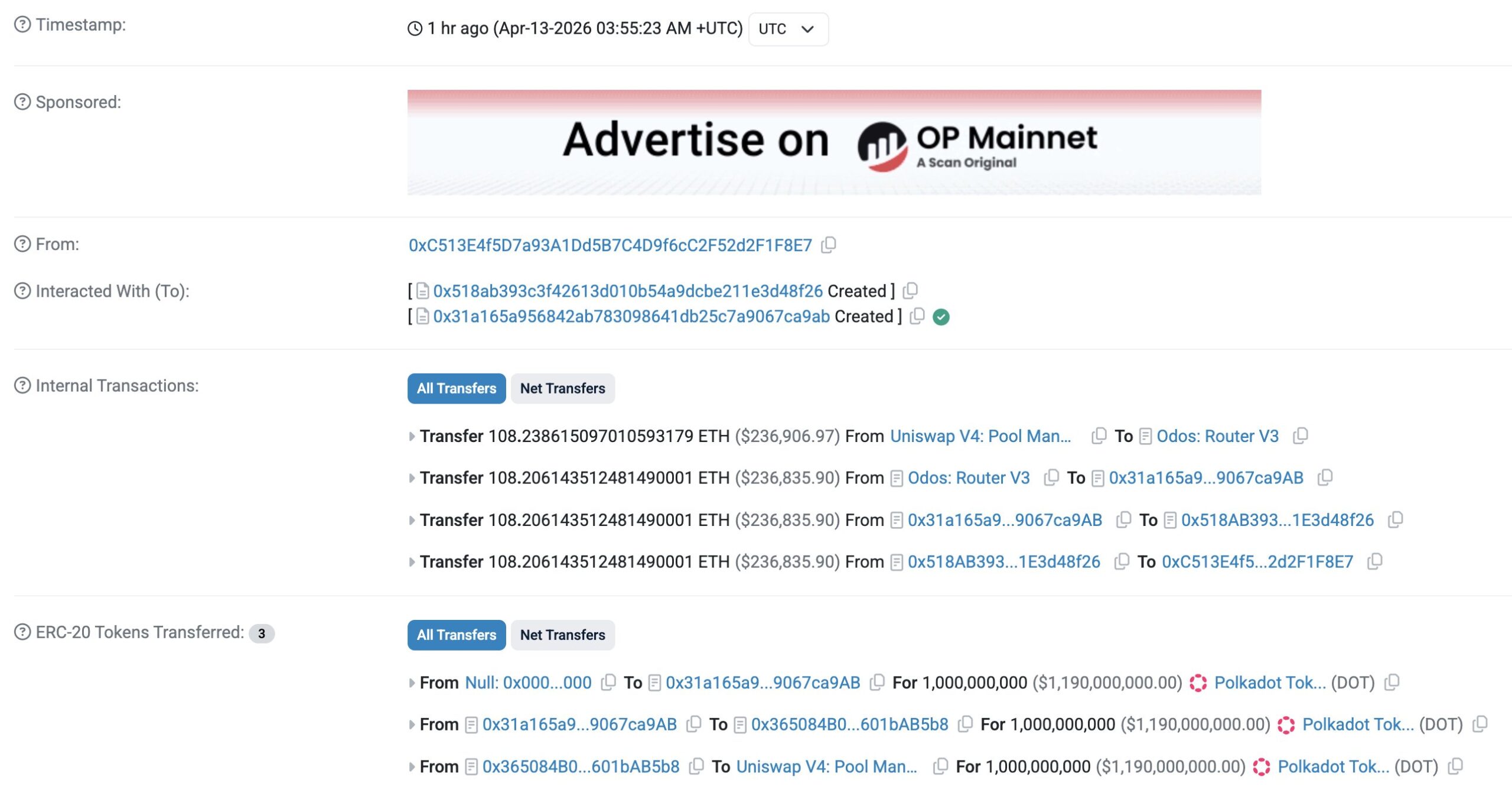
- Hacker extracts ~108.2 ETH ($237,000) after dumping the minted tokens in a low-liquidity Uniswap V4 pool.
- Native Polkadot ecosystem remains completely secure — relay chain, parachains, consensus, and official DOT supply are unaffected.
- Upbit issues precautionary notice via DAXA; temporary volatility leads to ~$728K in long position liquidations.
In a swift cross-chain incident, an attacker exploited a vulnerability in the Hyperbridge gateway contract on Ethereum, minting 1 billion fake bridged DOT tokens and dumping them for approximately 108.2 ETH (roughly $237,000 at current prices).
Today, April 13, 2026 The exploit, first flagged by blockchain security firm CertiK and on-chain analysts, targeted the bridged ERC-20 representation of Polkadot’s DOT on Ethereum — not the native Polkadot relay chain or its core ecosystem.
What Happened: Step-by-Step Breakdown
According to on-chain data and security alerts:
- The attacker forged a cross-chain message purporting to originate from the Polkadot side.
- This forged message allowed them to seize administrative control over the bridged DOT token contract on Ethereum.
- Using the elevated privileges, they minted 1,000,000,000 (1 billion) bridged DOT tokens directly from the null address.
- In a single transaction, the entire supply was dumped into a low-liquidity Uniswap V4 pool, extracting 108.2 ETH.
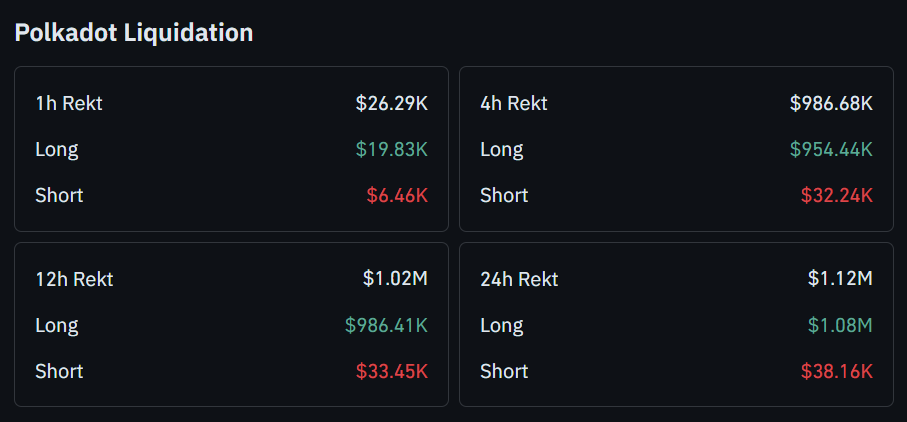
The incident prompted precautionary alerts from major Korean exchanges, including Upbit, which flagged DOT with a precautionary notice issued by the Digital Asset eXchange Alliance (DAXA). Around $1.12M in leveraged long positions were liquidated amid the brief volatility.
Critical Clarifications: What Was NOT Compromised
- Native Polkadot Ecosystem: The Polkadot relay chain, parachains, consensus mechanisms (GRANDPA/BEEFY), and the official DOT token supply remain fully secure and unaffected.
- No Impact on Staked DOT: Users holding native DOT on Polkadot or its parachains face zero risk.
- Isolated to Bridged Assets: This was a smart contract-level issue specific to Hyperbridge’s Ethereum gateway implementation, not a failure of Polkadot’s shared security model or Hyperbridge’s broader cryptographic verification design.
Hyperbridge, built as a parachain leveraging Polkadot’s crypto-economic security, light clients, and zero-knowledge proofs, was positioned as a more secure alternative to traditional multisig bridges that have lost billions historically. While the core protocol philosophy emphasizes trust-minimized bridging, today’s event highlights that even advanced implementations can face vulnerabilities in destination-chain gateway contracts.
Market Reaction and Immediate Aftermath
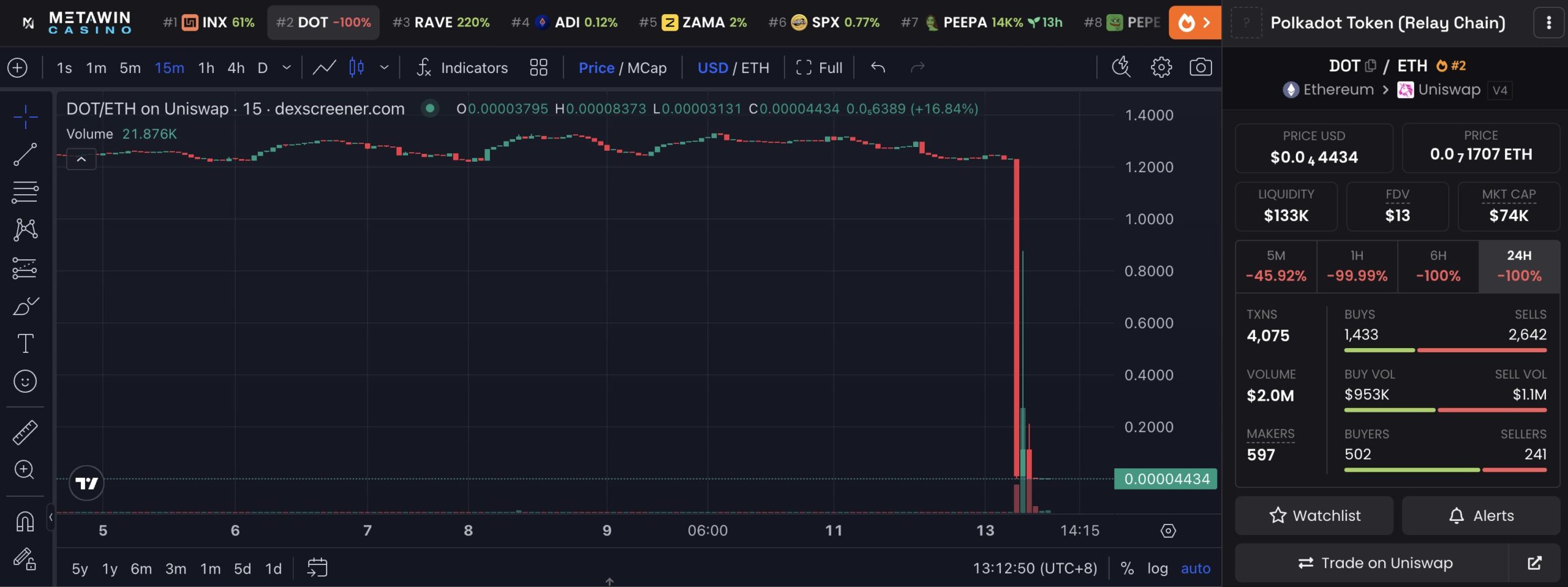
- Bridged DOT on Ethereum saw a sharp local price drop in the affected low-liquidity pool.
- Native DOT price experienced only minor, short-lived pressure with no significant long-term damage observed so far.
- Hyperbridge and Polkadot teams are actively reviewing the gateway contract and communicating updates to the community.
Industry Context: Bridges Remain a High-Risk Vector
This incident adds to the long list of bridge-related exploits in crypto, though the realized loss ($237K) is relatively contained compared to multi-million or billion-dollar historical breaches. It underscores a persistent truth in DeFi:Bridged assets carry additional smart contract and verification risks compared to native tokens on their home chain.Key Takeaways for Users:
- Prioritize native assets on their original chains whenever possible.
- Exercise caution with bridged representations, especially in lower-liquidity environments.
- In fast-moving situations, rely on verified on-chain data, official project channels, and reputable security firms like CertiK.
- Bridges continue to evolve, but implementation details and admin controls require relentless auditing.
Hyperbridge has positioned itself as a leader in verifiable interoperability. While today’s exploit exposed a localized weakness, Polkadot’s underlying shared security model once again demonstrated resilience by containing the impact strictly to the bridged Ethereum side.
Frequently Asked Questions (FAQs)
What exactly happened in the Hyperbridge exploit?
An attacker forged a cross-chain message to gain admin rights over the bridged DOT ERC-20 contract on Ethereum, minted 1 billion fake tokens, and sold them on Uniswap V4 for approximately $237,000. The attack was isolated to the Ethereum gateway.
Was native Polkadot or DOT affected?
No. The native Polkadot relay chain, parachains, consensus (GRANDPA/BEEFY), and official DOT supply remain fully secure and unaffected. Only the bridged representation on Ethereum was impacted.
Why did Upbit and other exchanges issue a precautionary notice?
As a standard safety measure following the incident, Upbit (via DAXA) flagged DOT with a precautionary alert to monitor deposits and withdrawals temporarily.
How much money was actually lost?
The attacker extracted roughly 108.2 ETH (~$237,000). The impact was limited due to low liquidity in the Uniswap pool.

The opinions and market insights shared on CoinsProbe represent the views of individual authors based on prevailing market conditions at the time of publication. Cryptocurrency investments carry significant risk and volatility. Readers are encouraged to conduct their own research and seek professional financial advice before making investment decisions. CoinsProbe and its contributors do not accept responsibility for financial losses or decisions made based on published content.
CoinsProbe may publish sponsored articles, affiliate links, or promotional collaborations. All sponsored material is clearly labeled to maintain transparency with our audience. Our editorial decisions remain fully independent, and advertising partnerships do not influence reviews, rankings, or published opinions.
Since 2023, CoinsProbe has delivered reliable insights on cryptocurrency, blockchain, and digital assets. Our content is created by experienced researchers and analysts who follow strict editorial standards focused on accuracy, transparency, and credibility. Every article is carefully reviewed and verified using trusted sources and current market data. We provide unbiased analysis and timely updates covering everything from emerging crypto projects to major industry developments.