

Date: Mon, Oct 20, 2025 | 06:46 AM GMT
The cryptocurrency market is starting the new week on a stronger footing after a volatile session last week. Ethereum (ETH) — viewed as the leader of the altcoin market — is trading back in the green with over 5% gains in the past 24 hours.
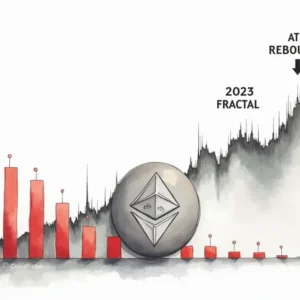
More interestingly, its latest price structure is beginning to mirror a familiar fractal pattern seen earlier in Bitcoin (BTC), one that could hint at a similar bullish continuation if history rhymes again.

Fractal Setup Hints at a Bullish Continuation
According to crypto analyst Osemka, Ethereum’s current price structure is closely resembling Bitcoin’s breakout fractal from late 2024 — a period when BTC reversed sharply after months of corrective pressure.
Back then, Bitcoin experienced a major sell-off triggered by the Yen Carry Trade, followed by a powerful rebound that led to a 65% rally once it broke above its breaker zone resistance.

Now, Ethereum appears to be following a similar trajectory. The October 10th “tariff crash” pushed ETH down to around $3,600, forming a key low before buyers stepped back in. Since then, ETH has rebounded to around $4,028 and is now approaching its breaker resistance zone between $4,200 and $4,300 — the same structural zone that marked Bitcoin’s breakout last year.
The chart comparison highlights how both BTC and ETH have reacted from their respective 0.5 Fibonacci retracement levels, showing a nearly identical rhythm in recovery and structure formation — a classic hallmark of a fractal setup.
What’s Next for ETH?
If this fractal pattern continues to unfold, Ethereum could soon reclaim the $4,200–$4,300 breaker zone, potentially confirming a bullish breakout. A decisive move above this level could open the doors for a strong continuation rally toward the $6,000 region, representing a major upside from current levels.
However, it’s important to note that fractals do not guarantee identical outcomes — they simply reflect repeating behavioral patterns between assets and timeframes. Any sustained rejection at the $4,300 zone could delay the move or lead to short-term consolidation before a clearer trend emerges.
Disclaimer: The views and analysis presented in this article are for informational purposes only and reflect the author’s perspective, not financial advice. Technical patterns and indicators discussed are subject to market volatility and may or may not yield the anticipated results. Investors are advised to exercise caution, conduct independent research, and make decisions aligned with their individual risk tolerance.

The opinions and market insights shared on CoinsProbe represent the views of individual authors based on prevailing market conditions at the time of publication. Cryptocurrency investments carry significant risk and volatility. Readers are encouraged to conduct their own research and seek professional financial advice before making investment decisions. CoinsProbe and its contributors do not accept responsibility for financial losses or decisions made based on published content.
CoinsProbe may publish sponsored articles, affiliate links, or promotional collaborations. All sponsored material is clearly labeled to maintain transparency with our audience. Our editorial decisions remain fully independent, and advertising partnerships do not influence reviews, rankings, or published opinions.
Since 2023, CoinsProbe has delivered reliable insights on cryptocurrency, blockchain, and digital assets. Our content is created by experienced researchers and analysts who follow strict editorial standards focused on accuracy, transparency, and credibility. Every article is carefully reviewed and verified using trusted sources and current market data. We provide unbiased analysis and timely updates covering everything from emerging crypto projects to major industry developments.