
- CFTC states readiness to issue crypto rules without waiting for Senate legislation
- Senate failed to pass the Digital Asset Clarity Act, leaving regulatory jurisdiction gap
- CFTC rulemaking under existing CEA authority is narrower — spot market oversight remains limited
- XRP trading at $1.27, down 8.82% in 24 hours amid ongoing regulatory uncertainty
BREAKING
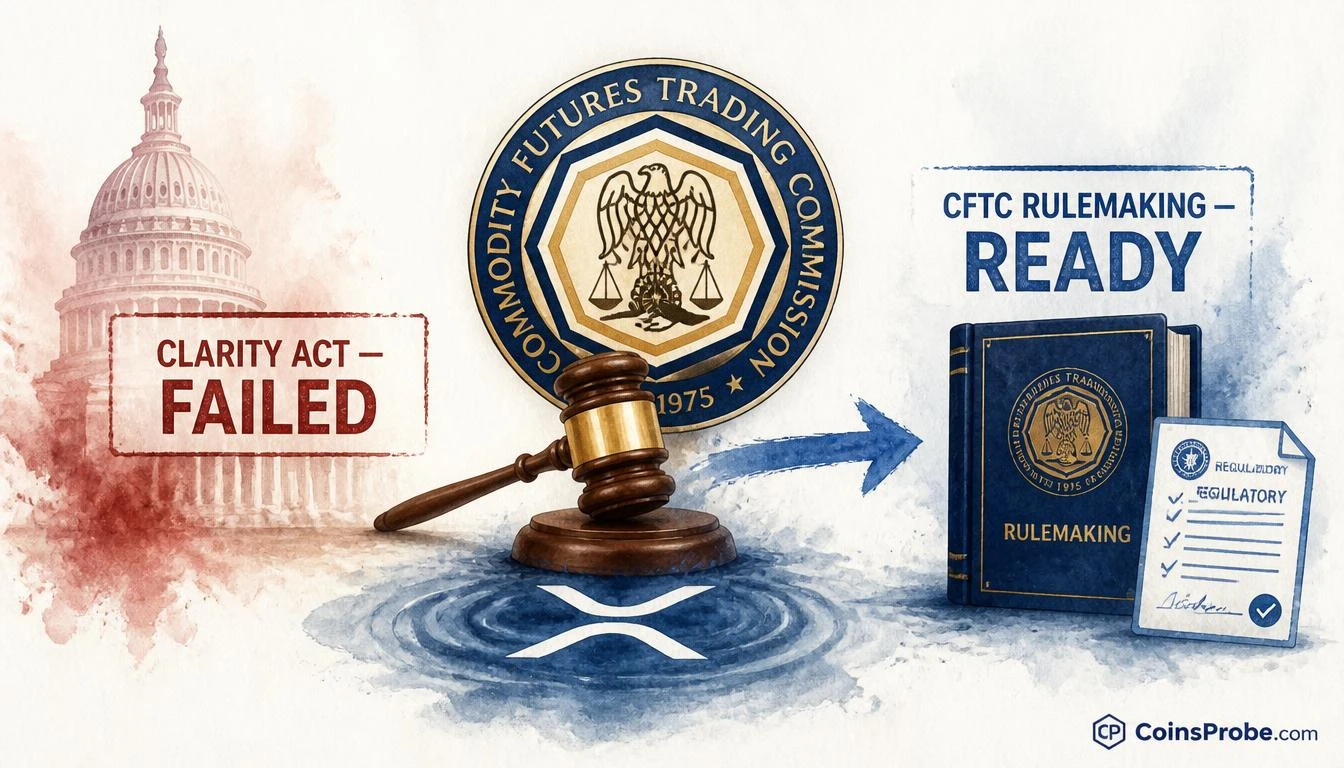
The U.S. Commodity Futures Trading Commission has stated it is prepared to move forward with crypto-specific rulemaking — independent of congressional action — following the Senate’s failure to pass the Digital Asset Clarity Act.
At the time of writing, XRP is trading at approximately $1.27, down 8.82% in the past 24 hours, against a broader regulatory backdrop that continues to define how U.S. agencies assert jurisdiction over digital assets. The CFTC’s posture is relevant to XRP and similar assets classified as commodities under current agency interpretations.
Who → What → Affected Assets
Who: The U.S. Commodity Futures Trading Commission (CFTC), the federal derivatives and commodities regulator.
What: The CFTC has publicly indicated it is ready to issue crypto market rules through its existing administrative rulemaking authority — without waiting for the Senate to pass new legislation granting it expanded statutory power.
Affected: Digital assets currently classified or potentially classifiable as commodities under the Commodity Exchange Act. This includes Bitcoin, Ether, and any token the CFTC determines falls outside the SEC’s securities jurisdiction.
Context — The Clarity Act Stalled
The Digital Asset Clarity Act was designed to establish a comprehensive federal framework delineating SEC and CFTC jurisdiction over digital assets. Its failure in the Senate leaves a regulatory gap that the CFTC is now signaling it will not wait to fill through legislation.
The CFTC’s decision to proceed via existing administrative authority means any rules issued would derive from the Commodity Exchange Act’s current statutory language — not new jurisdictional grants from Congress. This distinction matters: rules issued under existing authority are narrower in scope and carry greater legal challenge risk than rules underpinned by explicit new legislation.
For context on how on-chain credit markets are adapting to evolving regulatory frameworks, see our coverage of Maple Finance CEO Outlines Three Core Principles of On-Chain Credit on Stable Dash Live.
What the CFTC Can and Cannot Do Without New Legislation
| Action | Authority Under Current Law | Requires New Legislation |
|---|---|---|
| Regulate spot commodity markets | Limited — anti-fraud/manipulation only | Yes, for comprehensive spot oversight |
| Regulate crypto derivatives and futures | Yes — full authority | No |
| Define digital commodity classification | Partial — via guidance and rulemaking | Yes, for statutory certainty |
| Enforce against fraud in crypto spot markets | Yes — CEA Section 6(c)(1) | No |
No Effective Date Announced
The CFTC has not announced a specific effective date or formal rulemaking timeline for any forthcoming crypto regulation. The statement, as reported by @WatcherGuru via the Ripple Telegram channel, confirms intent and readiness — not a finalized rule or notice of proposed rulemaking (NPRM).
Under the Administrative Procedure Act, any CFTC rulemaking would require a public comment period before rules take effect.
Bottom Line
The CFTC is signaling that it will not allow the Senate’s failure on the Clarity Act to halt its crypto regulatory agenda. Rulemaking under existing Commodity Exchange Act authority is narrower than what new legislation would have enabled — particularly on spot market oversight — but the agency’s stated readiness marks a concrete shift from a wait-and-see posture to independent action. No formal rule text, NPRM, or effective date has been published. Watch for a Notice of Proposed Rulemaking filing in the Federal Register as the first concrete regulatory milestone.
Source: t.meFrequently Asked Questions
What is the CFTC’s authority over crypto without the Clarity Act?
What happened to the Digital Asset Clarity Act?
Will CFTC crypto rules apply to XRP?
Source: Ripple · Published by CoinsProbe Markets Desk
The opinions and market insights shared on CoinsProbe represent the views of individual authors based on prevailing market conditions at the time of publication. Cryptocurrency investments carry significant risk and volatility. Readers are encouraged to conduct their own research and seek professional financial advice before making investment decisions. CoinsProbe and its contributors do not accept responsibility for financial losses or decisions made based on published content.
CoinsProbe may publish sponsored articles, affiliate links, or promotional collaborations. All sponsored material is clearly labeled to maintain transparency with our audience. Our editorial decisions remain fully independent, and advertising partnerships do not influence reviews, rankings, or published opinions.
Since 2023, CoinsProbe has delivered reliable insights on cryptocurrency, blockchain, and digital assets. Our content is created by experienced researchers and analysts who follow strict editorial standards focused on accuracy, transparency, and credibility. Every article is carefully reviewed and verified using trusted sources and current market data. We provide unbiased analysis and timely updates covering everything from emerging crypto projects to major industry developments.