

Navigating the cryptocurrency space can be daunting for newcomers. While thousands of digital assets compete for attention, only a few projects deliver the kind of reliability, scalability, and ease of integration that appeal to early-stage participants. The ideal crypto for beginners isn’t just about hype or speculation — it’s about proven utility, community adoption, and future-facing infrastructure.Among the most talked-about projects of 2025, Qubetics (TICS) has positioned itself as a standout contender thanks to its strong presale momentum and practical use case.
Designed to serve individuals, businesses, and developers alike, Qubetics is earning attention for its decentralized VPN solution, which adds a much-needed layer of digital privacy and network security to the blockchain space. Alongside two respected blockchain platforms — Hedera and Cosmos — Qubetics is quickly becoming one of the best cryptos for beginners, especially those seeking exposure to long-term adoption and Web3 utility.
Qubetics (TICS): Private, Permissionless, and Powerful for New Entrants
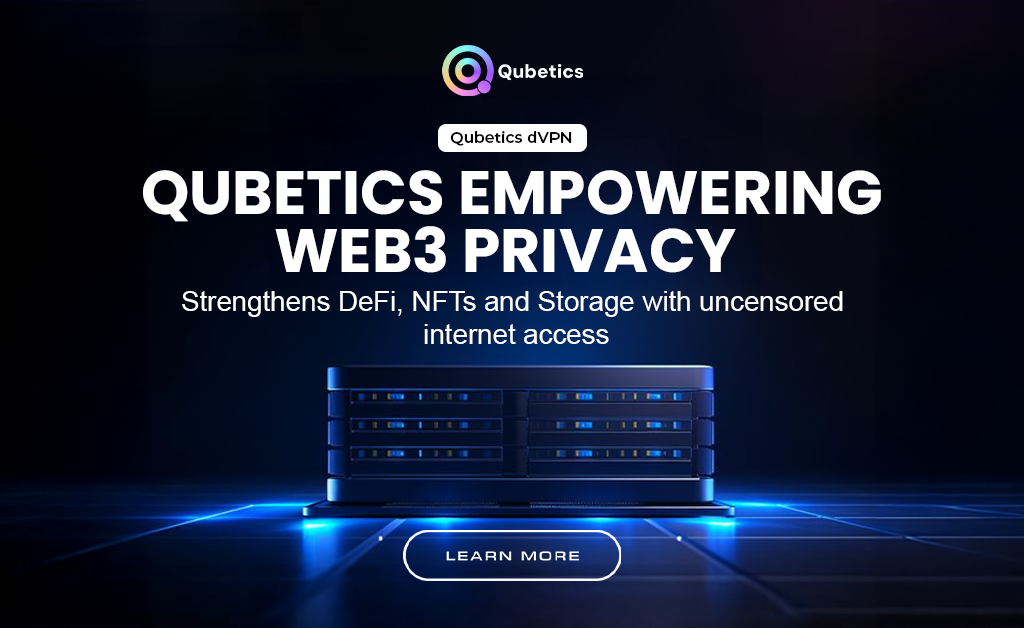
Qubetics is a next-generation blockchain platform tailored to real-world needs. A key feature attracting growing attention is its Decentralized VPN (dVPN) solution — an innovation designed to protect user data, anonymize online traffic, and shield browsing activity without relying on centralized service providers.
Unlike traditional VPNs that store user logs or operate through fixed server networks, Qubetics’ dVPN is powered by a peer-to-peer blockchain infrastructure. It allows anyone to route encrypted traffic through distributed nodes, making it almost impossible for intermediaries to trace or monitor user activity. A startup founder working remotely across various jurisdictions can use Qubetics dVPN to access sensitive dashboards securely. Likewise, digital nomads, privacy-focused professionals, and journalists operating under restricted regimes can maintain unrestricted access to the internet without compromising safety.

The decentralized structure also rewards bandwidth contributors through native token incentives, further reinforcing the Qubetics economy. As Web3 adoption continues to expand, a dVPN represents a critical pillar in protecting users from surveillance capitalism and cyber intrusions. For community members new to the crypto space, this application demonstrates how blockchain can offer real utility — not just speculative value.
This blend of real-world functionality and mass-user relevance makes Qubetics a front-runner among the best cryptos for beginners. It serves as a tangible example of blockchain’s power to decentralize vital online infrastructure and directly improve digital life for individuals and organizations alike.
Qubetics Presale Overview and Analyst Projections
The presale journey of Qubetics has become one of the most closely watched events in 2025. Now in Stage 34, the crypto presale has raised over $17 million, selling more than 512 million tokens to a growing base of 26,500 holders. Each $TICS token is currently priced at $0.2532, with access still open to new participants at this stage.
Projections by blockchain analysts highlight significant return potential depending on ecosystem growth and platform activation. Based on current models:
If $TICS reaches $1, early buyers may gain a 294% return.
If it reaches $5, projected ROI would rise to 1,874%.
At $6, early adopters may realize 2,269% returns.
A climb to $10 signals a potential 3,848% ROI.
Upon mainnet launch, should $TICS hit $15, the return could surge to 5,822%.
These figures have captured serious attention across the Web3 space, making Qubetics not only a solid choice for blockchain newcomers but also a strategic asset for seasoned participants targeting high-utility ecosystems.
Hedera (HBAR): Enterprise-Grade DLT with Institutional Trust
Hedera has consistently distinguished itself through its unique architecture and emphasis on enterprise-grade security. As a public distributed ledger based on Hashgraph consensus, Hedera offers high throughput, low fees, and finality within seconds. Unlike traditional blockchains, Hedera uses a directed acyclic graph (DAG) structure, which allows parallel processing of transactions — a key factor in its performance advantage.
For beginners exploring the space, Hedera’s clear value proposition lies in its partnerships and network governance. Its governing council includes global giants such as Google, IBM, LG, Deutsche Telekom, and Standard Bank, among others. These household names not only guide network decisions but also validate the infrastructure by running nodes. This level of transparency and stability makes Hedera a reassuring entry point for those new to the crypto ecosystem.
Hedera is also recognized for enabling real-world tokenization projects and micropayment systems. Developers have launched NFT platforms, supply chain tracking tools, and energy credit systems using Hedera’s low-latency architecture. The platform’s support for Solidity smart contracts and robust documentation gives it added developer accessibility.
Its reputation for regulatory compliance and corporate alignment makes Hedera particularly attractive to professionals and institutions exploring blockchain applications. As one of the best cryptos for beginners, Hedera offers a user-friendly and institutionally backed entry into decentralized technology — free from the volatility and technical complexity often associated with early-stage blockchain projects.
Cosmos (ATOM): The Internet of Blockchains for Scalable Interoperability
Cosmos has long been known as the “Internet of Blockchains” — a protocol dedicated to connecting decentralized networks across diverse ecosystems. Built on the Cosmos SDK and powered by Tendermint consensus, the platform enables sovereign blockchains to interoperate while preserving independence. For beginners, Cosmos presents a compelling case for understanding blockchain modularity, scalability, and open collaboration.
Rather than competing with other chains, Cosmos empowers them. Developers can launch application-specific blockchains known as “zones” that are interoperable via the Inter-Blockchain Communication (IBC) protocol. This means assets, tokens, and messages can be sent across chains with seamless finality. Newcomers often find this logic intuitive, as Cosmos models its network more like the internet — many independent systems working together under a shared set of protocols.
The Cosmos ecosystem has grown to include prominent projects such as Osmosis, Akash Network, and Secret Network. These applications span DeFi, cloud computing, privacy, and governance — all running on independent but interconnected chains. Its modular architecture also allows developers to customize security models, fee structures, and consensus logic based on their application needs.
With its focus on simplicity, education, and plug-and-play components, Cosmos is one of the best cryptos for beginners seeking to build, explore, or understand the power of interoperable Web3 ecosystems. It’s a gateway to blockchain infrastructure that feels more like using smart APIs than navigating raw code.
Final Thoughts
The journey into cryptocurrency doesn’t have to begin with meme coins or volatile assets. Projects like Cosmos, Hedera, and Qubetics offer structured, secure, and utility-rich platforms that enable new participants to explore blockchain with purpose and confidence. Each offers something distinct: Cosmos provides scalability through interoperability, Hedera delivers trust through enterprise-grade governance, and Qubetics introduces real-world privacy innovation with powerful economic incentives.
Yet it’s Qubetics that currently stands out for those focused on real-life blockchain impact and presale-stage opportunity. The platform’s decentralized VPN solution addresses a critical modern need — secure and anonymous internet access — while its tokenomics and strong presale traction reveal substantial near-term potential.
With over 512 million tokens sold, $17 million raised, and 26,500+ backers already on board, Qubetics represents a rare blend of technical innovation and community momentum. It’s not just one of the best cryptos for beginners — it’s a powerful tool for reshaping how individuals and organizations interact with the internet.
New participants exploring Web3 should seize the chance to engage with Qubetics at this foundational moment. Its use cases are real, its infrastructure is active, and the opportunity to enter at $0.2532 per token in Stage 34 remains open.

For More Information:
Qubetics: https://qubetics.com
Presale: https://buy.qubetics.com/
Telegram: https://t.me/qubetics
Twitter: https://x.com/qubetics
FAQs
1. What makes Qubetics beginner-friendly in the crypto space?
Qubetics offers a decentralized VPN that serves a real-world use case while maintaining user-friendly interfaces and educational support for new participants.
2. How many tokens has Qubetics sold in its presale?
Qubetics has sold over 512 million $TICS tokens to more than 26,500 holders, raising $17 million so far.
3. What is Hedera’s unique advantage in blockchain infrastructure?
Hedera uses a Hashgraph consensus model and is governed by a council of global enterprises, ensuring stability and performance.
4. How does Cosmos support blockchain scalability?
Cosmos uses interoperable, modular blockchain zones connected via IBC, enabling seamless asset and data transfer between chains.
5. What is the current token price in Qubetics’ Stage 34 presale?
The $TICS token is priced at $0.2532 in the current presale stage, offering significant potential upside before mainnet launch.
Disclaimer: This article is a sponsored press release for informational purposes only. Coinsprobe does not endorse or guarantee the accuracy, quality, or reliability of any content, products, or services mentioned. The views expressed do not reflect those of Coinsprobe and are not financial, legal, or investment advice. Investing in crypto assets carries significant risk. Readers should conduct their own research and act at their own risk. Coinsprobe is not liable for any losses or damages arising from reliance on this content.

The opinions and market insights shared on CoinsProbe represent the views of individual authors based on prevailing market conditions at the time of publication. Cryptocurrency investments carry significant risk and volatility. Readers are encouraged to conduct their own research and seek professional financial advice before making investment decisions. CoinsProbe and its contributors do not accept responsibility for financial losses or decisions made based on published content.
CoinsProbe may publish sponsored articles, affiliate links, or promotional collaborations. All sponsored material is clearly labeled to maintain transparency with our audience. Our editorial decisions remain fully independent, and advertising partnerships do not influence reviews, rankings, or published opinions.
Since 2023, CoinsProbe has delivered reliable insights on cryptocurrency, blockchain, and digital assets. Our content is created by experienced researchers and analysts who follow strict editorial standards focused on accuracy, transparency, and credibility. Every article is carefully reviewed and verified using trusted sources and current market data. We provide unbiased analysis and timely updates covering everything from emerging crypto projects to major industry developments.