

- SOL is trading at $94.28 — up 1.92% in 24 hours and an impressive 24.73% over 7 days — with a market cap of approximately $54.99 billion.
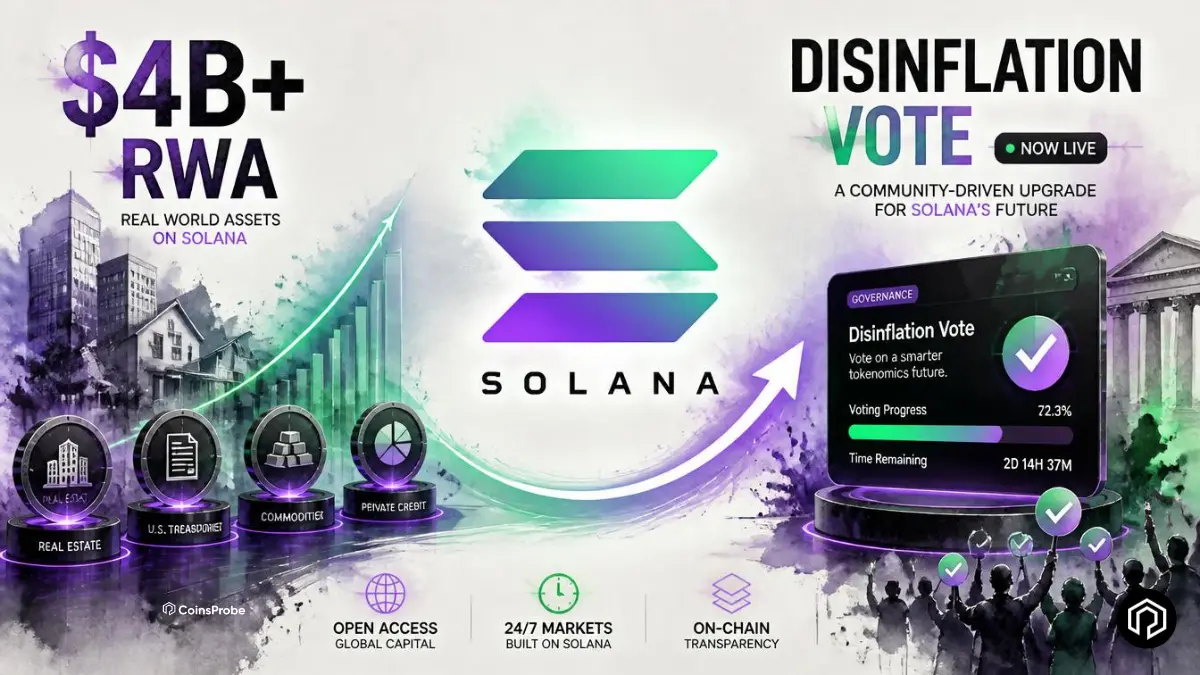
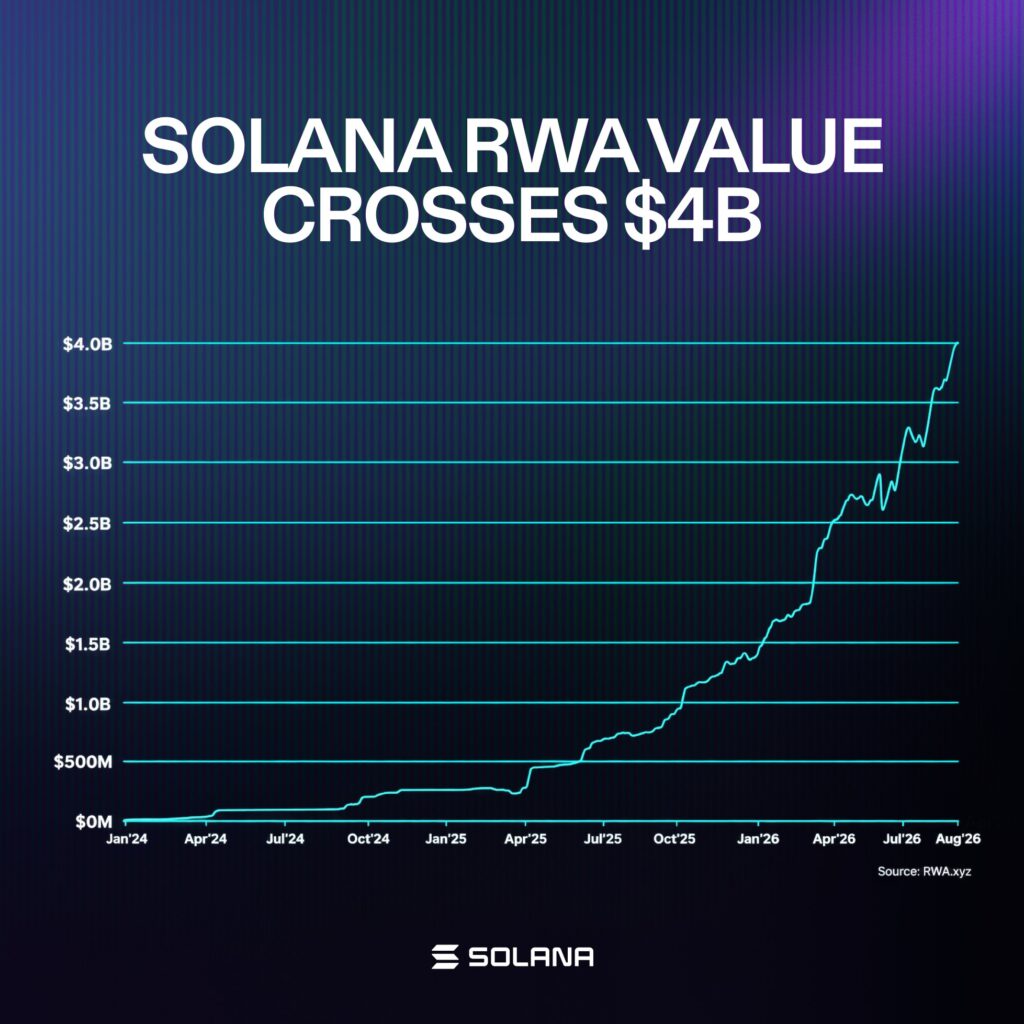
- Solana's Real World Asset (RWA) ecosystem has crossed $4 billion in total value — a new all-time high reflecting sharp acceleration in 2026 from near-zero in early 2024.
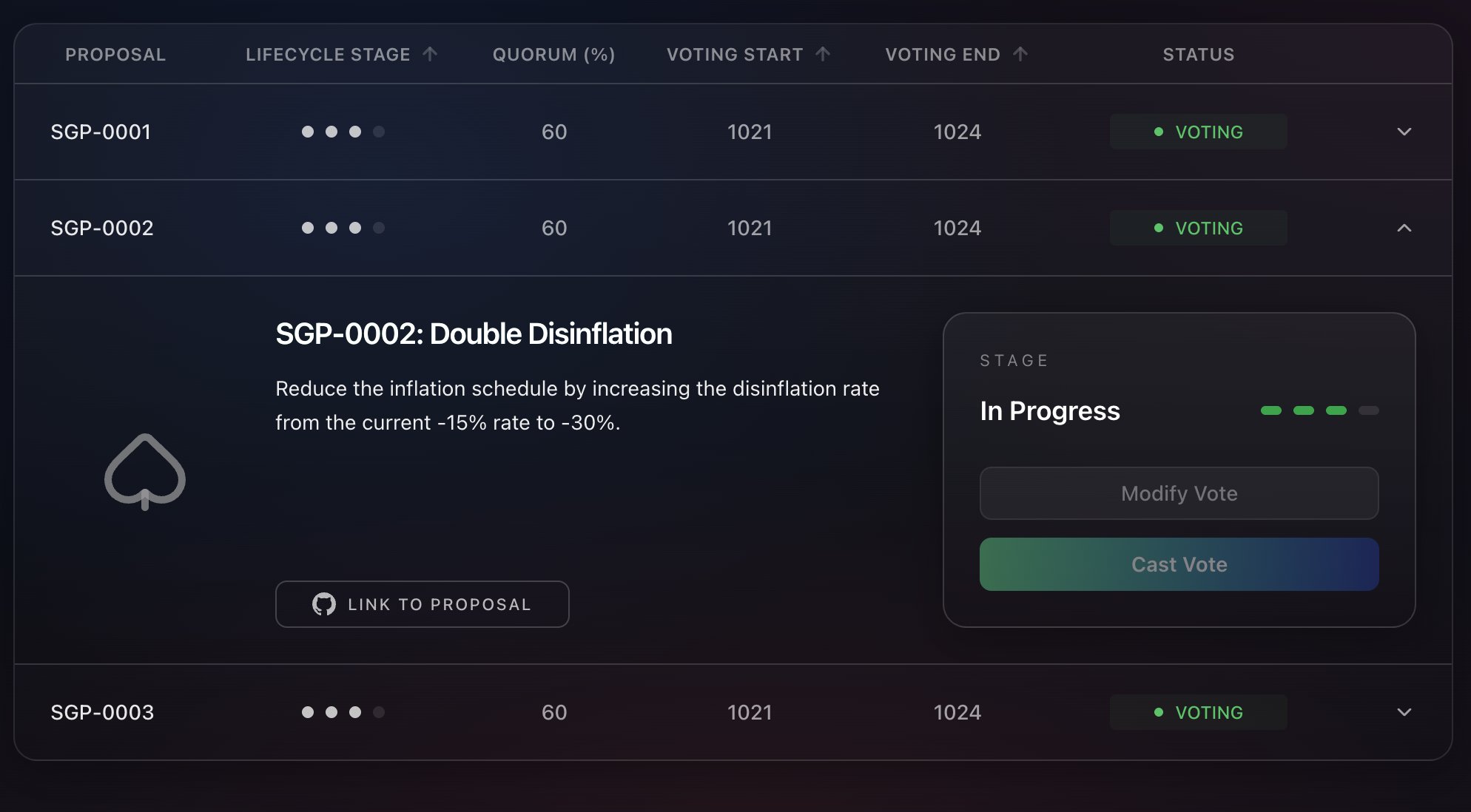
- Governance proposal SGP-0002: Double Disinflation is now in active voting (Epochs 1021–1024) — targeting a reduction of approximately 18.9 million SOL in issuance over the next six years and cutting the timeline to terminal inflation in half.
Solana is delivering two simultaneous milestones that independently strengthen its long-term narrative — and their convergence in the same week is not a coincidence. A network that is attracting institutional capital through real-world asset tokenization at record levels while its validator community votes on reducing future token supply is describing a maturation trajectory that few blockchain ecosystems have managed to execute at comparable speed.
At the time of writing, SOL is trading at $94.28 with a market capitalization of approximately $54.99 billion — up 1.92% in 24 hours and 24.73% over the past 7 days — reflecting the broader crypto market recovery that has been building since August 19.

Solana RWA Ecosystem Crosses $4 Billion — A New All-Time High
Official Solana accounts confirmed this week that the network’s Real World Asset (RWA) ecosystem has surpassed $4 billion in total value — a new all-time high that reflects one of the most rapid institutional adoption curves any blockchain has produced in the RWA category.
The Growth Trajectory
Data from RWA.xyz tells a story of accelerating institutional adoption that has gone from negligible to landmark in under three years:
| Period | RWA Value on Solana |
|---|---|
| Early 2024 | Near zero |
| Through 2025 | Gradual, steady growth |
| 2026 (accelerating) | Sharp expansion |
| August 2026 | $4 billion+ (All-Time High) |
The curve is not linear — the 2026 acceleration phase has been dramatically steeper than the 2024–2025 growth period, reflecting a shift from early adoption by specialized RWA protocols to broader institutional deployment across multiple asset categories.
What Is Driving the $4 Billion Milestone
The Solana RWA ecosystem encompasses tokenized versions of multiple traditional financial asset classes, including:
U.S. Treasuries: Tokenized short-term and long-term U.S. government debt — one of the fastest-growing categories in the RWA space globally, driven by institutional demand for on-chain yield with traditional asset backing.
Equities: Tokenized stock exposure, including the xStocks expansion that has been bringing traditional equity access to Solana rails for global investors — as covered in our Solana ETF inflow record and 2023 bottom fractal analysis.
Private credit: On-chain lending and credit instruments that provide institutional-grade yield products accessible through blockchain infrastructure.
Other traditional financial products: The category continues to expand as more asset managers and financial institutions explore Solana’s speed, low cost, and institutional-grade infrastructure as the preferred blockchain for tokenization.
Why $4 Billion on Solana Is Significant
The milestone is not just a number — it is a signal about Solana’s competitive positioning in the institutional blockchain space. The RWA sector has multiple competing chains, but the pace of Solana’s growth from near-zero in early 2024 to $4 billion in August 2026 reflects specific advantages: sub-second finality, low transaction costs at scale, and an ecosystem of institutional-grade tooling that has been built progressively throughout 2025–2026.
As Solana’s RWA value grows, it attracts more institutional integrations, more developer resources, and more regulatory engagement — a compounding network effect that makes continued RWA growth progressively more likely rather than less.
SGP-0002: Double Disinflation — What the Governance Vote Means
In a separate but equally significant development, Solana Governance Proposal SGP-0002: Double Disinflation has entered its active voting phase — giving validators and stakers a direct voice in one of the most consequential tokenomics decisions in Solana’s history.
What the Proposal Changes
The Double Disinflation proposal targets a specific parameter in Solana’s inflation schedule: the disinflation rate — the annual rate at which Solana’s inflation percentage decreases each year toward its long-term terminal rate.
| Parameter | Current | Proposed |
|---|---|---|
| Annual Disinflation Rate | -15% per year | -30% per year |
| Terminal Inflation Rate | 1.5% (unchanged) | 1.5% (unchanged) |
| Timeline to Terminal Rate | ~5.7 years | ~2.8 years |
| Cumulative SOL Reduction | — | ~18.9 million fewer SOL |
| Cumulative Issuance Impact | — | ~2.6% lower |
The proposal does not change Solana’s terminal inflation rate — 1.5% remains the long-term target. What it changes is how quickly the network reaches that target. By doubling the disinflation rate from -15% to -30%, the path to 1.5% annual inflation shortens from approximately 5.7 years to 2.8 years — cutting the transition timeline nearly in half.
The Supply Reduction Implications
The practical effect of accelerating to terminal inflation is a reduction in total SOL issuance between now and the point where inflation stabilizes at 1.5%. The proposal estimates approximately 18.9 million fewer SOL issued over the next six years — representing a 2.6% reduction in cumulative issuance compared to the current schedule.
For context: 18.9 million SOL at current prices (~$94.28) represents approximately $1.78 billion in supply reduction — a meaningful reduction in the inflationary pressure on existing SOL holders over the six-year horizon.
Voting Details
| Detail | Information |
|---|---|
| Proposal | SGP-0002: Double Disinflation |
| Voting Stage | Active |
| Voting Epochs | 1021–1024 |
| Quorum Requirement | 60% |
| Who Can Vote | Validators and stakers |
| Voting Portal | Official Solana governance portal |
Validators and stakers should cast their votes through the official Solana governance portal before the Epoch 1024 deadline. The 60% quorum requirement means broad participation from the validator community is necessary for the vote to be valid — low turnout would prevent the proposal from passing regardless of the directional result.
Why Both Developments Matter Together
The RWA milestone and the Double Disinflation governance vote are not connected events — they are independent developments occurring in the same week. But their simultaneous appearance strengthens Solana’s narrative in complementary ways:
RWA growth → demand side: $4 billion in tokenized assets on Solana represents growing institutional demand for the network’s services. More RWA activity means more transactions, more fees, more developer engagement, and more institutional capital exposed to the Solana ecosystem. This is a demand-side strengthening of the SOL value proposition.
Double Disinflation → supply side: If SGP-0002 passes, approximately 18.9 million fewer SOL will be issued over the next six years than under the current schedule. This is a supply-side tightening — the same token that increasing institutional demand is purchasing will be issued at a faster-declining rate. Supply reduction and demand expansion occurring simultaneously is the classic setup for improved price dynamics over time.
The combination of accelerating RWA adoption (demand) and a potential disinflation acceleration (supply reduction) arriving in the same week as SOL trades up 24.73% over 7 days is one of the more complete fundamental-plus-technical convergences Solana has produced in 2026.
Bullish vs. Bearish Scenarios
Bullish Scenario
SGP-0002 passes with the required 60% quorum — accelerating Solana’s path to terminal inflation and reducing cumulative SOL issuance by 18.9 million over six years. RWA value continues growing beyond $4 billion as more institutional asset managers tokenize traditional instruments on Solana rails. SOL holds its post-rally gains above $90 and builds toward the $100+ level as the combined demand-side (RWA) and supply-side (disinflation) narratives attract institutional positioning.
Bearish Scenario
SGP-0002 fails to reach the 60% quorum threshold — either through low validator participation or directional rejection — leaving the current -15% disinflation schedule unchanged. RWA growth moderates from the current acceleration pace as broader market conditions shift. SOL gives back a portion of its 24.73% weekly gains if the broader crypto market (led by Bitcoin and Ethereum) enters a consolidation phase following the August 19 rally.
Bottom Line
Solana is executing on two parallel tracks simultaneously — institutional adoption and tokenomics governance — both delivering meaningful milestones in the same week. The $4 billion RWA all-time high confirms that institutional capital is choosing Solana as a preferred tokenization infrastructure in increasing volume. The Double Disinflation governance vote gives the community the opportunity to accelerate the path to terminal inflation — reducing cumulative SOL issuance by an estimated 18.9 million tokens over six years.
Both developments arrive as SOL trades at $94.28 — up 24.73% over 7 days — in a broader market environment that has just produced one of its strongest weekly performances of 2026. The fundamentals and the price action are pointing in the same direction. Whether the governance vote passes will be the next significant data point for the SOL narrative heading into September.
Frequently Asked Questions
What is Solana’s RWA all-time high?
Solana’s Real World Asset ecosystem has crossed $4 billion in total value — a new all-time high confirmed by official Solana accounts and tracked by RWA.xyz. The growth has accelerated sharply in 2026 from near-zero in early 2024, driven by tokenized U.S. Treasuries, equities, private credit, and other traditional financial instruments.
What is SGP-0002: Double Disinflation?
It is a Solana governance proposal to increase the annual disinflation rate from -15% to -30% — doubling the pace at which Solana’s inflation decreases toward its terminal rate of 1.5%. If passed, this would cut the timeline to terminal inflation from approximately 5.7 years to 2.8 years and result in approximately 18.9 million fewer SOL issued over the next six years.
Who can vote on SGP-0002 and when?
Validators and stakers can vote during Epochs 1021–1024 through the official Solana governance portal. A 60% quorum is required for the vote to be valid.
What is the supply impact of SGP-0002 passing?
Approximately 18.9 million fewer SOL would be issued over the next six years — representing a 2.6% reduction in cumulative issuance compared to the current schedule, and approximately $1.78 billion in supply reduction at current prices.
What is driving Solana’s RWA growth?
Solana’s RWA growth is driven by its sub-second finality, low transaction costs at scale, and growing ecosystem of institutional-grade tooling. Asset categories include tokenized U.S. Treasuries, equities (via xStocks), private credit, and other traditional financial instruments being deployed on Solana rails by institutional asset managers.
The opinions and market insights shared on CoinsProbe represent the views of individual authors based on prevailing market conditions at the time of publication. Cryptocurrency investments carry significant risk and volatility. Readers are encouraged to conduct their own research and seek professional financial advice before making investment decisions. CoinsProbe and its contributors do not accept responsibility for financial losses or decisions made based on published content.
CoinsProbe may publish sponsored articles, affiliate links, or promotional collaborations. All sponsored material is clearly labeled to maintain transparency with our audience. Our editorial decisions remain fully independent, and advertising partnerships do not influence reviews, rankings, or published opinions.
Since 2023, CoinsProbe has delivered reliable insights on cryptocurrency, blockchain, and digital assets. Our content is created by experienced researchers and analysts who follow strict editorial standards focused on accuracy, transparency, and credibility. Every article is carefully reviewed and verified using trusted sources and current market data. We provide unbiased analysis and timely updates covering everything from emerging crypto projects to major industry developments.