
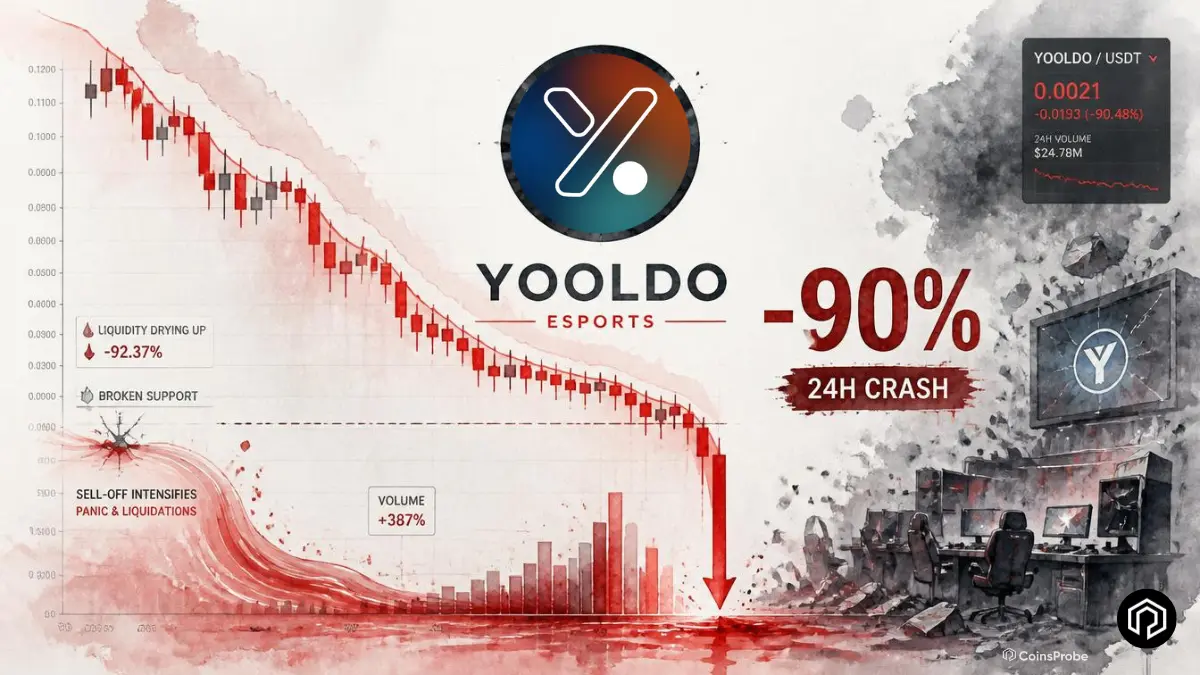

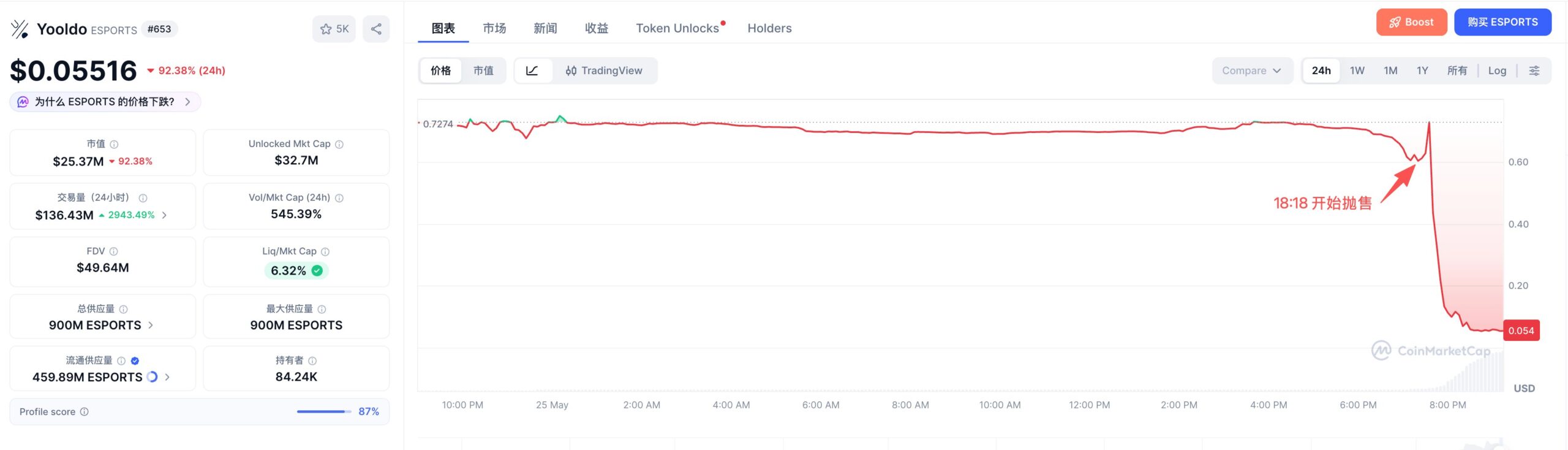
- $ESPORTS has collapsed -91%+ in 24 hours — falling from a high of $0.7509 to approximately $0.059 — with market cap dropping to approximately $27.8 million.
- On-chain analyst published a warning one day before the crash — identifying synchronized equal-sized wallet transfers as a "classic whale exit strategy" and flagging hidden exchange inflows.
- Suspected insider wallets dumped up to 196 million ESPORTS — approximately 43% of circulating supply — converting approximately $13.65 million worth of BNB in the process.
- Two additional wallets from the same distribution chain still hold large ESPORTS positions — representing continued supply overhang and ongoing risk for remaining holders.
Yooldo’s $ESPORTS token has become one of the most dramatic GameFi collapses of 2026 — and what makes this incident particularly significant is that the warning came before the crash, not after.
As the latest market data confirms:
From a 24-hour high of $0.7509 to a low of $0.05261 — $ESPORTS lost 91.70% of its value in a single trading day — one of the steepest single-session collapses recorded in the GameFi sector in 2026.

On-chain analyst @0xInChain published a detailed alert one day before the collapse — flagging the exact wallet patterns and exchange deposit flows that would precede the sell-off. The market did not react in time. By May 25, the price had crashed more than 91% — devastating retail holders who bought into the KuCoin listing excitement while suspected insider-linked wallets converted their positions into approximately $13 million in BNB.
The Warning That Came First
The detail that separates this collapse from a simple rug pull story is that @0xInChain identified the setup before it played out.
The analyst’s pre-crash report highlighted three specific red flags:
Synchronised equal-sized wallet transfers — Multiple tightly coordinated wallets were moving equal-sized amounts of ESPORTS tokens — a pattern the analyst described as a “classic whale exit strategy.” Equal-sized transfers across coordinated addresses are used specifically to avoid triggering on-chain surveillance tools and community panic — distributing the exit across enough transactions that no single move draws immediate attention.
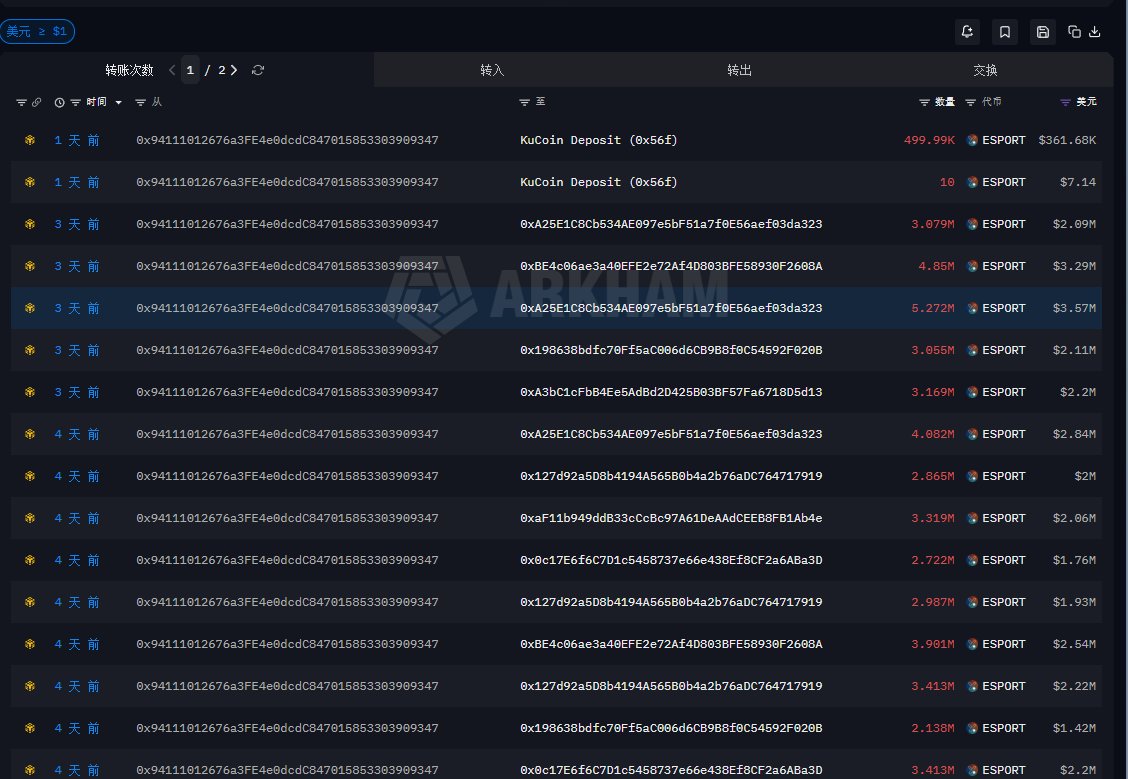
Artificially maintained support levels — The analyst warned that in highly centralised projects, apparent price support can be maintained intentionally while insiders quietly unload into the market’s buy-side demand. The listing hype creates the ideal environment for this — retail buyers provide the liquidity that insiders need to exit.
Hidden exchange inflows — Millions of ESPORTS tokens were gradually flowing into centralised exchange deposit addresses in the days before the crash — creating sell pressure that was invisible to most market participants but clearly visible on-chain. The analyst flagged this as the precursor signal that a large-scale exit was imminent.
The warning was published. The crash followed within 24 hours.
The On-Chain Timeline — What Actually Happened
The full sequence of events — reconstructed from on-chain data — reveals a methodical distribution that began months before the KuCoin listing:
~2 months ago: Over 60 million ESPORTS tokens were unlocked from a multisig wallet — an activity first identified and flagged by on-chain analyst @0xInChain, who suspected the wallet belonged to the project team or VC investors. The tokens were held quietly while the listing was prepared — with the analyst continuing to monitor the address in the weeks that followed.
Days before crash: The unlocked tokens were split and distributed across multiple separate wallets — a standard obfuscation technique to reduce traceability and spread the eventual exchange deposits across enough addresses to avoid immediate detection.
48 hours before crash: One address transferred 16.25 million ESPORTS into KuCoin deposit wallets — timed precisely around the listing when buy-side demand and liquidity were at their peak.
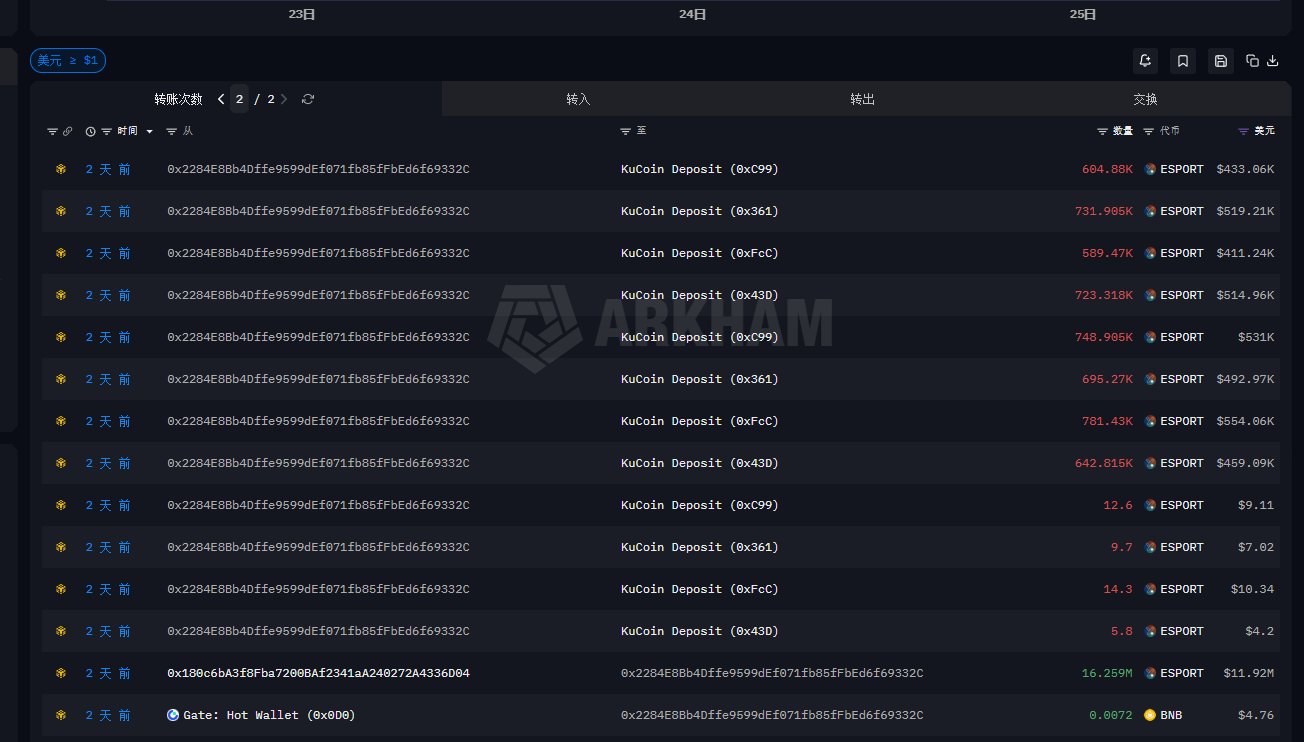
May 25 — The Collapse: Suspected insider wallets executed the decisive move — dumping up to 196 million ESPORTS — representing approximately 43% of the entire circulating supply — in concentrated selling activity that overwhelmed the available order book depth. The tokens were swapped for approximately $13.65 million worth of BNB.
The order books had no depth to absorb selling pressure of this scale. Liquidity evaporated instantly and the price collapsed from $0.7509 to a low of $0.052 — a near-vertical decline that triggered widespread panic across the market.
What Is Yooldo?
Yooldo Games is a Web3 gaming and esports ecosystem built on BNB Chain — combining Play-to-Earn mechanics, esports tournaments, and a dual-token economy:
- $ESPORTS — governance and utility token for payments, rewards, staking, and protocol governance
- $TROB — in-game token for gameplay mechanics and tournament rewards
The project gained genuine attention during its listing phase — positioning itself in the competitive but growing GameFi sector. The events of May 24–25 have severely and fundamentally damaged that positioning — raising serious questions about token concentration, team transparency, and the project’s commitment to its retail participant base that cannot be resolved by product announcements alone.
Why This Matters Beyond $ESPORTS
This collapse follows a pattern that has appeared repeatedly in the low-float, high-concentration GameFi and early-stage token space — and the @0xInChain pre-crash warning demonstrates that the pattern is identifiable before it plays out for those monitoring on-chain data.
The listing creates the exit opportunity — Exchange listings generate the retail buy-side demand and liquidity that insider-linked wallets need to exit at scale. Without the listing hype driving buyers in, the dump cannot be executed at these prices. The listing is the mechanism — not just the occasion.
Equal-sized transfers are not accidental — The matrix wallet pattern flagged by @0xInChain is a deliberate technique. Random selling does not produce equal-sized coordinated transfers. When this pattern appears — it should trigger immediate investigation regardless of the project’s stated fundamentals.
Token concentration is the most important metric — When a small number of wallets control a large percentage of circulating supply with vesting schedules tied to exchange listings, the fundamental risk is structural — not market-based. No amount of product quality changes the math of 43% circulating supply hitting the order book simultaneously.
What Remains at Risk
The situation has not fully resolved for $ESPORTS holders:
Two wallets still hold significant positions — Of the multiple addresses that received the original distribution, not all have fully sold. These remaining positions represent continued supply overhang — additional selling pressure that could push the price lower if those wallets follow the same pattern as the addresses that already executed.
No project statement — The Yooldo team had not issued any public acknowledgement, explanation, or commitment regarding the on-chain activity at the time of publication.
Bottom Line
The $ESPORTS collapse is not just a cautionary tale — it is a case study with a pre-written warning that went unheeded. @0xInChain identified the whale exit pattern, the exchange inflows, and the coordinated distribution one day before the crash. The tools exist. The signals were there. The retail holders who bought the listing pump absorbed the consequences.
For anyone still holding $ESPORTS — monitor the remaining suspected distribution wallets for any movement toward exchange addresses. That is the signal that additional selling is imminent.
For the broader market — on-chain monitoring is not advanced trading. It is the minimum due diligence required when participating in newly listed, low-float tokens with concentrated insider holdings.
Frequently Asked Questions (FAQ)
What happened to Yooldo’s $ESPORTS token?
$ESPORTS collapsed 91%+ in 24 hours after suspected insider-linked wallets dumped up to 196 million tokens — approximately 43% of circulating supply — for around $13.65 million in BNB immediately following the KuCoin listing.
Did anyone warn about the crash before it happened?
Yes — on-chain analyst @0xInChain published a warning one day before the crash flagging synchronised equal-sized wallet transfers, artificially maintained support levels, and hidden exchange inflows as signs of a coordinated whale exit strategy.
What is the “matrix wallet” pattern?
Equal-sized coordinated transfers across multiple addresses — used to distribute large-scale selling across enough transactions to avoid triggering community panic or on-chain surveillance tools. A documented precursor to coordinated insider exits.
Is there more selling risk for $ESPORTS?
Yes — two of the wallets from the original distribution chain still hold significant ESPORTS positions. These represent continued supply overhang and ongoing downside risk if they follow the same selling pattern.
The opinions and market insights shared on CoinsProbe represent the views of individual authors based on prevailing market conditions at the time of publication. Cryptocurrency investments carry significant risk and volatility. Readers are encouraged to conduct their own research and seek professional financial advice before making investment decisions. CoinsProbe and its contributors do not accept responsibility for financial losses or decisions made based on published content.
CoinsProbe may publish sponsored articles, affiliate links, or promotional collaborations. All sponsored material is clearly labeled to maintain transparency with our audience. Our editorial decisions remain fully independent, and advertising partnerships do not influence reviews, rankings, or published opinions.
Since 2023, CoinsProbe has delivered reliable insights on cryptocurrency, blockchain, and digital assets. Our content is created by experienced researchers and analysts who follow strict editorial standards focused on accuracy, transparency, and credibility. Every article is carefully reviewed and verified using trusted sources and current market data. We provide unbiased analysis and timely updates covering everything from emerging crypto projects to major industry developments.