

- Pi Network has completed the first KYC validator rewards distribution — with all eligible validators receiving payments directly to their Mainnet Pi Wallets as of April 3, 2026.
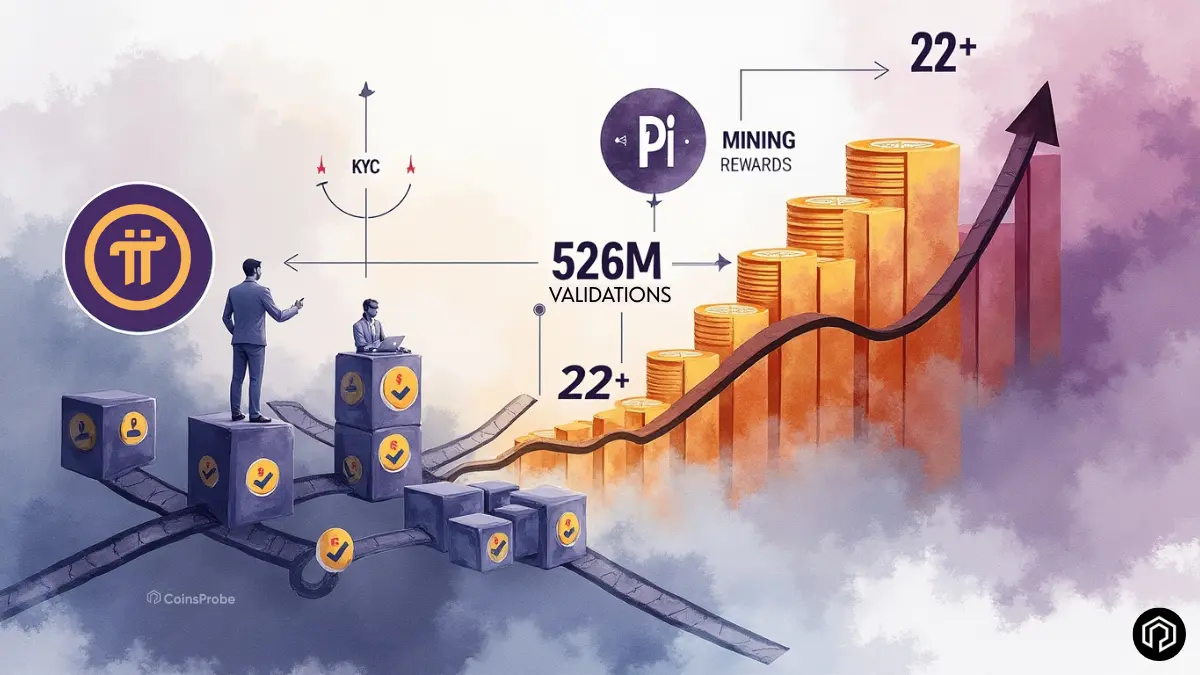
- 526,970,631 successful validations were completed by 1,094,680 human validators — resulting in 18 million identity verifications worldwide — one of the largest distributed human verification workforces ever assembled.
- The price per validation for this first round is 0.0504179 Pi — approximately 21–22 times the current base mining rate — funded by 16,568,774 Pi from the validator rewards pool plus a 10 million Pi sponsorship from the Pi Foundation.
- Pi Network is now preparing the second distribution round with an improved validator performance algorithm — and Pioneers who start validating now will be eligible for future reward rounds.
Pi Network has reached one of its most significant community milestones yet — completing the first round of KYC validator reward distributions on April 3, 2026. The distribution — which began on Pi Day 2026 (March 14) — has now been fully processed, with all eligible KYC validators receiving their rewards directly to their Mainnet Pi Wallets on the live blockchain.
The numbers behind this milestone are extraordinary — over 526 million validations completed by more than 1 million human validators, resulting in 18 million people’s identities being verified worldwide. The price paid per validation in this first round was 22 times the current base mining rate — making KYC validation one of the most rewarding activities available to Pi Pioneers.

What Is KYC Validation and Why Does It Matter?
Before understanding the rewards, it helps to understand what KYC validation actually is and the critical role it plays in Pi Network’s ecosystem.
KYC (Know Your Customer) is the identity verification process that every Pioneer must complete to migrate their mined Pi to the Mainnet blockchain. Without KYC, Pi remains in the internal system and cannot be used in the live ecosystem.
The challenge Pi Network faced was unique — how do you verify the identities of tens of millions of people globally in a way that is accurate, privacy-preserving, and decentralized? The answer was a distributed human validator workforce — a system where trained Pi Pioneers review identity verification tasks submitted by other Pioneers, with multiple validators independently checking each application before a final decision is reached.
This is not a simple yes/no process. Each Pioneer’s KYC application requires an average of 20 separate validations before reaching finality — because the privacy-preserving design breaks each application into multiple distinct tasks:
- Liveness checks — confirming a real person submitted the application
- Document verification — confirming identity documents are genuine
- Photo matching — confirming the person matches their documents
- Data matching — confirming information is consistent across the application
- Name checks — confirming name accuracy and handling update requests
For applications requiring special requests — such as name updates or multiple resubmissions — the validation count increases further. This layered approach ensures both accuracy and privacy simultaneously.
The Numbers Behind the First Distribution
The scale of what Pi Network’s human validator workforce has achieved is genuinely remarkable — and worth understanding in detail.
The Validator Rewards Pool:
The rewards pool is built from a simple but elegant mechanism — each Pioneer who successfully migrates to Mainnet contributes 1 Pi to the validator rewards pool. This creates a direct link between ecosystem growth and validator compensation — the more Pioneers complete KYC and migrate, the larger the pool available to reward the validators who made those verifications possible.
At the snapshot date of March 5, 2026 — the cutoff for the first distribution round — the pool contained:
- 16,568,774 Pi — from 16,568,774 Pioneers who had successfully migrated to Mainnet
- +10,000,000 Pi — a sponsorship from the Pi Foundation to supplement the first round, recognizing that the early validation period was partially used to train validators and establish the network
Total pool: 26,568,774 Pi
The Price Per Validation Calculation:
(16,568,774 Pi + 10,000,000 Pi) ÷ 526,970,631 validations
= 0.0504179 Pi per validation
This price per validation represents approximately 21–22 times the current base mining rate — a significant earning opportunity that reflects the genuine value of the human verification work that validators contributed to the network.
Eligibility Requirement: To receive payment in the first round, validators must have completed at least 50 validations that reached majority agreement by March 5, 2026. Rewards are automatically transferred to validators’ Mainnet Pi Wallets — no manual claiming is required.
Why the Pi Foundation Added 10 Million Pi
The Pi Foundation’s decision to sponsor 10 million Pi into the first distribution pool reflects an important acknowledgment about the nature of the early validation phase.
When the KYC validator network first launched, many early validations served a dual purpose — they were simultaneously processing real applications and training new validators to become accurate and skilled in performing verification work. This early training phase was essential for building the high-quality validator workforce that Pi Network now has — but it meant that some early validation work carried additional value beyond just processing individual applications.
The Foundation’s 10 million Pi sponsorship recognizes this contribution — ensuring that early validators who helped establish and scale the network are fairly compensated for the foundational work they performed, even when that work served a broader training and network-building function.
What This Milestone Means for Pi’s AI Economy Vision
Beyond the immediate financial reward for validators, the Pi Core Team has highlighted a much larger implication of this milestone — one that connects Pi Network’s validator workforce to the future of artificial intelligence.
The numbers speak for themselves: 526,970,631 tasks completed by 1,094,680 people — all compensated through the Pi blockchain. This represents one of the largest demonstrations of coordinated, compensated human labor at global scale in blockchain history.
As the Pi Core Team notes — many AI projects recognize the critical importance of human input in building and refining AI systems, but face a fundamental challenge: there are no or few humans actually participating. Pi has solved the hard problem first — it already has a massive, active, globally distributed workforce that has demonstrated both the willingness and the capability to contribute to human-necessary tasks at scale.
The KYC validator program has proven several things simultaneously:
Capability — Over 1 million people can accurately perform complex identity verification tasks across language barriers, document types, and jurisdictions.
Consistency — 526 million validations were completed with sufficient accuracy to produce 18 million verified identities — a quality bar that required real skill and attention.
Scale — A distributed human workforce can operate at a scale comparable to centralized systems — without any central authority coordinating individual participants.
Payment infrastructure — The Pi blockchain can handle workforce payments at scale — processing over 1 million individual reward transactions to validators’ Mainnet wallets.
This combination positions Pi Network’s community not just as cryptocurrency holders — but as a verified, compensated, globally distributed human workforce ready for the human-in-the-loop processes that the AI economy increasingly requires. As the Pi Core Team notes — more details on these broader implications for Pi’s role in the AI economy will be shared in a future announcement.
What’s Changing in the Second Distribution Round
Pi Network is already working on improvements for the second KYC validator reward distribution — with the most significant change being an updated validator performance algorithm.
The first round used a relatively straightforward calculation — total pool divided by total successful validations — giving every successful validation the same price regardless of the individual validator’s accuracy or consistency over time.
The second round is expected to incorporate additional or different criteria based on validator consistency and accuracy — rewarding validators who maintain high-quality standards over time more generously than those who complete validations less accurately.
Additionally — as AI processing in KYC increases and the system becomes more sophisticated, fewer human validations per application will be necessary. This means fewer total validations will be dividing the reward pool in future rounds — which mathematically increases the price per validation for validators who continue contributing. This creates a compelling incentive structure for Pioneers who start validating now — as the per-validation reward is likely to grow over time rather than shrink.
How to Start Validating and Earn KYC Rewards
With the first distribution complete and the second round being prepared, now is an excellent time for Pioneers to begin contributing as KYC validators. Here is exactly what you need to do:
Step 1 — Complete your own KYC You must have successfully completed your own KYC verification before you can become a validator for others.
Step 2 — Complete the Mainnet Checklist Set up your Mainnet Pi Wallet by completing the Mainnet Checklist — including Step 3 (Wallet 2FA setup) as we covered in our Pi Network Protocol 21 upgrade guide. Without a confirmed Mainnet wallet, reward payments cannot be received.
Step 3 — Access the KYC validator app Open the Pi Browser and access the KYC validation app — where you will find available validation tasks to complete.
Step 4 — Complete at least 50 validations The minimum threshold for eligibility in reward distributions is 50 successful validations that reach majority agreement. Quality matters — accurate validations count toward your reward; inaccurate ones do not.
Step 5 — Monitor your performance dashboard The full breakdown of your validator rewards and performance status is available in the validation dashboard in the KYC app — giving you real-time visibility into your earnings and accuracy metrics.
What’s Next for Pi Network
The KYC validator rewards distribution is the latest in a series of accelerating ecosystem milestones that Pi Network has delivered in early 2026. As we have covered in our recent Pi Network analysis:
The second migrations rollout has brought referral bonuses on-chain for over 119,000 Pioneers. The Pi Launchpad testnet attracted over 301,000 participants in its first week. The RPC server launch opened the Testnet to smart contract development for the first time. And the Protocol 21 upgrade is building toward v23.0’s expected smart contract enhancements in May 2026.
The KYC validator rewards distribution adds a new dimension to this momentum — demonstrating that Pi Network is not just building blockchain infrastructure but actively compensating its community for the real, valuable work they contribute to making that infrastructure function.
Frequently Asked Questions
Who is eligible for the first KYC validator reward distribution?
Validators who completed at least 50 successful validations that reached majority agreement by the snapshot date of March 5, 2026 and have a confirmed Mainnet Pi Wallet are eligible for the first distribution. Rewards are automatically transferred — no manual claiming is required.
How much Pi did validators earn in the first round?
The price per validation in the first round was 0.0504179 Pi — approximately 21–22 times the current base mining rate. A validator’s total reward equals this price multiplied by their number of successful validations. The full breakdown is visible in the validation dashboard in the KYC app.
Why did the Pi Foundation add 10 million Pi to the pool?
The Foundation sponsored 10 million Pi to recognize the additional value of early validators who helped train the workforce and establish the network during the bootstrapping phase — ensuring fair compensation for foundational work that served a broader purpose beyond individual application processing.
How does the validator rewards pool work?
Each Pioneer who successfully migrates to Mainnet contributes 1 Pi to the validator rewards pool. This pool is then divided by the total number of successful validations to calculate the price per validation. The more Pioneers migrate and the fewer validations are completed, the higher the price per validation — creating a mathematically favorable outlook for validators as Pi’s ecosystem grows.
Will the price per validation increase in future rounds?
Potentially yes — as AI processing handles more validations automatically, fewer human validations will be needed per application. This means fewer total validations dividing the pool — which mathematically increases the price per validation. The second round will also incorporate accuracy and consistency criteria — rewarding high-quality validators more generously.
How do I start earning KYC validator rewards?
Complete your own KYC, set up a confirmed Mainnet Pi Wallet, access the KYC validator app through the Pi Browser, and complete at least 50 accurate validations. Quality matters — only validations that reach majority agreement count toward your reward eligibility.
The opinions and market insights shared on CoinsProbe represent the views of individual authors based on prevailing market conditions at the time of publication. Cryptocurrency investments carry significant risk and volatility. Readers are encouraged to conduct their own research and seek professional financial advice before making investment decisions. CoinsProbe and its contributors do not accept responsibility for financial losses or decisions made based on published content.
CoinsProbe may publish sponsored articles, affiliate links, or promotional collaborations. All sponsored material is clearly labeled to maintain transparency with our audience. Our editorial decisions remain fully independent, and advertising partnerships do not influence reviews, rankings, or published opinions.
Since 2023, CoinsProbe has delivered reliable insights on cryptocurrency, blockchain, and digital assets. Our content is created by experienced researchers and analysts who follow strict editorial standards focused on accuracy, transparency, and credibility. Every article is carefully reviewed and verified using trusted sources and current market data. We provide unbiased analysis and timely updates covering everything from emerging crypto projects to major industry developments.